Nostalgia for the Old West
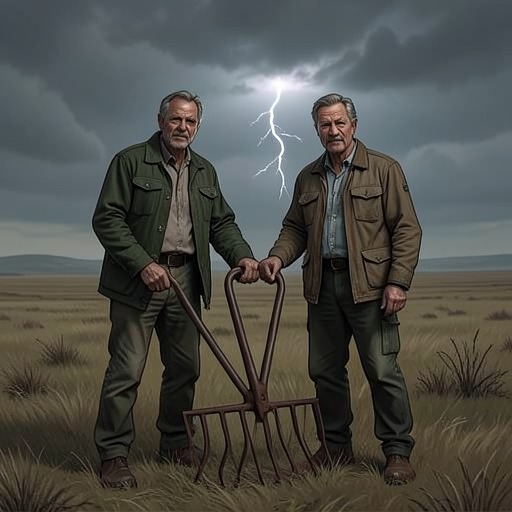
The Power of the Dog (Thomas Savage Edition)Nostalgia for the Old West is the backward-looking ideal through which Phil Burbank measures the changing valley and his own identity. He remembers a world of open trails and consequential cowboy work, especially the era of Bronco Henry, and treats modern boundaries and habits as evidence that the old life has become a performance. Yet the novel sets that ideal against the labor that sustains the ranch, Phil’s selective account of progress, and the dispossession that made white access to the valley possible. His nostalgia is therefore both a personal code and a limited account of western history.
The Cowboy and the Lost Past
Phil’s standard for a real cowboy comes from the period he associates with Bronco Henry. He believes that being a cowboy once meant having a serious man’s occupation, whereas younger men appear to him to be imitating an image learned from moving pictures. Their silver-mounted equipment and cowboy-song records, purchased through mail-order catalogues, seem to him like props in a confusion between work and entertainment. His diagnosis is sharpened by the irony that the ranch hands also use catalogues: they order practical horsehide gloves from Sears, Roebuck and Montgomery Ward, which Phil mockingly renames, and sometimes rely on a literate coworker to complete their forms. The same commercial world he treats as a symptom of make-believe supplies ordinary necessities to ranch labor.
Phil’s own refusal of gloves gives his ideal a bodily, practical measure. Ranch hands wear them for roping, fencing, branding, hay work, and riding to avoid damaging their hands; Phil rejects that protection and regards such caution with contempt. His hands are described as lean and powerful, embodying his belief that competence means enduring discomfort rather than guarding against it. But the contrast also shows that his image of toughness is a personal rule, not a neutral description of how ranch work must be done.
His memories also take the form of unfinished quests. In speaking to Peter, Phil recalls an old cliff bearing initials and a date, which he associates with the Lewis and Clark expedition, and piles of rocks whose direction he never followed to its end. He invites Peter to search for the route with him. The episode gives nostalgia a more exploratory side: the past is not only an argument against modernity but a landscape Phil still hopes to read and share. Even here, however, what he offers is a remembered possibility rather than a completed discovery.
Fences, Farms, and the Changing Valley
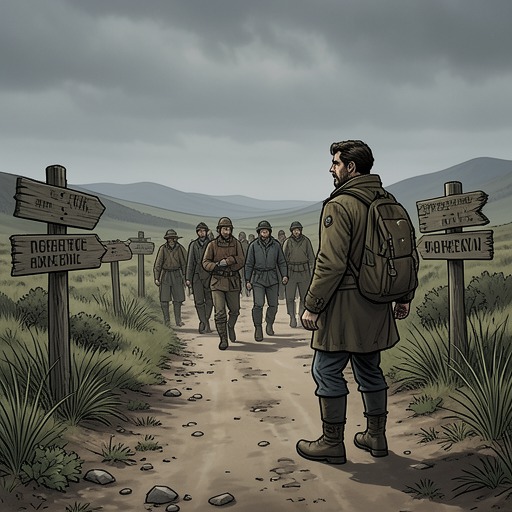
The physical changes Phil resents are unusually concrete. Dryland farms have taken up parts of the flat, and barbed-wire fences obstruct the old cattle trail toward the mountains, forcing the herd to change direction. Phil regards the farmers, many of them Finnish or Swedish immigrants, with hostility and sees their small houses, clothing, and attempts to grow shade trees as signs of a transformed country. His attachment to an open range is bound up with prejudice: he dismisses both foreigners and farmers instead of treating their presence as a change that might have more than one cause.
The farms’ failure complicates his satisfaction. Rain is scarce, prayers do not bring it, and ranchers control the water in the streams. Many settlers abandon their claims, but their empty dwellings and the remaining wire still alter the land and divert travel. Phil sometimes leaves obstructing gates open, making a small, deliberate gesture against the fences and the people he blames for them. His anger at the barriers thus coexists with an awareness that the dryland settlers have themselves struggled and left behind visible evidence of hardship.
Phil’s resentment extends from private fences to government construction. At a new boundary between state land and the forest, he encounters a massive government gate secured with a long chain. He sees its scale and expense as a bureaucratic absurdity imposed on a simple fence, and imagines paperwork, public waste, and political enemies behind it. The gate converts his abstract distrust of modernization into an object he must physically open. Yet it also marks a real change in how the land is divided and managed: the open country of his remembered past is increasingly crossed by boundaries he cannot simply wish away.
Work Beneath the Ideal
The ranch’s seasonal routine reveals how much organization lies behind Phil’s cowboy identity. George Burbank keeps the accounts, deals with buyers, handles correspondence and telephone calls, and maintains the Reo; Phil oversees haying, repairs machinery, checks equipment and tents, directs irrigation from the creeks, inspects the hay, and sets the start date for the work. The operation depends on an extensive inventory, including eight mowing machines, twelve large tents, and separate mobile cooking and dining shacks. This division of responsibility makes the old ranch life less like unstructured freedom than a coordinated enterprise.
Haying begins as soon as possible after the Fourth of July, and its ninety-day season follows the ranch hands’ Independence Day celebrations. The holiday’s band, rodeo, fireworks, and hoped-for drink form a brief interval before sustained work. The men who drive mowing machines handle half-broken horses and operate equipment whose seven-foot cutter bars can cause severe accidents. Their skill and danger bring them extra pay, newer tents, a more attentive hearing, and first choice of the best steaks. These details give the laborers a defined place in the ranch’s social order. They also qualify any romantic picture of cowboy work: the season requires specialized skill, compensation, and privileges because the work is demanding and hazardous.
The Past and Its Exclusions
Phil’s nostalgia concentrates on the loss of an open landscape for white ranchers, but the valley’s history in the novel includes a more profound dispossession. The last Indigenous residents are driven from their land to a reservation after the government stops honoring treaties; the account links that decision to the increased value of land and the political power of white voters. Johnny Gordon sees them leaving in worn vehicles and on old ponies, and his thoughts turn to the arid southern Idaho landscape where they will live. Their forced departure is not simply another instance of modernization: it reveals that the apparent openness of Phil’s remembered West rests on the removal of its prior inhabitants.
Life on the reservation is also defined by restrictions. Alcohol is prohibited, and leaving requires a permit granted only for a pressing reason; because residents have few destinations or people who can shelter them, the rule can make movement practically unavailable. Against this history, Phil’s fury at a gate or a fence has an evident limit. He experiences new barriers as an injury to the range he claims as home, while the novel records the far greater curtailment of Indigenous land and movement. When Phil tells Edward Nappo and his son to leave, his attachment to the territory appears not as an abstract love of freedom but as an assumption about who has the right to remain.
Nostalgia for the Old West consequently remains double-edged. It preserves Phil’s respect for skilled labor, endurance, and a landscape he knows intimately, while his own routines depend on machinery, business organization, commercial supplies, and seasonal planning. His complaints about fences register genuine changes to the working range, but his remembered past is neither universal nor free of exclusions. The novel lets the ideal retain its force while showing the people and histories it leaves outside its frame.