Phil Burbank—George Burbank: brothers and business partners
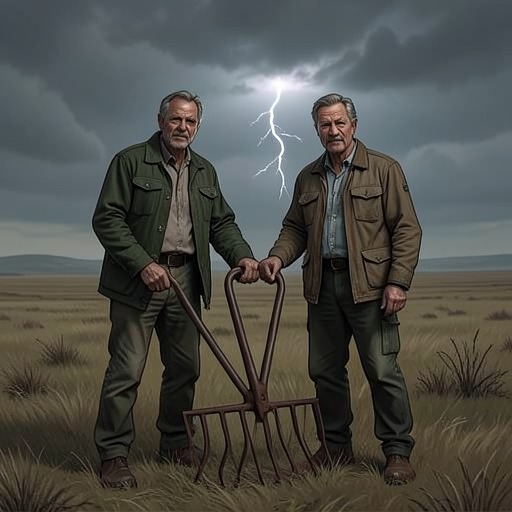
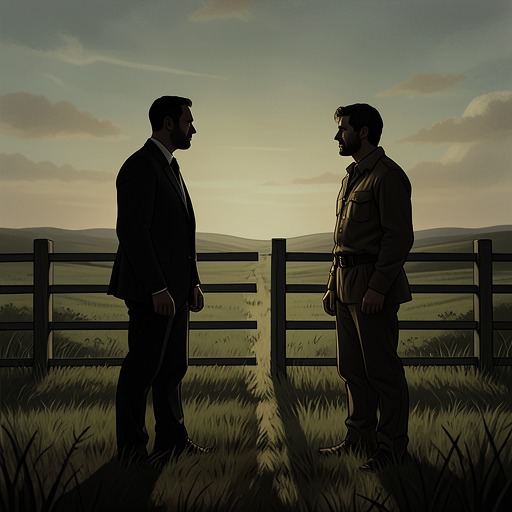
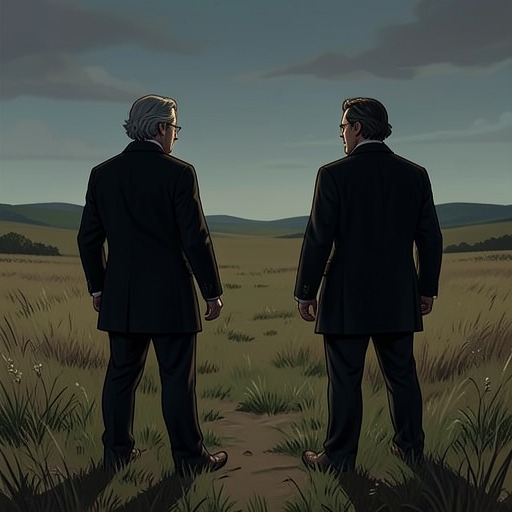
The Power of the Dog (Thomas Savage Edition)Phil Burbank and George Burbank are brothers, co-owners of the largest ranch in their Montana valley, and companions whose bond is older and more intimate than a business partnership. They share work, childhood memories, and a home, yet their differences are built into the way they run the ranch: Phil oversees physical operations, while George manages its books and dealings with the outside world. George’s marriage to Rose unsettles the arrangement Phil has taken for granted, exposing both the strength of their attachment and the limits of Phil’s understanding of his brother.
Shared History and Household
The brothers’ closeness is presented as something more than a practical alliance. At roundup time they ride together and talk as though they had only just met, returning to high-school memories and their time at a California university. Their educational paths had diverged: George flunked out in the year Phil graduated. Phil recalls the tricks he played on fellow students and the friends they shared, remembering himself as the bright one and George as the plodder. The recollections establish an affectionate familiarity, but also a lasting difference in how each brother sees his own abilities and his sibling’s.
At forty, Phil still shares the room they had as boys, sleeping in the same brass beds in the large log house. Their parents have left the ranch for a suite in Salt Lake City, leaving the brothers to occupy the family home together. The old bedroom of the parents has been shut up; its dust, dead geraniums, and stopped clock mark a household whose earlier generation has withdrawn while the brothers remain in the space shaped by their childhood. Their continued use of the boys’ room makes their adult partnership feel rooted in a shared past, rather than formed solely by business necessity.
Complementary Work and Authority
The brothers divide the ranch’s responsibilities along distinct lines. George sits at the head of the table, keeps the books, speaks with buyers, writes letters, answers the telephone, and keeps the Reo running. Phil directs the operational work: he oversees haying, checks and repairs equipment, organizes irrigation, monitors the hay’s growth, and sets the beginning of the season for as soon as possible after the Fourth of July. Their authority is joint, but its daily expression differs. George handles accounts, communication, and commercial relationships; Phil supervises machinery, water, timing, and field work.
That division connects their private partnership to the labor system they manage. Haying lasts ninety days, and before it begins Phil inspects an extensive inventory: eight mowing machines, six buck rakes, six sulky rakes, two derricks, the cookshack and dining shack, and twelve large canvas tents. The machines and shelters make seasonal work a coordinated operation rather than an individual undertaking. The mowing crews use dangerous cutter bars and sharpen them after work; their skill and exposure to risk bring extra pay and privileges, including newer tents, a stronger voice, and first choice of the meat. The account does not assign these crew conditions to George and Phil’s personal relationship, but it shows the scale of the work Phil organizes and the economic structure their ownership sustains.
Their contrasting attitudes toward physical protection offer another small measure of difference. Ranch hands generally wear gloves to guard against rope burns, splinters, cuts, and blisters, while Phil refuses them and scorns those who use them. His dry, powerful hands express a personal ideal of toughness. The other men’s horsehide gloves, ordered from mail-order catalogues, also reveal a practical dependence on written forms and numbers: some struggle with order blanks and turn to more literate companions for help. This detail places Phil’s self-reliant work identity beside the ranch’s less romantic routines of equipment, paperwork, and shared labor.
Mutual Knowledge and Misreading
Phil is attentive to George, but his attention does not mean he understands him fully. He sometimes worries when George rocks in his chair and gazes toward Old Tom Mountain, thirty miles away and twelve thousand feet high. The distant look troubles Phil, who reads it as evidence that George may be elsewhere in thought. Yet another moment complicates this assumption: when a task calls for the dignity and manner of the Old Gent, George performs it with ease. Phil recognizes that George has watched their father over the years and prepared himself for precisely such a responsibility. Phil’s confidence that he need not have worried gives way to a broader uncertainty about how accurately anyone can judge another person.
The contrast is not simply between an active brother and a passive one. Phil’s memories cast George as the plodder, and his concern over George’s faraway gaze suggests that he can mistake quietness for incapacity. George’s practiced performance of the family role reveals patience and preparation that Phil had not fully credited. The episode makes the brothers’ intimacy imperfect: they know one another’s habits and history, yet each can remain partly opaque to the other.
Marriage and Strain
George’s marriage to Rose changes the terms of the brothers’ household and tests Phil’s expectation that their closeness should remain undisturbed. Phil warns George to consider what the Old Lady would think if he became involved with Rose, invoking family feeling and the brothers’ longstanding closeness. The appeal shows Phil trying to influence George by treating their shared family identity as a reason to resist the relationship. George’s answer is decisive: they were married on Sunday, and Rose has disposed of her property in Herndon. The marriage has already happened; Phil’s protest arrives too late to prevent it.
Phil’s response is significant because it reveals both attachment and possessiveness without erasing George’s independence. He frames the marriage as a matter that affects the family and their established bond, while George announces a choice he has made. In this exchange, the business partners’ old intimacy no longer guarantees that George will arrange his life according to Phil’s expectations. Their relationship persists, but it must now accommodate Rose and the altered household.
Partnership and Its Limits
The brothers’ bond is held together by shared history, co-ownership, and a practical division of labor, not by sameness. Phil brings forceful supervision and a culture of physical endurance to the ranch; George brings administrative competence and a quiet ability to learn by observing others. Their long familiarity allows them to move easily through work and memory, but it also encourages Phil to believe he knows what George can do and what he should choose. George’s performance of the Old Gent’s role and his marriage to Rose each contradict that confidence in a different way.
As a relationship, theirs joins genuine companionship to unequal assumptions. Phil may be the brother who remembers himself as brilliant and George as plodding, but the ranch’s functioning depends on George’s distinct abilities as much as on Phil’s operational command. Their partnership is therefore both durable and vulnerable: durable because it has been formed through years of shared work and domestic life, vulnerable because closeness can become a claim to interpret or direct the other. George’s marriage marks the clearest boundary of that claim.