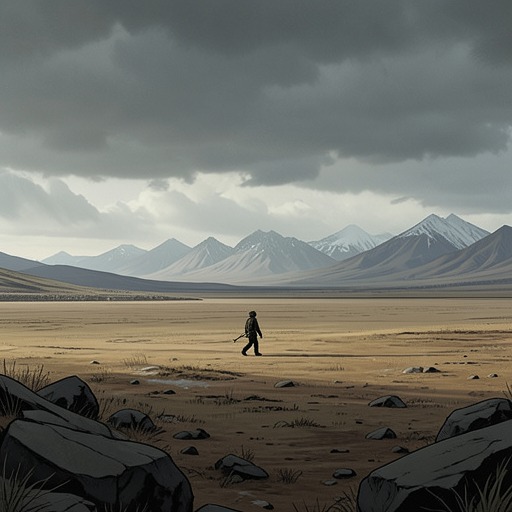
Rocky Mountains
The Power of the Dog (Thomas Savage Edition)The Rocky Mountains are both a physical horizon and a measure of perspective in the novel. Their visible grandeur frames life at the Burbank ranch, while the vastness associated with the mountains and the open horizon informs a broader idea of Western character: that living amid such expanses can make distant societies and nearby neighbors seem less consequential.
Landscape and Western Outlook
A reflection on regional character connects the West’s openness to the experience of looking toward the Rocky Mountains or across an equally vast horizon. From that perspective, Europe and the idea of neighbors recede. The mountains therefore shape more than the view: they supply a scale through which the novel considers distance, independence, and the outlook attributed to Westerners. This is presented as an interpretation of how landscape shapes people, not as a claim that every Western character responds to it in the same way.
The Mountains and Ranch Life
At the Burbank ranch, the Rockies stand behind ordinary work as well as moments of beauty. As Rose watches George undertake a difficult ranch chore, the mountains appear behind him, setting the human task against a grander landscape. The juxtaposition keeps the setting from becoming only a scenic backdrop: the ranch’s daily work continues beneath the imposing range.
The ranch’s seasonal routine also gives the regional landscape a practical dimension. Phil oversees haying preparations, inspecting eight mowing machines—four John Deeres and four McCormack-Deerings—as well as rakes, derricks, tents, and the mobile cook and dining shacks. He directs the diversion of water from the main creeks for early-summer irrigation and sets haying to begin as soon as possible after the Fourth of July. The work proceeds on a demanding seasonal schedule, with the mowing-machine crews receiving extra pay and special standing for handling hazardous equipment and maintaining it after work.
A Wider Western Geography
The novel’s Western setting also includes histories of restricted movement and dispossession. It describes the last Indigenous people of a valley being forced from their land to an Indian reservation, where leaving without a permit was prohibited and permits were granted only for pressing reasons. The passage places that removal within a broader account of Western land and power; it does not identify the Rocky Mountains themselves as the site of the expulsion. Read alongside the mountains’ immense horizon, this history makes the region’s openness an unequal condition: expansive landscape does not mean unrestricted access to land.