Rose cannot play “Just Like a Gypsy” at the governor's dinner
The Power of the Dog (Thomas Savage Edition)Rose Gordon Burbank’s inability to play “Just Like a Gypsy” at the Governor’s dinner is more than a public musical lapse. The song carries a memory of her courtship with George Burbank, while the performance takes place under the pressure of Phil Burbank’s hostility. Rose’s hands fail her at the very instrument through which she once expressed herself and drew George close; the silence that follows leaves George disappointed and Rose unable to repair the moment.
The performance becomes Rose’s responsibility
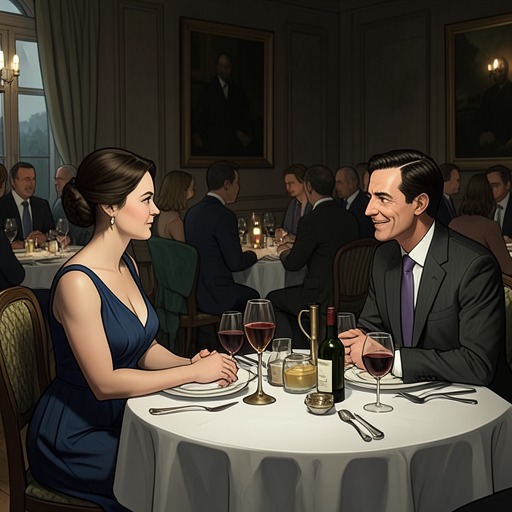
George Burbank tells the guests that his brother will soon join them and suggests that they begin their cocktails. Rose already knows Phil Burbank will not appear. At first she has wondered whether his absence might be a relief: she and George would otherwise have to account for his weather-worn clothes, hair, and hands. But once it is clear he is not coming, her anxiety shifts. She hopes he will appear, because the conversation George regards as dull leaves the evening’s success resting on her piano playing.
That burden is heightened by the guests’ attention to the room and to Rose’s place in it. When the Governor’s wife asks whether Rose plays, Rose understates her ability and explains that, before her first marriage, she played piano in the pit of a moving-picture house and is now badly out of practice. George objects that she has been playing often. His confidence is affectionate, but it also makes the request harder to refuse: the Governor’s wife asks her to play, and the Governor welcomes the piano as a likely way to bring an uncomfortable evening to its close.
Phil’s influence in his absence
Rose walks to the piano while looking directly at the dining table, where Phil’s place has been set. She feels, in a moment of distress, that he has arranged the scene and is smiling wherever he is. The thought is not evidence that Phil has actually engineered the dinner; it registers how thoroughly his malice has entered Rose’s expectations. His absence offers no release from the pressure she associates with him.
The piano itself is similarly charged. Its chords have provoked Phil’s vicious mimicry, and Rose remembers that it may have broken a young man’s back. As she sits down, she feels pursued and confused by Phil’s hostility. Her palms are wet and her throat dry. The performance is therefore not a neutral test of practice: the instrument and the room bring her into contact with the humiliation and fear connected to Phil, even though he is not there to confront her directly.
From practiced music to blankness
Rose manages an easy Strauss waltz, but only mechanically, repeating it as a child might recite the alphabet. The three listeners clap and wait. When asked for another piece, she asks which one, buying time as numbness spreads from her shoulders into her hands and fingers. The request is for the gypsy song, and Rose recognizes it as “Just Like a Gypsy.”
The tune is simple and sentimental, but Rose had made it her own by adding a little cascade of notes after each phrase. Those codas lifted the written melody into an expression of sweet longing. She had played it for George at The Inn / Red Mill on the old mechanical piano, and the story links his affection for the tune with the beginning of her affection for him. George, usually prosaic and tongue-tied, had seemed to understand something in the music that she understood too. The requested song thus carries more than the risk of a poor performance: it recalls a private point of recognition between them.
Rose rubs her hands as a professional pianist might, takes a breath, and touches the keys. But her fingers have no feeling or knowledge of what to do. She folds her hands in her lap and looks at them. The clock behind her strikes; she has hoped its chime might release her from the spell, but the sound changes nothing. Her mind remains blank and her fingers dead. Turning on the bench, she apologizes and says she cannot remember the piece.
The cost of the silence
George parts his lips in amazement but says nothing. Rose recognizes disappointment on his face for the first time, and recognizes too that this is his first disappointment with her that she cannot put right. The distinction matters: the failure is not merely that she cannot satisfy the guests or finish the evening’s entertainment. It interrupts an intimate understanding previously carried by the song and leaves her without the familiar means of mending a hurt.
The Governor reassures her, and his wife responds that she too forgets things. Their kindness softens the public embarrassment, but it does not restore the music or undo Rose’s awareness of George’s disappointment. The scene ends with the gap between what the guests can see—a forgotten tune—and what the song means to Rose. Phil’s absence, the set place at the table, the clock’s useless chime, and Rose’s unresponsive hands all converge on that gap. Her failure makes visible how a hostile presence can dominate a room without entering it, and how a shared memory can become painfully inaccessible under pressure.