Social performance and class anxiety
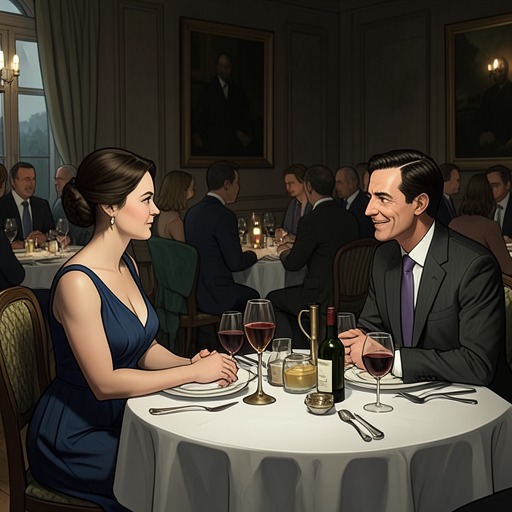
The Power of the Dog (Thomas Savage Edition)Social performance and class anxiety are not merely anxieties about appearing proper; they govern who feels entitled to belong, what can safely be shown, and how people disguise discomfort as good manners. At the Burbank ranch, Rose Gordon Burbank’s attempts to please and impress others meet a household trained by earlier humiliations to dread company. The governor’s visit brings those tensions into view: a carefully staged dinner promises social recognition, but its participants remain watchful, frightened, and largely unable to communicate.
Making a Self Through Art and Gesture
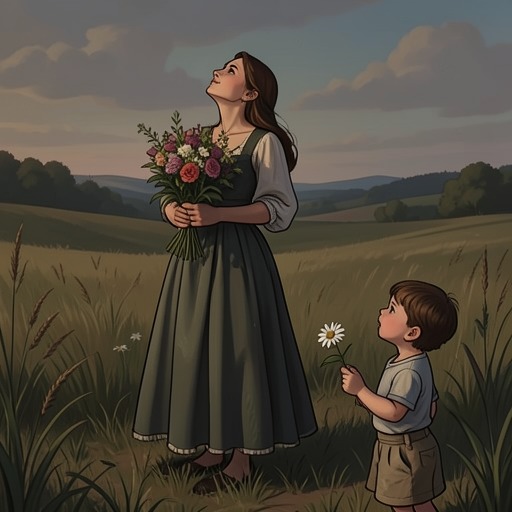
Rose’s performance begins in private, as an effort to recover a self she fears she has lost. Her flower work draws on materials she first saw through George Burbank’s binoculars, scattered by a woven-wire fence around the horse pasture. The materials seem to be nothing in themselves; her achievement lies in arranging them into something that tests her considerable skill. In Rose's Floral Arrangement, she finds an analogy for art itself: seemingly trivial elements can become meaningful through selection and form. The arrangement is therefore more than a decorative accomplishment. It is a deliberate act of self-reconstruction, made by someone asking what remains of her identity and what she might make from what is at hand.
The arrangement is also directed toward George. Like her piano playing, her careful dressing for dinner, and a picnic beside the road, it is intended to please and surprise him. George responds with earnest, slightly uncertain praise. His delight is bound up with affection: he notices Rose’s delicacy and loves the sight of her face, while recognizing that her work may provoke Phil Burbank’s ridicule. Social performance here is both intimate and defensive. Rose offers a crafted version of herself to her husband; George, in turn, anticipates the cruelty of an audience that is not even present yet.
That anticipation comes from George’s own history of exposure. He remembers Phil’s hooting laughter after George wore a blue silk dressing gown and matching slippers, gifts from his mother, over his clothes at Christmas. The memory helps explain why George fears that Rose’s harmless handiwork will become material for mockery, whether to her face or in the bunkhouse. The episode places gentleness and artistic effort under the pressure of the ranch’s masculine social code: a person who reveals a taste, tenderness, or uncertainty risks being made into a spectacle.
The Household’s Memory of Failed Sociability
The Burbanks’ difficulty with guests predates Rose’s arrival. The Cabbage Dinner has become a family shorthand for a social occasion that went wrong, one of several parties the older Burbanks attempted. Its memory is not a charming anecdote for George: his mother’s face went pale, and years passed before she could laugh about it. The old family’s gatherings have left a legacy of apprehension rather than confidence, so George treats the prospect of another party as a danger to be managed, not an opportunity to shine.
The pattern persists after the meal ends. Guests depart with awkward excuses; the Old Gent files away the Victrola records, while the Old Lady removes her jewelry and studies her face in the mirror. On the drive back, the guests sit in silence, ashamed of their own wooden performance and wondering why they could not talk, waltz, or rise to the occasion. The contrast between a formal gathering and its quiet aftermath makes sociability feel like a failed public exercise. Property and money have been acquired, yet neither gives the guests the ease or connection they hoped those things might secure.
This history shapes George’s response when Rose asks whom to invite for the governor’s visit. She wants a list and expects that people will come because refusing a dinner for a governor would be impossible. George instead proposes a small gathering with Rose, himself, and Phil, recalling the previous disaster and arguing that a crowded table would make matters worse. His decision is protective, but it also narrows Rose’s room to maneuver: she had counted on the twenty-four-seat table and the presence of many guests to make her less exposed. Numbers promise her both prestige and cover.
The Governor’s Dinner as a Social Trial
The governor’s visit turns the household’s private unease into a public performance. As the day approaches, Rose wants to dazzle the governor with a large gathering, but she also wants to hide within it. Her wish for numbers is therefore not simply ambition. It is a strategy for dispersing attention, an attempt to make a formidable social occasion safer by enlarging its audience. George’s decision to keep the party small removes that protection. Rose accepts his choice, though she had hoped it would be easier to perform before a crowd than before a few important observers.
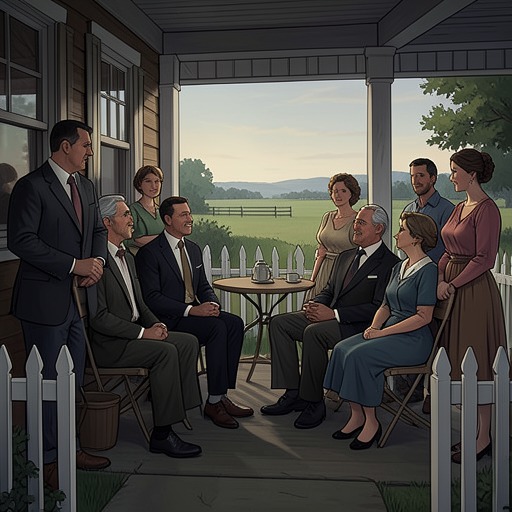
When the governor’s automobile appears, George reaches for his necktie. Rose sees him in a suit and feels as if they are about to attend a funeral. The couple go down the porch steps with fixed smiles and wait by a gate meant to keep wandering livestock off the weak lawn. Rose’s new satin slippers with cut-steel buckles carry the formality across the gravel as she and George approach their guests. The details make the arrival look choreographed, but the choreography does not settle their nerves; it gives those nerves a public shape.
Rose’s own speaking performance falters once Phil has not arrived. At first she had wondered whether his absence might be preferable, since she could not explain his clothes, weather-roughened hands, and casual washing to the visitors. Now she hopes he will appear, because his presence would take some pressure off her. Without him, she must keep the conversation moving through commonplaces while George prepares cocktails. The talk about changeable weather is precisely the sort of dull conversation George had associated with unsuccessful dinners, and its inadequacy makes Rose’s piano playing seem to carry the evening’s remaining hopes. Her practiced role as hostess has become a sequence of exposed tasks, each one more consequential because there are so few people to distract from it.
Wealth, Class, and the Performance of Ease
Inside the house, the governor’s wife reads the room as evidence of a reversal in social fortunes. The rose-carpeted bedroom, silver-framed prints, lavish lace, canopy bed, crystal decanters, and heavy silver objects suggest a scale of luxury she herself has known only while her husband holds office. She knows those privileges will disappear when the official cars, mansion, cook, gardener, and maid are gone. By contrast, Rose, whom she understands to have run a rooming house, now possesses treasures the visitor regards as markers of an elevated life.
The visitor’s reaction is not uncomplicated admiration. She wonders whether Rose is pretending to have been born to this elegance and whether the strain of the role might eventually show. Rose’s casual acceptance of the room’s wealth seems, to the governor’s wife, either secure ease or deliberate preparation for losing it. The scene makes class status visible not only in possessions but in the interpretation of how their owner behaves around them: the same composure can be read as entitlement, disguise, or a means of surviving uncertainty. The visitor’s own jealousy complicates her judgment, since her sense of Rose’s performance is shaped by awareness that her own access to luxury is temporary.
The governor, too, arrives with interests beyond simple hospitality. During the drive back toward Herndon, he considers the political value of a visit that might help launch George’s new wife socially, while also thinking of the Burbanks’ substantial campaign contribution. His reflections expose the transaction beneath the courtesy: the Burbanks offer money and a distinguished table; the governor’s presence supplies recognition. Yet he is also unsettled by how difficult the visit has been and by the possibility that people gather from boredom or gain rather than genuine pleasure. Public importance cannot guarantee private ease.
Exposure, Silence, and Narrative Meaning
The dinner’s social roles conceal rather than overcome the strain between those present. Rose finds it disturbing even to speak of Phil, who has spoken directly to her only a couple of times, and then only to ask for something at the table. George may ignore the tension because he does not perceive it, or because acknowledging it would make the household harder to bear. Rose’s dry mouth and thickened tongue show how a seemingly ordinary conversation can become an ordeal when the person she fears is part of its unspoken context.
Afterward, the governor and his wife approach Herndon in silence. He has found the gathering hard going, but admitting as much would reveal his belief that people often assemble out of boredom or self-interest. His wife judges Rose as frightened and pretending to be accustomed to cocktails; the governor says he did not notice. That exchange preserves the gap between the performance observed from outside and the experience of the person performing it. Rose’s anxiety is legible to her guest, yet not something the governor chooses—or manages—to acknowledge.
Across these episodes, social display offers both a possible route to recognition and a means of concealment. Rose makes art from overlooked material and tries to make hospitality into a place for herself; George’s remembered humiliation makes him wary of public exposure; the governor and his wife bring their own ambitions and class insecurities into the visit. The resulting silence is not incidental to the failed sociability. It is its consequence: everyone manages appearances, but the management leaves little room to speak plainly or meet one another without a role.