The governor's dinner at the Burbank ranch
The Power of the Dog (Thomas Savage Edition)The governor’s dinner at the Burbank ranch is a carefully staged social occasion that instead exposes the household’s unease. Rose hopes a polished welcome will make a favorable impression, but Phil’s absence leaves her facing the Governor and his wife without the family member she expects to carry the conversation. When Rose is asked to play Just Like a Gypsy, the piece associated with the beginning of her affection for George, she cannot remember it. The evening ends politely, but its failures remain private and unresolved after the guests depart.
Preparation and Expectations
The Governor’s visit had been approaching for some time. Rose asked George whom she should invite, imagining a large dinner and believing that a full table might make the occasion easier. The ranch’s dining table could seat twenty-four. George, however, remembered the Cabbage Dinner, one of the old Burbanks’ failed parties: his mother had been so distressed that years passed before she could laugh about it. He urged Rose to keep the gathering to the two of them and Phil, arguing that a crowd would make the evening harder rather than easier. Rose accepted his preference, though she had been counting on the security of numbers.
Mrs Lewis was willing to help with preparations but did not want to meet the Governor. Having never seen one, she hoped to watch his arrival from a window; she planned to make popovers and chicken by her late mother’s recipes, along with maple mousse. Her reluctance contrasts with Rose’s investment in the event: Mrs Lewis is content to observe the spectacle, while Rose is preparing to host it.
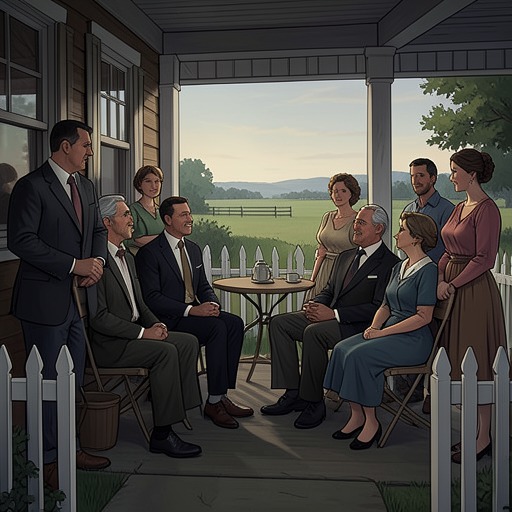
On an April day that threatened snow, the table was set for five, with finger bowls and butter plates. The clouds hung low over the mountains, and smoke from the bunkhouse settled nearby. Lola, the hired girl, had curled her hair with a lamp and curling tongs. By two o’clock, Rose and George had learned by telephone from Herndon that the Governor and his wife were indeed on their way. George reported that the Governor sounded cheerful and was looking forward to a drink; his wife also wanted one and might smoke. The possibility that official business would prevent the visit, which might have spared the household its ordeal, had disappeared.
A Guest Missing from the Table
George took responsibility for making cocktails while Rose was to talk with the visitors. The drinks came from bottles kept behind locked buffet doors, part of an assortment the Old Gent had guarded and restricted. George brought out gin and bitters and prepared the shaker on a silver tray. The arrangements gave the evening the appearance of confident hospitality, even as Rose and George remained preoccupied with whether Phil would join them.
After the Governor and his wife arrived, the men smoked cigars. George said his brother would be there soon and suggested that they begin cocktails. Rose then understood that Phil would not appear. Until that moment, she had worried about the explanations his unkempt appearance might require; now she wished he were present. Without him, she felt that the burden of keeping the occasion alive, and eventually of playing the piano, rested with her.
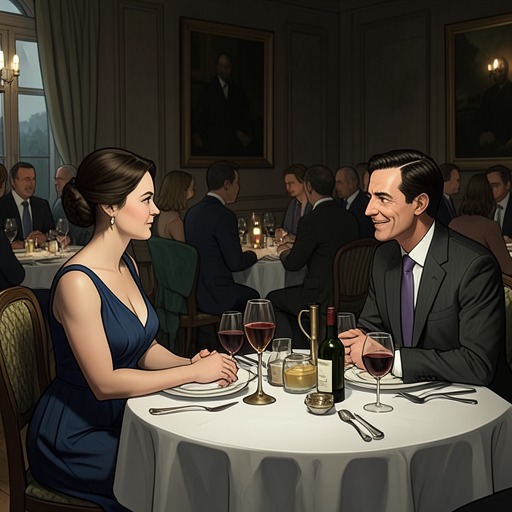
At the table, a remark about the cocktails being more suited to women drew a friendly response from the Governor’s wife, and the group smiled. But when conversation stalled, Rose found herself looking at the place set for Phil. George met her eyes with a miserable expression and rose to look for his brother. The Governor’s wife filled the silence with a story about a pack rat that had stolen spoons bearing the state crest and built a nest in the Governor’s bedroom closet. Rose listened, but could not respond warmly; she was waiting for signs that George had searched the bunkhouse and barn and returned. His absence stretched the pause around Phil’s empty place.
The Piano and the Failed Performance
The Governor’s wife encouraged Rose to play, and the Governor welcomed the suggestion as a way to bring the uncomfortable evening toward a close. George smiled proudly as Rose rose from the table. The piano carried a difficult association: its chords had provoked Phil’s vicious imitation, and Rose felt that the table had been arranged so that she would face the place he should have occupied. She imagined his malice pursuing her even in his absence.
Rose managed an easy Strauss waltz mechanically. Then George asked for Just Like a Gypsy, a simple, sentimental tune she had played for him at the inn on its old mechanical piano. She had given each phrase a small coda, a cascade of notes that lifted the melody beyond the printed music. George’s appreciation of the piece had helped draw her toward him in their early days. Its significance to them made the request more than a routine choice of music.
Rose rubbed her hands, took a breath, and touched the keys, but she could not make her fingers remember the tune. She waited as the clock prepared to strike, hoping the pause would release her from the blankness; when it struck, her mind and hands remained unresponsive. She turned from the piano and apologized, saying she could not remember the piece. George’s astonishment gave way to disappointment, the first she had seen in his face and the first disappointment from him that she could not repair. The Governor tried to reassure her, and his wife remarked that she, too, forgot things.
Departure and Aftermath
The Governor’s wife eventually said it was time to leave, remarking that the long summer was close. Outside, the sun had gone behind the mountains, and ice was already forming across a puddle beside the automobile. She called the evening lovely and suggested they meet again; George held the car door for her, and Rose also invited the couple to return. The farewells were courteous, but they did not undo the failures Rose had experienced inside.
After George went toward the bedroom, Rose silently removed Phil’s untouched plate, glass, and cutlery and returned them to the cupboard. She took care that neither the china nor the silver made a sound. The unused place had been a source of tension during dinner; clearing it afterward spared her from having to see the setting the next morning. George, already in bed, assumed that Rose’s poor playing came from stage fright or from the cocktails. She did not explain that neither was the cause. She also remembered telling the Governor’s wife about her earlier piano-playing days in a motion-picture palace, a disclosure she regretted because she had wanted the woman to think George had married someone of worth.
Rose had a splitting headache, and the night did not bring an easy conversation between the couple. George turned away and lay breathing evenly; Rose pretended to be asleep as she reconsidered the day and thought about Johnny, her first husband, and the dilemma of having been married twice. When she reached for George’s hand, his grew rigid. The dinner’s public courtesies thus give way to a more private distance. Its significance lies not in an overt confrontation but in the accumulated gap between the graceful evening Rose hoped to stage and the silences she could neither explain nor overcome.