The strong and the weak
The Power of the Dog (Thomas Savage Edition)The strong and the weak names a governing logic in the novel, not merely a contest of physical power. It shapes the way people single out those they consider vulnerable, the institutions that restrict their choices, and the ways cruelty can be handed down as ordinary behavior. Against that logic, Johnny Gordon offers Peter Gordon a different measure of strength: the effort to remove obstacles for people who need or love someone.
A social law of dominance
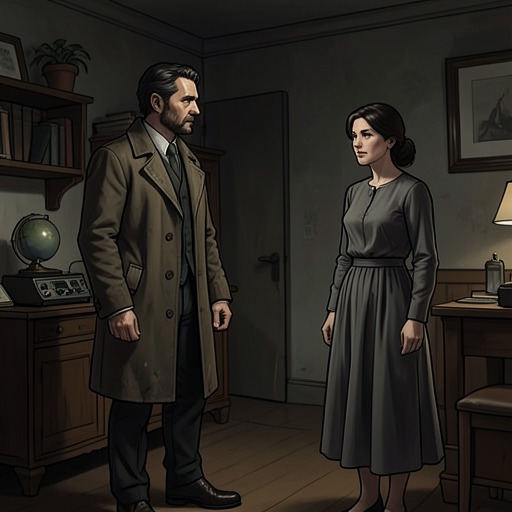
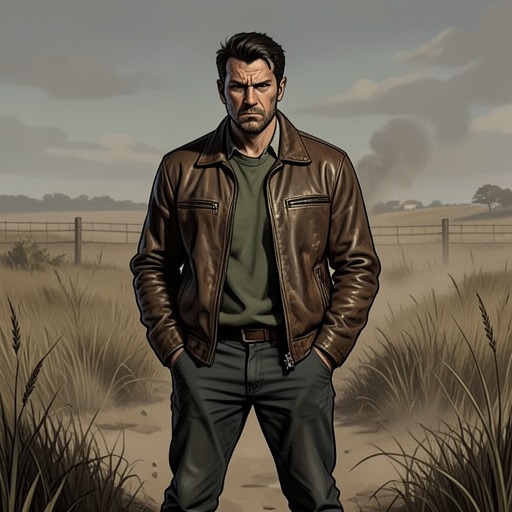
Phil Burbank and George Burbank are brothers and joint owners of the largest ranch in their Montana valley, but their temperaments sharply diverge. Phil Burbank is intellectually brilliant and committed to dominance; his contempt for weakness accompanies a capacity for cruelty. George Burbank is quieter and gentle. Their contrast gives the principle a domestic form: strength can mean the power to impose one’s will, while gentleness need not mean an absence of character or consequence.
At school, Peter Gordon experiences the same hierarchy among children. The narrative compares his treatment to the way poultry in a pen turns on birds marked as maimed or strange. Peter is hazed and mocked for seeming insufficiently masculine, but the insult that finally makes him fight back concerns his father, whom the other boys call a drunk. The distinction matters: Peter has endured being made an outsider, yet the attack on Johnny Gordon crosses a line of familial loyalty. His classmates surround him and evade his attempt to retaliate. He recognizes the scene as part of a recurring pattern: the boys’ fathers and grandfathers had formed similar circles around earlier outcasts, and their own sons may do so in turn. Cruelty appears less as an isolated act than as a social habit passed between generations.
Johnny Gordon’s recognition of vulnerability
Johnny Gordon’s understanding of weakness is shaped by private distress as well as what he witnesses beyond his family. After Peter brings him ten careful drawings of plant root systems from near the river, Johnny recognizes their quality and tells his son he is proud. Peter says that Johnny taught him; Johnny then wonders whether the gift comes from pity. During the following year Johnny does not drink, but he also stops singing, loses weight, and withdraws from intimacy. The narrative does not reduce his later reflections to a single cause, but this period places them alongside a man who has become acutely aware of failure and exposure.
After delivering a woman’s dead child, Johnny thinks of the infant as spared a world governed by the destruction of the weak by the strong. On his return from the hills, he has seen thirty Indigenous families being driven from the last of their land in the valley and sent to a reservation. He understands their removal as dispossession, not as a neutral change of residence: people who have lost their land are made wards of the government and dependent on its limited charity. His thought connects a child’s vulnerability to a public order in which the powerful can decide whose home, movement, and future count.
Johnny’s conversation with Peter turns that recognition into advice. He tells his son not to let other people’s judgments define what they know of another person’s heart, but warns that ignoring others can harden a person. He also sees Peter’s potential strength as dangerous: Peter could hurt people terribly. Johnny defines kindness as trying to remove obstacles from the way of those who love or need someone. He admits that he himself has been an obstacle to Peter, thanks him for understanding, and places a hand on his son’s head before leaving. This is no promise that the world will become fair; it is an ethical alternative to using strength to dominate.
Dispossession made into policy
The novel extends the strong-and-weak principle from individual conduct to the administration of Indigenous life. Its account of the valley’s final removals stresses that the government no longer pretends to honor treaties: land has become too valuable, while officials fear white voters more than Indigenous resistance. The families are sent toward the dry flats of southern Idaho, where the account emphasizes poor soil, scarce trees, and sulfurous water. The contrast between the value of land to those taking it and the harsh conditions imposed on those removed exposes the unequal distribution of power and security.
On the reservation, restrictions make that inequality concrete. Liquor is prohibited under a paternalistic rule that assumes Indigenous people cannot drink as white people do. Leaving requires a permit, granted only for a pressing reason; because officials assume residents have nowhere to go and no one to shelter them, the permission system can make confinement appear unnecessary to question. Firearms are prohibited, while meat is distributed through the government store. The reservation’s authority works through rules governing movement and access, not only through the prior removal from land. A well-kept agent’s house and carefully observed flag rituals accompany this administrative order; respectable appearances do not undo its restrictions.
The gate and the limits of welcome
Edward Nappo’s journey with his son brings the abstract principle to a ranch boundary. Their route reaches a gate Phil Burbank cannot remember, a detail that unsettles any easy assumption that the land’s present divisions are self-evident. Edward tells Phil that his father was a chief. Phil dismisses the significance of that history and orders Edward and the boy to leave, despite Edward’s request to stay for a couple of days while their old horse rests. The refusal turns the ranch gate into a point where private ownership and a longer history of dispossession meet. Phil’s judgment of Indigenous people, elsewhere expressed through contemptuous generalizations, makes his dismissal part of a broader refusal to recognize their claims or circumstances.
The scene does not present Edward’s request as a successful challenge to Phil’s authority. Later, Rose Gordon Burbank recounts seeing the Indigenous cart on the road: its passengers had been leading the horse, then rode in the cart before getting out and leading it again at the rise. Her observation, and George Burbank’s questions about what she saw, register the family’s encounter with the travelers without claiming an outcome the scene does not establish. Across these episodes, the novel places individual acts of exclusion beside rules and property boundaries that make the powerful person’s decision effective. Johnny’s counsel to Peter supplies the counter-principle: strength becomes humane when it is used to clear a way for someone vulnerable, rather than to close one.