
The Western Landscape as Moral Force
The Power of the Dog (Thomas Savage Edition)This flow traces how the land shapes work, memory, exclusion, and the characters’ sense of what is possible.
increasing Bearing strength in each event
 decreasing
Bearing strength in each eventdecreasingA Vast and Demanding Country
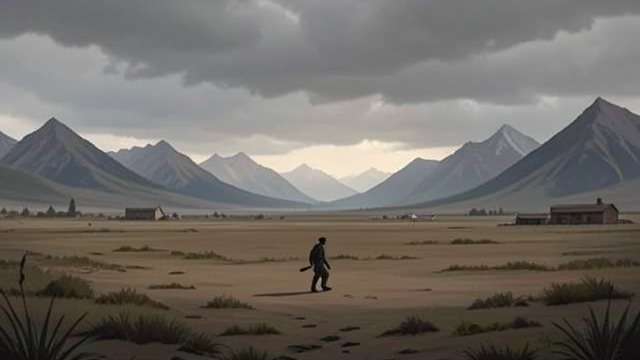
A Vast and Demanding Country
Scale and Labor
The open land requires cattle work, careful travel, and endurance against weather. People’s ambitions appear small beside mountains, distance, and uncertain water.
A Shaping Environment
The landscape does more than provide a setting. It influences which livelihoods succeed and which people are forced to leave.
Dryland Failure
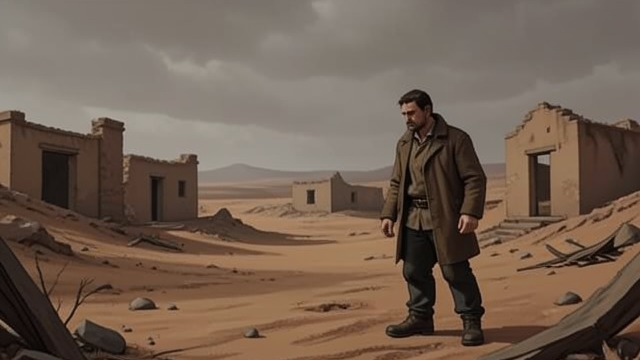
Dryland Failure
Promises of Settlement
Farmers arrive after being encouraged to take land, but rain is scarce and water remains controlled by large ranches. Many farms fail and their buildings are abandoned.
Nature and Power Combined
The hardship is not simply natural: unequal access to water makes the landscape more punishing for settlers. The abandoned homesteads preserve the cost of optimism without resources.
The Dog in the Hills
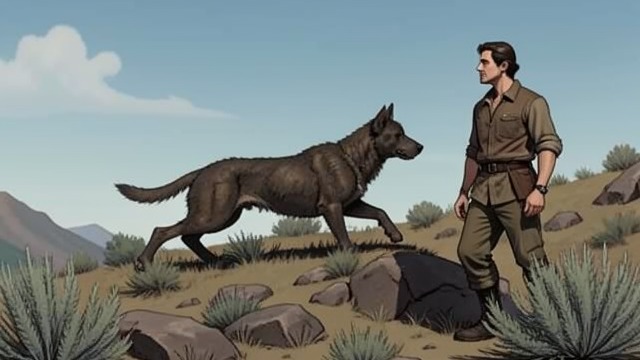
The Dog in the Hills
Nature as Pattern
Phil sees a running dog formed by rocks and sagebrush on the hill. The image gives him a sense of unusual perception and connects him to Bronco Henry.
A Private Measure
Phil treats recognition of the dog as evidence that another person can understand him. The landscape becomes a test of intimacy as well as a source of imaginative meaning.
A Mountain Returned To
A Mountain Returned To
Ancestral Memory
Edward Nappo brings his son toward the mountains to show him the land his grandfather knew. The journey carries family memory through a country changed by removal and fencing.
A Blocked Relationship
Phil denies them access, making the landscape a possession guarded by ranch authority. Rose’s later invitation offers shelter but cannot restore the lost homeland.
The Land Holds the Ending
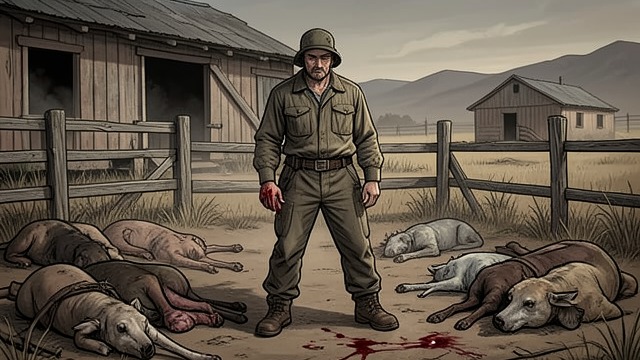
The Land Holds the Ending
Natural Materials, Human Consequences
Hides, animal disease, and a small wound connect the ranch’s ordinary work to Phil’s death. The land supplies the material conditions for an outcome no character publicly anticipates.
A Landscape Beyond Control
The ranch may be managed, fenced, and worked, but its biological dangers exceed Phil’s confidence. The country shapes the ending without offering a simple moral judgment.
The opening cattle-drive era
The years before the main story
During Phil’s adult years
Summer 1925
Late summer 1925
