“To be kind is to try to remove obstacles”
The Power of the Dog (Thomas Savage Edition)Johnny Gordon’s definition of kindness as an effort to remove obstacles makes the expression a practical ethic rather than a vague appeal to good feeling. Spoken to Peter in a conversation about other people’s judgments and the danger of becoming hard, it links strength with responsibility and ends in a moment of tenderness between father and son.
The Principle in Context
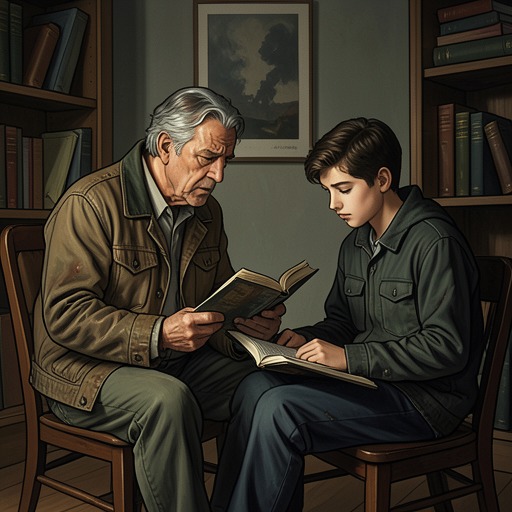
The exchange begins with Johnny advising Peter not to be governed by what people say, because they cannot know another person’s heart. Peter answers, “I’ll never mind what people say.” Johnny immediately qualifies that resolve: many people who stop caring about others’ opinions grow hard. His repetition of “You must be kind” makes the correction sound urgent, not ornamental. The advice is therefore not simply to resist judgment; it is to resist judgment without surrendering concern for other people.
Johnny then names the risk he sees in his son. Peter is strong, and Johnny believes that the man he will become could hurt people terribly. The warning gives the definition its stakes: kindness is a discipline that must accompany strength, because strength can cause harm when detached from care. Asked whether he understands kindness, Peter answers, “I’m not sure whether I do, father.” His uncertainty prompts Johnny to replace an abstract virtue with a testable form of conduct: “To be kind is to try to remove obstacles in the way of those who love or need you.”
From Virtue to Action
The definition makes kindness active. Its key verb is “remove”: kindness requires an attempt to change a difficulty in another person’s path, rather than merely feeling sympathy or avoiding cruelty. At the same time, “try” makes the standard one of effort, not guaranteed success. The line specifies whom that effort serves—those who love or need the person acting—so the principle is relational rather than detached from particular human ties.
The word “obstacles” remains open enough to encompass different kinds of impediment without naming any in this exchange. That breadth matters: Johnny gives Peter a way to judge conduct, not a list of prescribed gestures. The measure is whether a person tries to make life less obstructed for someone who depends on or cares for them. In this sense, kindness answers the earlier warning about strength. It directs power away from injury and toward assistance, while leaving the circumstances of assistance to be recognized in each relationship.
Johnny’s Self-Recognition
The advice becomes more intimate when Johnny applies its language to himself. After Peter says he understands, Johnny admits, “I’ve always been something of an obstacle, Peter.” The confession changes the definition from paternal instruction into self-judgment. Johnny is not speaking only about what Peter ought to become; he recognizes a failure, or at least a burden, in his own place within their relationship. The text does not specify which particular actions he means, so the admission’s force lies in its plainness rather than in a detailed account of blame.
His next words, “But now I feel good. Thank you for understanding,” make Peter’s response part of the exchange’s emotional consequence. The movement is from Johnny’s fear that Peter may grow hard, through Peter’s uncertainty, to a brief assurance between them. That resolution is modest: Peter has not supplied a history or an argument, only acknowledged the definition. Yet Johnny receives that understanding as meaningful enough to say that he feels good.
The Gesture and Its Narrative Weight
The scene places this counsel beneath the turning windmill, which moves in a cold, dry wind “to no purpose,” doing no work and only going through the motions. The image gives the conversation a sharp counterpoint: mechanical motion without useful action stands beside Johnny’s definition of kindness as an effort that helps another person. The uselessly turning windmill is also linked to Johnny’s own past injury; the narration says it had turned on him and cut him before Peter was born. The juxtaposition does not make the windmill a direct explanation of Johnny’s words, but it gives the exchange a setting marked by futile motion and bodily harm.
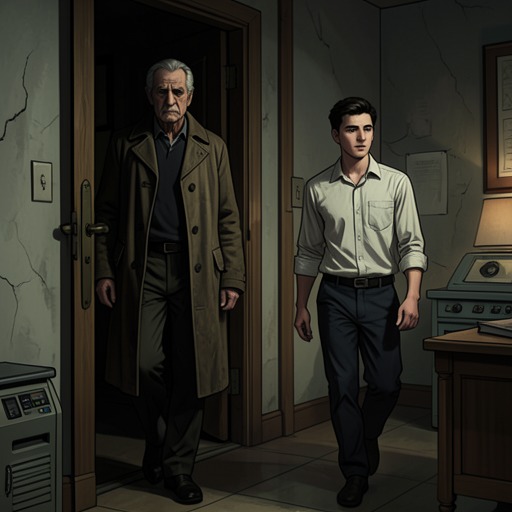
After thanking Peter, Johnny stands for another moment with a small smile, steps forward, and lays the flat of his hand on Peter’s head, calling him “Good, good boy.” The touch supplies an answer beyond argument: Johnny’s care is expressed in a physical gesture, while his definition has just described care as an effort made for another. He then leaves the room and goes upstairs. Thus the expression remains both a general principle and a particular act of fatherly instruction, spoken at a moment when Johnny acknowledges his own failings and accepts Peter’s understanding.