George courts and marries Rose
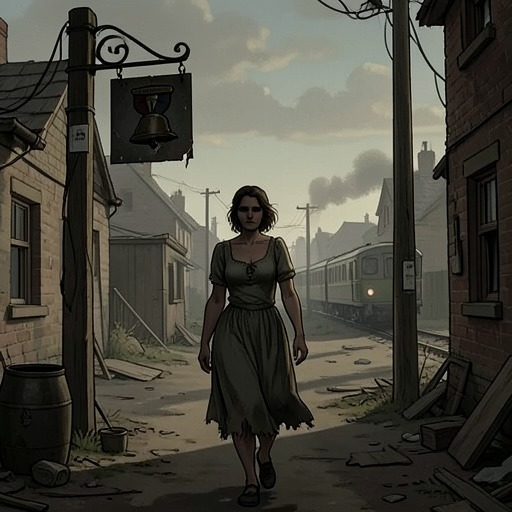
The Power of the Dog (Thomas Savage Edition)George Burbank courts and marries Rose Gordon Burbank through a sequence of modest visits, offers of help, and increasingly direct requests. His courtship joins affection to practical care: he offers to pay Rose’s bill, promises to support Peter Gordon’s schooling even if she does not marry him, and ultimately asks to marry her. Their private wedding after Christmas in Herndon takes account of Peter’s feelings, making the marriage not simply a new bond between two adults but a change the family discusses and accepts together.
An Opening Made Through Practical Help
When George finds Rose crying, he recognizes that he is out of his depth. He thinks he might have known how to deal with anger, but has little experience with tears. His first response is concrete: he has come to pay the bill. Rose shakes her head, and George changes course, asking whether she would send it to him instead. The exchange establishes the restrained, practical manner in which he approaches her distress. He does not claim to understand it or press her to explain; he offers assistance and leaves her room to refuse.
George returns rather than treating the declined offer as the end of their connection. He knocks and says he has come to see her. The difference matters: paying a bill could remain an isolated act of help, while coming back makes space for companionship. At another visit, he likes the flour on Rose’s hands and urges her to expect the people who are coming. The conversation pleases him, and he enjoys sitting with her. His account of love is therefore grounded less in grand declarations than in the ordinary pleasure of being beside someone and talking together.
Affection and the Offer of a Future
George does not present himself as an authority on love. He tells himself that he knows no more about it than he does about tears, even as he recognizes that being in the presence of a loved person is itself a source of delight. The contrast gives his courtship its characteristic tone: he is unsure how to name or manage feeling, but his repeated visits and willingness to remain with Rose make his attachment legible through action.
As their familiarity grows, George asks whether he may call her Rose and whether she will call him George. The request to use first names marks a small but deliberate change in their relation, asking for mutual personal recognition before he asks for marriage. A Sunday later, he makes the larger request. Rose’s response raises the question of whether he likes her and points toward the possibility of a future together, while also bringing Peter’s prospects into view.
George answers with a promise about Peter’s education. He says he could put the boy through school, at any school, and makes clear that this help is not conditional on Rose marrying him. He would lend her the money or otherwise assist her and Peter regardless of her decision. At the same time, he says that their laughter and conversation are worth anything he could do for them. His offer thus has two distinct parts: material support for Rose’s son and an expression of the value George places on their time together. The first does not serve as a price for the second; he explicitly separates the assistance from the marriage proposal.
Marriage and Peter’s Place in It
Rose and George marry after Christmas in the rectory in Herndon. George wonders whether they should invite people, but Rose thinks the wedding should be private because of Peter. George appears to understand and leaves the decision to her, smiling. The small ceremony follows the private character of their courtship and respects Rose’s concern for her son rather than turning the marriage into a public occasion.
Peter’s response gives that concern a direct place in the story. Rose explains that she will always love Peter’s father and asks whether Peter would understand her marrying again, especially if he might be hurt by it. Peter smiles and asks whether she understands. The exchange does not erase his father or suggest that the new marriage replaces that bond. Instead, it presents remarriage as something Rose discusses with her son while affirming that her love for his father remains. Peter’s smile and his question indicate understanding within the scene, without making the transition more elaborate than the evidence allows.
The Marriage Within the Ranch Household
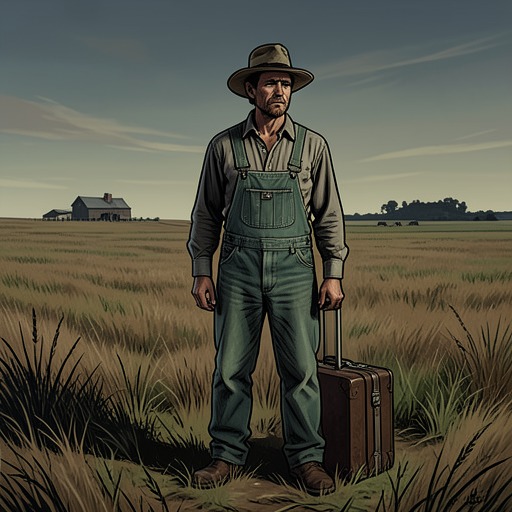
The later division of responsibilities at the Burbank Ranch gives context to the different roles George and his brother Phil Burbank occupy in the household’s working life. George sits at the head of the table, keeps the books, talks with buyers, writes letters, answers the telephone, and keeps his Reo motorcar running. Phil oversees haying, checks and repairs machinery, organizes tents and work camps, directs irrigation, inspects the hay, and sets the start of the season for as soon as possible after the Fourth of July. Their contrasting duties show the ranch as both a business requiring communication and record-keeping and a large operation dependent on seasonal labor.
That labor has a demanding rhythm: the haying lasts ninety days, and the men’s brief celebration around Independence Day precedes the work. The mowing crews operate equipment whose lowered cutter bars make the work dangerous; their skill and risks bring extra pay and a measure of deference, including newer tents and first choice of the meat. These details do not define George and Rose’s courtship, but they place their marriage within a household organized around sharply divided responsibilities and the ranch’s seasonal demands. Against that setting, George’s visits to Rose are a quieter form of commitment: he offers practical help without making it contingent on marriage, seeks mutual intimacy in small steps, and includes Peter in the decision that changes their family.