George serves the noisy guests at Rose's inn
The Power of the Dog (Thomas Savage Edition)George serves the noisy guests at Rose's inn in a small but consequential reversal: when the party overwhelms Rose, he crosses the swinging door and takes on the work himself, turning a moment of domestic strain into a moment of shared amusement. His intervention makes him newly visible to Rose—not just as a quiet presence, but as someone who can act when she is worried and unsettle a room without raising his voice.
The Party and Rose’s Concern
The guests are part of a new, fast-moving crowd from Herndon, associated with fashionable roadhouses, late nights, and restless entertainment. Among them are a druggist, an undertaker, two blonde women, and the leading dentist of Herndon, accompanied by Consuela, the dark beauty who hands him instruments at his office. This busy party is not a subdued gathering: the people are already noisy, and their dancing makes the floor shake all the way into the kitchen.
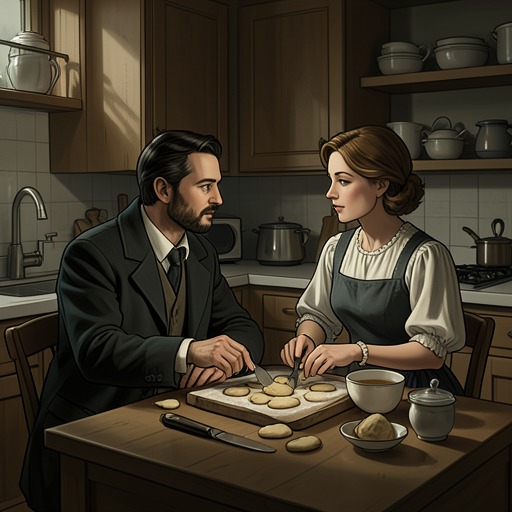
Rose hears the disturbance from the kitchen and regrets having put the piano in the room. She is not merely annoyed by the noise. The meal still needs to be served, and she is counting on Peter to return and help with the salad. She thinks through the chicken and the timing, then decides she must go and fetch him. The scene places the ordinary demands of hosting—food, guests, and a missing helper—against a party whose energy is escaping her control.
George Takes the Salad Through
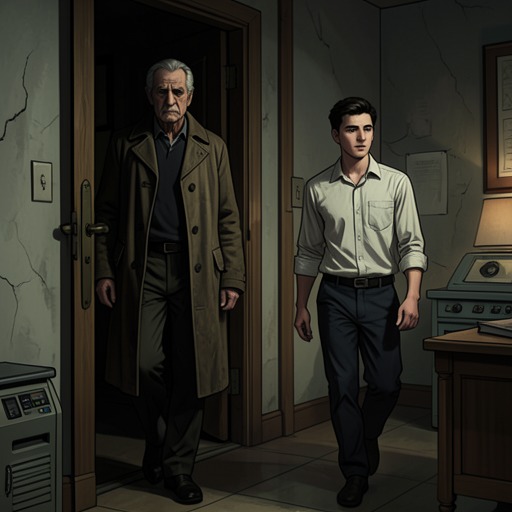
Before Rose can leave, George offers to serve the salad himself. He picks up two plates from the counter and shoulders open the swinging door before she can answer. From the kitchen, Rose sees the dark beauty kicking high and swinging her long jet beads as the party carries on around her. The movement beyond the doorway makes George’s quiet entrance all the more conspicuous: he walks directly into the noisy room with plates in hand, taking up the task Rose had meant to manage.
The voices rise, and then the sound stops abruptly. The piano chord remains unresolved. In the sudden silence, George greets the dentist and laughs, presenting himself as the party’s new waiter. His mild, unruffled greeting punctures the guests’ momentum without any reported confrontation. The scene’s turn depends on contrast: a room full of dancers and raised voices gives way to stillness at the arrival of a man who has come only to serve salad.
Rose’s Reversal from Alarm to Laughter
When George returns to the kitchen for more salad, Rose is leaning against the sink. He assumes she is weeping, having once found her in tears before, but this time she is laughing. She tells him that he was perfect and that the guests were shocked; she can hardly finish the thought before doubling over again. The reaction reverses the scene’s emotional direction. Rose had been appalled when George first went through the door, but the very action that startled her has delighted her.
George, for his part, recognizes that he has handled the moment well. No one had thought him amusing before, and Rose’s laughter gives his unexpected performance a response he is not accustomed to receiving. Later, over coffee in the kitchen, she tells him that twice, when she has been worried, he has been there. The exchange gives the episode weight beyond its comic interruption: Rose names a pattern of reassurance in their developing companionship, while George’s practical help has given her a fresh reason to trust his presence.
Dramatic Irony and Growing Intimacy
Rose’s growing warmth toward George rests on incomplete knowledge. She does not know that he was the man who tore Johnny Gordon’s shirt and threw him against a wall; because Johnny never named his assailant, she has not connected George with that humiliation. She has also begun to rationalize the incident of the paper flowers, wondering whether Phil Burbank meant anything by it. Against this background, her appreciation of George’s considerate intervention is genuine, but the reader can see the concealed history that she cannot.
The serving scene therefore joins comedy to dramatic irony. George’s entrance offers Rose immediate help, and his composure turns an unruly party into a story they can laugh about together. Her later acknowledgment that he has been present when she was worried marks a step toward intimacy, culminating in George’s grave request that they use each other’s first names. The event does not erase the undisclosed violence in his past; instead, it shows how trust can grow through small acts while important knowledge remains withheld.