Just Like a Gypsy
The Power of the Dog (Thomas Savage Edition)Just Like a Gypsy is a piano piece that links Rose Gordon Burbank’s musical practice to her affection for George Burbank, then becomes the piece she cannot perform at the governor’s dinner. Its changing place in the story—from a tune shared through affection to a source of public pressure—makes Rose’s limited repertoire carry emotional weight beyond its modest scale.
Place in Rose’s Repertoire
The piece belongs to a small repertoire: Rose plays a few Strauss waltzes, a military march, and sugary accompaniments to songs. She gives Just Like a Gypsy a personal touch by adding a little cascade of notes after each phrase, lifting the written music with a coda of her own. The tune is sentimental and thoughtful, carrying, in Rose’s experience, a sense of longing that seems to reach beyond the sheet music.
George’s pride in Rose’s modest musical ability frightens her, though he does not notice when she misses a note. She practices diligently so that she can play what she knows well and make him proud. The piece thus sits between her own desire to improve and her wish to answer the affection he shows for her playing.
An Early Bond with George
Rose remembers that George liked Just Like a Gypsy when she played it for him at the inn on the old mechanical piano. She wonders whether his fondness for the tune helped begin her own affection for him in those first days. The song’s significance is therefore relational rather than professional: its place in their courtship rests on a shared response to a piece Rose performs, not on her mastery of a demanding repertoire.
That early association gives the tune a private meaning before it becomes a public request. George, ordinarily prosaic and tongue-tied in Rose’s view, recognizes something in the music that she recognizes too. His later request reaches back to that initial connection, even as the dinner setting makes the same music harder for her to summon.
Practice and the Banjo
Rose’s practice is also shaped by Phil Burbank’s presence in the house. When she plays, he leaves the room so pointedly that she waits until he is elsewhere or has shut his bedroom door before sitting at the piano. She suspects that his musical taste is better than George’s and that he silently laughs at her because she practices to impress the governor.
One afternoon, Rose hears Phil’s banjo from behind his closed bedroom door. When she starts playing, the banjo starts too; when she pauses, it stops. She cautiously resumes and hears the pattern repeat, realizing that Phil is playing precisely what she is playing. The moment connects her exposed, self-conscious practice to Phil’s concealed musical presence without resolving what he intends by matching her.
The Governor’s Dinner
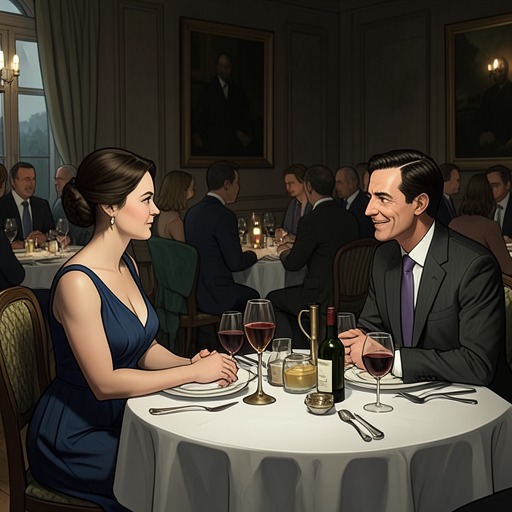
At the dinner, George asks Rose to play the tune he likes, identifying it as the piece about the gypsy. Rose names Just Like a Gypsy and blushes, aware that George knows she understands his request. But when she rubs her hands, takes a breath, and touches the keys, her fingers have no feeling or knowledge of the music. She folds her hands in her lap and cannot remember the piece.
The clock strikes while she waits for its chime to release her from the spell, but her mind remains blank. She turns on the bench, smiles, and apologizes. George is amazed and keeps silent; Rose sees disappointment in his face for the first time and cannot repair it. The failure overturns the tune’s earlier intimacy: a piece associated with the beginning of her affection for George becomes a public measure of what pressure has made her unable to do.
Reappearance as a Motif
Later, the narration calls Rose Woozy-Rosie as she plays Just Like a Gypsy. The return of the song preserves its association with her piano playing while the nickname reduces that performance to a target of mockery. Across its appearances, the tune moves from Rose’s self-fashioned coda and George’s early affection to anxious practice, public failure, and a later recollection colored by ridicule.