Medical Books Left by John Gordon
The Power of the Dog (Thomas Savage Edition)Medical Books Left by John Gordon are both a family inheritance and the material source of knowledge that shapes Peter Gordon’s life. Kept close through his years of study, they preserve a connection to Johnny Gordon, the physician whose diagnostic ability Peter inherits; at the story’s end, the books also give Peter the precise medical knowledge he uses to bring about Phil Burbank’s death.
Identity and Physical Form
The collection is substantial and unmistakable: it includes the Britannica, a complete medical encyclopedia, and heavy, musty, secondhand black books about flesh and bone. Their weight and age are part of their presence in Peter’s life. These are not a few convenient reference volumes but an extensive body of medical learning, gathered by his father and retained by his son.
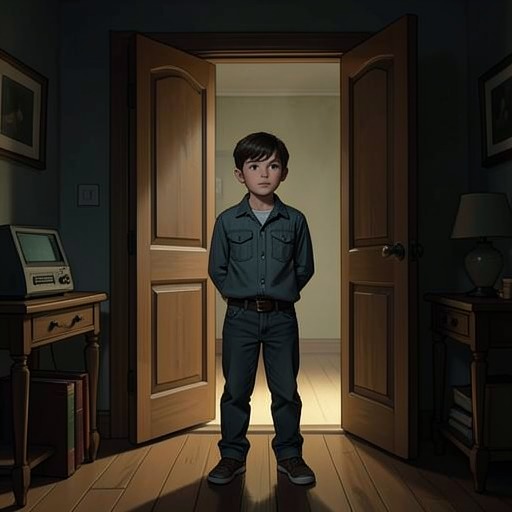
At The Inn / Red Mill, the books fill shelves Peter has built in the shed attached to the building. The windmill turns above it, while inside Peter keeps the books alongside his other scientific materials: stuffed gophers and rabbits, beakers, retorts, and chemical equipment. The shed gives the collection a working setting. It is not merely stored away as a memorial; Peter reads and studies there, among the instruments and specimens of his investigations.
Johnny Gordon and the Inheritance of Knowledge
The books carry the presence of Johnny Gordon, whose medical career was marked by poverty and unrealized possibility. When Johnny encounters Alma, he recognizes from her eyes, complexion, and mental state that her problem is not consumption. His ability to diagnose is described as extraordinary: the narrative imagines that, had he lived in another place and time, he might have had a successful medical office. It also makes clear that he passed his diagnostic gift to Peter.
That inheritance is intimate as well as intellectual. In the shed, Johnny looks at a slide Peter has prepared of a bacillus that kills rodents and praises both the specimen and the boy’s drawing. He notices Peter’s fine hands and struggles to say what he means before finally telling his son that he loves him. Peter answers that he loves his father too. The books belong to the same bond: they make Johnny’s work and learning available to Peter after his father is gone, while Peter’s study gives their shared interest a future.
The setting also clarifies why the collection matters to Peter beyond its scientific contents. At school in Herndon, he endures taunts and jibes; in the shed, he can withdraw into a private world organized around observation, books, and experiments. His medical reading is therefore both a form of education and part of a life in which he has space to concentrate away from other people’s judgments.
The Books at the Ranch
When Rose Gordon Burbank considers Peter’s move to the ranch for the summer, she suggests that he leave his books behind because there are so many. Peter asks whether she understands why he has considered doing so. Her uncertainty reflects the strain she feels about his safety and his prospects there: his neatness and slight lisp, once sources of pride to her, now seem likely to invite Phil’s scorn. The books are part of the practical question of what Peter will bring, but they also represent the intellectual life and the attachment to his father that Rose fears may not be secure at the ranch.
The collection’s arrival has consequences for the household’s objects and relationships. George Burbank tells Phil that he has given Peter the bookcase because Peter wants it for his father’s books. Phil had meant to turn it into a gun case. His reaction reveals how the collection’s presence is bound up with the hostility he directs at Peter: Phil resents the choice and mocks the boy to the ranch hands as Miss Nancy. The books themselves are not the target of that mockery, but their place in Peter’s new life makes his difference visible to Phil and the men who follow his lead.
Peter’s books also sit uneasily within Rose’s and Peter’s new domestic arrangements. In Rose’s room, Peter notices George’s razors beside her perfumes and creams, and thinks of the books and the private life they represent. His father’s collection is thus a continuing link to the earlier household in Herndon, even as Peter begins forming relationships at the ranch that may take him away from his mother’s protection.
Medical Knowledge and the Ending
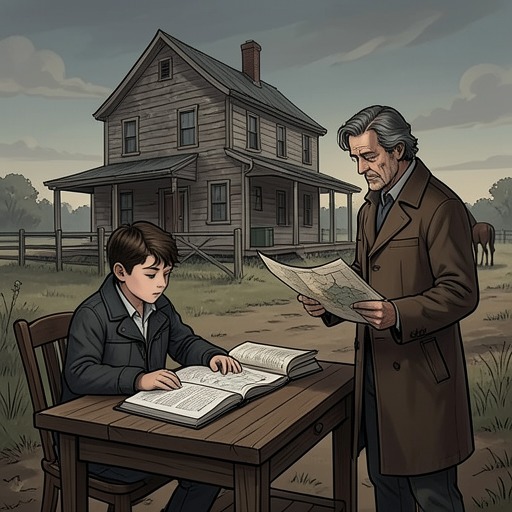
The books’ decisive use comes when Peter discovers that anthrax, called blackleg locally, is an animal disease that can pass to humans through cuts or breaks in the skin. His reading supplies a specific route of infection: handling the hide of a diseased animal, as when a man with damaged hands uses such a hide to braid a rawhide rope. This is practical knowledge about transmission, not merely a general familiarity with disease.
That knowledge becomes the concealed means by which Peter kills Phil. The collection’s function has therefore changed without ceasing to be an inheritance: the same books that belonged to a physician and supported his son’s study now enable an intentional act. At the close, Peter considers the line from the Book of Common Prayer about deliverance from the power of the dog as a possible final addition to his scrapbook. He understands the outcome as deliverance for his mother, achieved through his father’s sacrifice and through the knowledge he gained from his father’s black books.
Narrative Significance
The books join three forms of inheritance: a father’s learning, a son’s intellectual formation, and the consequences of knowledge applied outside healing. Johnny’s diagnostic gift passes to Peter as an aptitude, while the volumes offer the information that makes Peter’s final plan possible. The distinction matters: the books do not simply symbolize a dead father, but hold knowledge that can be studied, tested, and put to use.
Their narrative role also turns on a stark reversal. In the shed, books and scientific apparatus shelter Peter from the daily hostility he faces at school; later, his reading equips him to act within the violent conflict at the ranch. The volumes that once supported a private world of study become part of the chain of cause and effect that ends Phil’s life. Their inheritance is at once sustaining and dangerous, shaped not only by what Johnny knew but by what Peter chooses to do with it.