Phil Burbank–Rose Burbank: Mockery and Hostility
The Power of the Dog (Thomas Savage Edition)Phil Burbank and Rose Burbank: Mockery and Hostility is a relationship shaped by an imbalance of power inside a shared home: Phil withholds ordinary speech and makes his contempt explicit, while Rose tries to interpret the silence, preserve her marriage to George Burbank, and find a way to approach him. Their conflict becomes most painful when Rose finally asks Phil why he dislikes her and receives an answer that connects his hostility to her access to George’s alcohol.
A household organized around silence
Rose experiences Phil’s presence as a pressure even when he is not speaking. She wonders whether George understands that Phil has spoken directly to her no more than twice, and then only at the table, to name something he cannot reach with his long arms, such as the salt or bread. She cannot tell whether George is unaware of the estrangement, assumes it is natural because Phil and Rose have little in common, or recognizes the strain but manages it by ignoring it. The uncertainty leaves Rose physically unsettled: when she speaks of Phil, her mouth dries and her tongue thickens, and thoughts that had been pleasant and coherent scatter.
The strained quiet is not simply an absence of conversation. Rose experiences Phil as someone whose glance and eyes can drain her courage, and whose power seems to her to reside even in small actions such as closing a door or breaking open a book. She fears the jagged, derisive laughter she has heard from the bunkhouse when Phil visits the ranch hands, unsure whether it is directed at her or at her son, Peter Gordon. Her uncertainty about the object of his contempt deepens her isolation: she feels its force without knowing where it will fall.
Marriage, kinship, and the impossible move
Rose tries to imagine a practical solution to living with Phil. She thinks that he might build a home of his own nearby, better suited to him, while she and George remained together elsewhere on the ranch. But the imagined arrangement collapses under the weight of family loyalty and domestic reality. Rose cannot picture George leaving his brother in the sixteen-room house, and she sees no possibility of either couple moving. Her marriage therefore offers no simple escape from the antagonism: challenging Phil may also mean challenging George’s affection for his brother, while remaining silent leaves her trapped in the same household.
Rose does not present herself as liking Phil or expecting that they could become close. She understands that he would be no happier with her than she is with him, yet insists to herself that he is a human being to whom she might still offer friendship. What she cannot settle is how to speak without turning the confrontation into an accusation that George might resent. She rehearses imagined conversations, each beginning with the same direct question about why Phil dislikes her, but repeatedly loses her nerve when she is alone in the living room and imagines approaching him. In her private reckoning, Phil seems at once merely another man with secret problems and something beyond the reach of ordinary human speech.
The governor’s dinner and Rose’s apprehension
Phil’s absence from the governor’s dinner at the Burbank ranch makes the relationship visible through what Rose expects him to do and what his absence means. Before she knows he will not arrive, she wonders whether his appearance would require an explanation: his clothes, weather-roughened hair, and hands only casually washed would contrast with the occasion. Once George says his brother will come later, however, Rose realizes Phil will not appear and begins silently hoping that he will. Without him, she feels the evening’s success depends on her piano playing, while the conversation has fallen into the commonplaces George regards as dull.
That reversal captures how thoroughly Phil’s behavior governs Rose’s attention. His presence threatens to expose the divide between ranch life and a formal social occasion; his nonappearance leaves her feeling that the burden of performance has shifted onto her. The dinner does not resolve their conflict. Instead, it shows Rose anticipating Phil even when he is elsewhere and measuring the occasion by the pressure his presence, or absence, places on her.
The Indian question and Rose’s attempt to speak
Rose connects the strain with Phil to their disagreement over the Indians, though she also questions whether that disagreement truly changed his attitude. She recalls having supported a small act of assistance: grass for an old horse, a few potatoes, and beef that would otherwise spoil. In summer, she reasons, a quarter of meat regularly went bad and became food for magpies, dogs, and feral cats. Against that waste, she sets the humiliation of a child. She believes she would have been cowardly not to speak up, yet also concludes that Phil’s treatment of her had been much the same before the dispute.
The episode sharpens rather than simplifies their conflict. Rose understands her intervention as ordinary kindness and cannot see what she could have done differently; at the same time, she fears the force with which Phil seems able to make her feel that she has crossed him. She wants to speak to him not only about his rudeness but also to offer friendship again. Her effort to do so is entangled with her dependence on courage that she associates with the locked door and bottle she has hidden in the bathroom hamper. Even the approach to Phil is caught between her wish to act and the means by which she tries to steady herself.
The confrontation and its aftermath
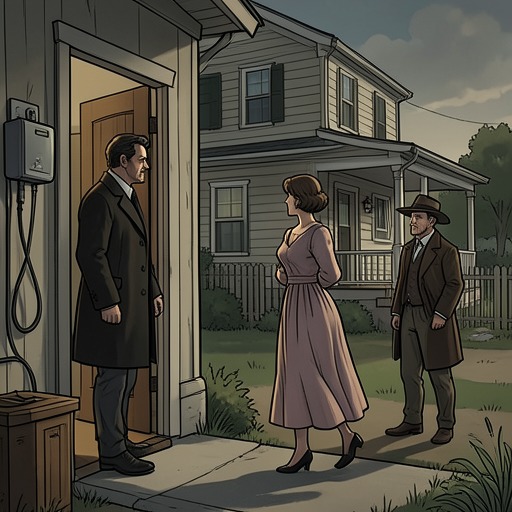
When Rose finally addresses Phil, she prepares herself with small, deliberate gestures. She chooses a book from the bookcase and holds it with a finger marking her place, wanting something to do with her hands. She asks why he dislikes her in what she intends as an open, friendly, calm manner. After a silence, she asks him to tell her. Phil answers that he dislikes her because she is a cheap schemer and gets into George’s booze, then returns his attention to his magazine. His response does not explore the history Rose has been trying to understand; it reduces the conflict to a contemptuous judgment and an accusation about drinking.
Rose touches her hair, turns, and walks as straight as she can to the pink bedroom, closing the door behind her. Once inside, she sags, moves by touching the furniture, and lies face down on the bed. She is dry-eyed but sick with cold despite the summer air. Sounds from outside—the bunkhouse latch, rifle reports, and the men calling out over their shooting at magpies—temporarily keep Phil’s voice from her attention, but they cannot undo the shock of his words. She feels suffocated by the gap between her intention to protect Peter and her ability to do so, and shattered by loneliness. As Phil’s footsteps pass her door and continue down the hall, Rose brings a fist to her mouth. The encounter confirms that her attempt at open speech has not produced mutual understanding; it has made the hostility unmistakable while leaving her with no clear way to answer it.