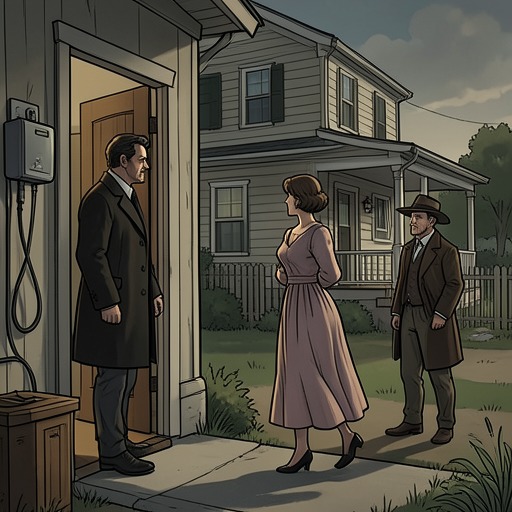
Phil tries to win Peter over and turn him against his mother
The Power of the Dog (Thomas Savage Edition)Phil Burbank’s attempt to win Peter Gordon’s friendship is both an offer of intimacy and a calculated effort to separate him from his mother, Rose Gordon Burbank. Phil presents himself as a patient mentor, offering the skills and companionship Peter seems to lack; at the same time, he expects Rose to become more dependent on alcohol and believes George Burbank may eventually reject her. The plan draws Phil and Peter into a moment of genuine-seeming closeness, but neither man understands the other’s intentions fully.
The Strategy Behind the Overture
Phil’s approach follows his recognition that Peter has endured hostility at the ranch. Peter’s manner and paper flowers have already made him an object of ridicule among the ranch hands, and the household has grown tense since his arrival. Yet when Peter walks past the men after being mocked, Phil recognizes an uncommon kind of courage in him. Rather than simply dismissing Peter, Phil sees an opportunity: the boy might welcome friendship with a man, and that attachment might loosen his bond with his mother.
The intended consequence for Rose is central to the scheme. Phil anticipates that, if Peter turns toward him and away from her, Rose will feel deserted and drink more. He imagines that George will then cast her off. His offers of friendship are therefore not separate from his hostility toward Rose; he means to make Peter’s trust serve as a means of increasing her isolation. The kindness in his approach is entangled with a plan to worsen her circumstances.
Testing Peter’s Vulnerability
Phil begins to probe Peter’s family history by bringing up his mother’s drinking. He watches closely for Peter’s response, uncertain whether he has spoken too soon or alienated the boy. Peter initially asks what Phil means, and Phil explains that Rose has been drinking heavily through the summer. Peter’s small wince at Phil’s blunt wording reassures Phil that he has reached a sensitive subject. Phil treats the reaction as information: it tells him how much Peter already knows and encourages him to continue.
He then turns to Peter’s father, John Gordon, asking whether he also drank. Peter explains that John drank heavily until near the end of his life, and that he died by suicide. Phil’s manner changes. He starts to reach toward Peter, stops himself, lowers his voice, and offers comfort and hope. The exchange lets Phil approach Peter through a painful family memory, while Peter’s response gives their conversation a gravity beyond Phil’s initial attempt to draw him into an alliance against Rose.
The Rope as an Offer of Fellowship
The most direct bridge between them is Phil’s Braided Rawhide Rope. Phil has promised to teach Peter practical ranch skills, including roping and riding, and he offers him the rope he is making. Peter responds by bringing Phil rawhide he has cut himself, explaining that he wants to learn to braid as Phil does. He also thanks Phil for treating him well. The gesture appears to Phil as more than a contribution to the rope: he reads it as admiration and a wish to imitate him.
Phil’s reaction reveals how deeply he invests in that interpretation. He wonders whether Peter’s offer might be intended to help Rose, but gives greater weight to the possibility that Peter genuinely wants to learn from him. The contact of Peter’s hand on his arm moves Phil, who has rarely permitted such closeness. He puts an arm around Peter’s shoulders and promises that things will be easier for him from then on. That night, he finishes the rope while Peter watches, continuing despite a wounded hand. The act makes the offer tangible: Phil is not merely promising instruction but completing an object around which their new connection can form.
Recognition, Secrecy, and Unequal Aims
Phil frames his lessons through memories of Bronco Henry, who taught him that courage, patience, and close observation could make difficult things possible. He asks Peter what he sees on a hillside. Peter identifies the running dog that Phil associates with Bronco Henry’s way of seeing. Peter says he noticed it when he first came to the ranch, showing that his watchfulness predates Phil’s attempt to teach him. Their shared recognition creates a point of connection, but it also demonstrates that Peter has been observing the ranch—and Phil—on his own terms.
Phil’s sense of fate is also bound up with their earlier encounters at Phil’s Swimming Hole, where Peter had unexpectedly seen him, and with Peter’s experience of being scorned by the ranch hands. Phil imagines that mutual exposure to vulnerability has made them understand one another. His embrace and promise of protection consequently feel, to him, like the beginning of a bond he has long wanted. Peter, however, remains composed while Phil rages after Rose sells hides to a trader. The contrast between Phil’s openly expressed anger and Peter’s stone-faced attention leaves the motives on either side unequal and partly hidden. Phil believes his plan is bringing Peter close and pushing Rose toward dependence; Peter accepts the rope and the offered connection, but the episode also makes clear that he has a purpose of his own.