Phil's ideal of cowboy masculinity
The Power of the Dog (Thomas Savage Edition)Phil Burbank’s ideal of cowboy masculinity is a code of toughness that treats physical competence, emotional restraint, and conventional manhood as measures of a person’s worth. It gives Phil a language for despising softness and for claiming authority over the ranch, but its most revealing test is Peter Gordon: the boy Phil mocks as a sissy becomes the attentive companion whose presence he comes to enjoy.
The Code and Its Standards
Phil’s contempt for perceived femininity is direct and visceral. He dislikes how men he regards as sissies walk and talk, and he anticipates Peter’s arrival as a threat: the boy will be in the house, listening, and will embody the kind of manhood Phil rejects. Phil assumes that George Burbank shares this prejudice, imagining that George, like himself, hates sissies. This assumption makes the code seem to Phil like common sense shared by other men, rather than a personal judgment he has chosen to enforce.
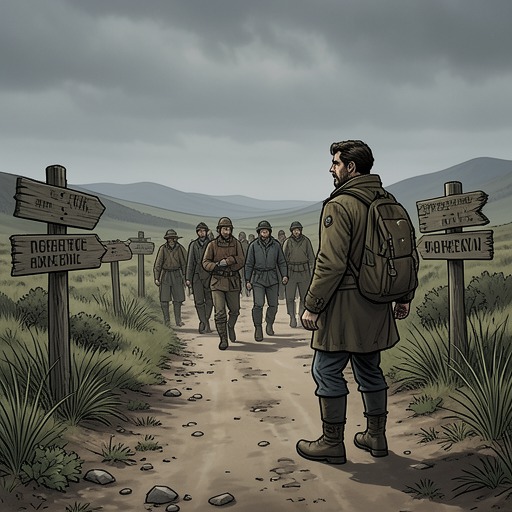
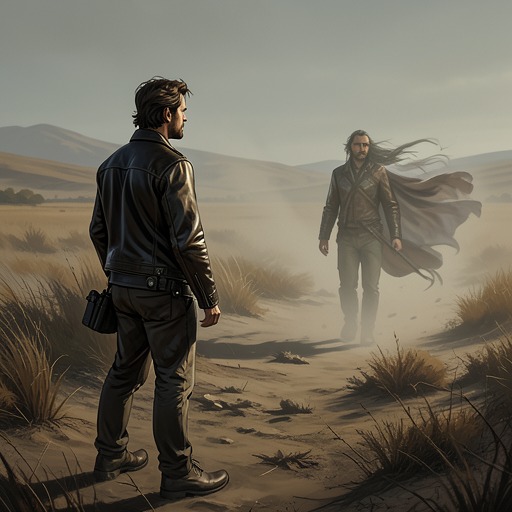
Phil’s idea of masculinity also depends on an idealized past. In conversation with Peter in the blacksmith shop, he warns him not to let his mother make a sissy of him and contrasts the present with a time when, in Phil’s telling, there were real men. He attaches that older world to stories of the land: initials and the date 1805 carved near a spring, and piles of rocks he once found beyond Sagebrush Hill. He invites Peter to search for the end of the rock trail with him. The invitation turns nostalgia into a lesson in manhood: the past is something Phil can narrate, and a boy can be brought into it by following him across the landscape.
His standards are not only about work or physical courage. Watching a cow and bull in the herd, Phil notices a young man beside him watching too, then teases him that he will soon be in town. When the young man blushes, Phil reads the reaction as proof that young men think chiefly about sex. He regards their pursuits as self-destructive: they may lose money, contract disease, or marry women he dismisses as unfaithful. He places George’s marriage and the prospect of a stepson in the same bitter account, judging George no wiser than the young man beside him. For Phil, heterosexual desire is both an expected masculine appetite and a force that makes men foolish and vulnerable.
Enforcing the Ranch’s Hierarchy
Phil’s standards become social power when he tells the hired men stories about Peter: that the boy shuts himself in with books and pictures, that boys in Beech have mocked him for knowing little about sports, and that he makes and arranges paper flowers. Phil frames these details to make Peter appear outside the ranch’s accepted idea of a boy. He understands that itinerant workers are alert to perceived injustice, but his account invites them to judge Peter before they know him.
When Peter crosses the opening by the tents, Phil watches as the men whistle at him as they might whistle at a girl. Rose Gordon Burbank stiffens; Peter continues without pausing. Phil interprets the whistle as confirmation that the men look to him, rather than George, as the ranch’s boss. The scene makes the code more than a private prejudice: the men’s mockery is a public test, and Phil’s stories have helped set its terms. Even so, Peter’s refusal to falter disrupts the judgment Phil has prepared. He watches the boy look up at the magpies’ nest, then notes that Peter turns and crosses the open space again, this time without whistles. Phil gives him credit for an uncommon kind of guts. His admiration rests on endurance, but it also exposes a limit in his own categories: the quality he values appears in the very boy he has cast as unmanly.
Peter as Exception and Opportunity
That contradiction changes Phil’s relation to Peter without immediately dissolving his prejudice. Phil imagines that the boy would welcome friendship with a man and considers drawing him away from his mother. He also sees a consequence for Rose: if she feels deserted, he expects her to depend increasingly on alcohol, and he predicts that her drinking will bring conflict with George sooner. His proposed friendship is therefore entangled with a plan to isolate Rose and worsen the strain in the household. Phil’s approval of Peter’s courage does not prevent him from treating the boy as a means in a larger conflict.
Yet their later companionship has a quality Phil genuinely enjoys. He prolongs work on the rawhide rope, although it is nearly finished, because Peter stays nearby as he braids and shapes it. Peter listens closely to Phil’s accounts of earlier days, becoming so absorbed in them that Phil laughs at his entrancement. Phil calls him old-timer, teaches him to ride, gives him a gentle bay horse, and takes him into the fields to help build pole fences around haystacks. At lunch they share deviled ham sandwiches and apples while Phil tells stories of Bronco Henry. These are concrete acts of instruction and shared work, not merely a performance of masculine contempt; Phil acknowledges to himself that he has enjoyed their time together.
Meaning and Tension
Phil’s ideal is powerful because it joins a narrow definition of manhood to fellowship, memory, and practical skill. Work with a horse, a fence, or the rawhide rope can become a bond between men; stories about the old days make that bond seem part of an inherited tradition. But the same code licenses ridicule, makes Peter’s manner a target, and turns the hired men’s response into a measure of Phil’s authority. It allows Phil to recognize Peter’s persistence only after that persistence has passed through a test he values.
The relationship therefore neither simply confirms nor cleanly overturns Phil’s beliefs. He continues to describe the past in terms of “real men” and to warn Peter against becoming a sissy, even as he welcomes Peter’s attention and takes pleasure in teaching him. The tension is central to the ideal’s meaning: Phil can offer Peter companionship by presenting it as masculine instruction, while the gentleness of Peter’s listening and Phil’s own attachment to the boy complicate the hard boundary between acceptable manhood and the softness Phil condemns. His code sustains his authority, but his growing intimacy with Peter reveals how much that authority depends on judgments that experience itself begins to unsettle.