Silence and failed communication
The Power of the Dog (Thomas Savage Edition)Silence and failed communication are not merely absences of speech in the Burbanks’ world: they are social performances, symptoms of unequal power, and barriers within the family. Dinner guests struggle to speak across differences in education and experience, while the pressure surrounding Phil Burbank makes Rose Burbank’s direct appeal feel almost impossible. The contrast gives silence a changing force—from collective embarrassment to intimate menace.
Social Performance and the Dinner Parties
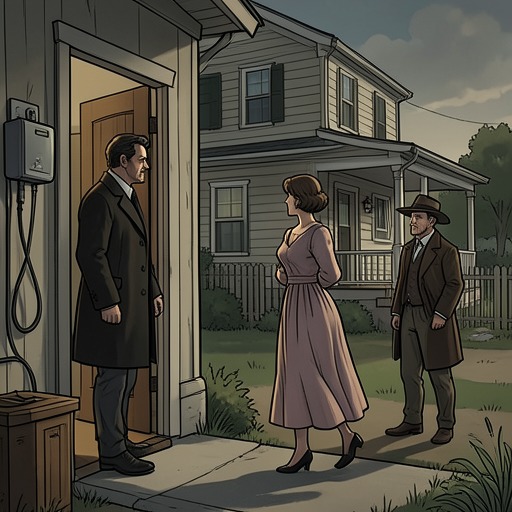
The old Burbanks’ dinner parties repeatedly fail because the hosts and their ranching guests have little in common, while the subjects that might connect them are precisely those that cannot be raised at the table. From the early parties, when guests arrived by buggy and team, to later visits in motorcars, the pattern remained: husbands and wives separated into opposing groups and sat as if they had never met. Before dinner, the women held themselves stiffly, anxious about their gowns, hair, hands, and ability to speak without exposing some supposed social inadequacy. The men, gathered on the other side of the room, were no more at ease. They knew little of the Old Gent’s references to politics and foreign conflicts, and answered the mismatch with strained posture and silence.
The Burbanks tried to furnish ways across the divide. Music from the Victrola did not bring the sexes together; even when the rugs were rolled back for dancing, the guests managed only brief waltzes and two-steps before longing to return home. Conversation, like dancing, became a test of competence rather than a shared pleasure. The guests watched what others did, afraid of making a mistake, while the hosts’ attempts at hospitality made the distance between them more visible.
The Narrow Range of Speakable Subjects
The guests’ silence is shaped by shame as much as by a lack of topics. They could talk about ranching and the breeding of cattle and horses, but such subjects risked turning toward the facts of breeding, the purchase and worth of bulls and studs, and the implications those facts carried for marriage. They feared that ordinary ranch talk might expose what everyone preferred to keep unspoken. In its place, they returned to recent deaths and the details of final suffering, last words, last meals, and bereavement. Weather offered another safe subject. Once someone raised it, the guests seized on temperature, rain, snow, humidity, and wind with almost hysterical enthusiasm, each taking a turn before the topic fell flat and the room again went quiet.
A dinner remembered as the Cabbage Dinner briefly interrupted this pattern. An Episcopal minister introduced cabbage, and the guests unexpectedly found a subject they could develop together: preferences, memories of mothers’ sauerkraut, country gardens, and recipes. The women exchanged instructions and promised to try one another’s methods. The episode is both comic and revealing: a vegetable could sustain a lively conversation where the guests’ own lives and relationships could not. Yet this opening did not transform the parties. After dinner, guests left in silence, embarrassed by their wooden performance and wondering why they could not talk, dance, or rise to the occasion. The Old Gent remained by the Victrola, while the Old Lady removed her jewelry before the mirror. Hospitality had gathered the guests, but it could not make them feel at home with one another.
Silence Under Pressure at Home
The governor’s dinner brings the public problem of conversation into Rose Burbank’s private distress. Before the guests arrived, she feared Phil would appear in clothes and a condition that would be difficult to explain. Once it became clear he would not come, her fear changed: she began to pray for his arrival because the conversation had already fallen into the commonplaces George Burbank associated with dull dinners, and she depended on her piano playing to carry the evening. With Phil absent, that performance seemed to bear the whole weight of the occasion.
At the table, Rose stared at the empty place Phil was supposed to occupy. Her eyes met George Burbank’s, and she saw that he too was miserable. He rose to look for his brother, leaving Rose among the guests as the Governor’s wife told a story. Rose understood that the story called for more than a smile, but could not produce warmth in her laugh. She listened instead for the sounds that would tell her George had searched the bunkhouse and barn and was returning. His eventual entrance brought a cold draft ahead of his footsteps. The scene links social speech to the unspoken tension in the household: conversation continues, but Rose’s attention is fixed on Phil’s absence and on George’s search for him.
Direct Questions and Unanswered Speech
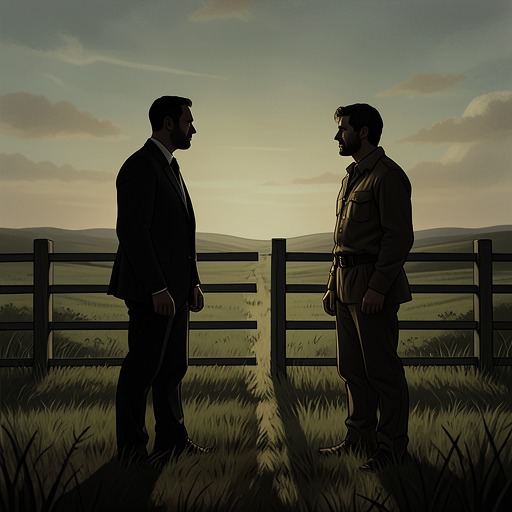
The strain is also visible in Rose’s observation to George that Phil makes him nervous. She identifies not a particular insult but a repeated presence: Phil does not speak when he enters a room, and he brings in the cold. The remark makes silence physical and relational. Phil’s quiet is not the guests’ embarrassed inability to find common ground; in Rose’s account, his arrival changes the atmosphere before he has said anything.
When Rose finally addresses Phil directly, she prepares herself with a small, practical gesture. She chooses a book from the bookcase, opens it, and keeps a finger between its pages, wanting something in her hands while she speaks. Then, smiling openly and calmly, she asks why he dislikes her and asks him to tell her. The question makes explicit what the household’s silence has left unresolved. Phil’s eyes remain cold, and silence falls. Even this carefully approached appeal cannot produce an explanation in the moment. The clock, which Rose glances at for a clue, measures the pause but supplies no answer.
Narrative Significance
These episodes distinguish several failures that can look alike from the outside. The dinner guests fall silent because they fear embarrassment and lack a comfortable common language; the Old Burbanks’ hospitality cannot overcome the divide. Rose’s strained laughter at the governor’s dinner is a social response that conceals rather than relieves her anxiety. At home, Phil’s silence is bound to his intimidating effect on others, and Rose’s request for an explanation meets a silence that leaves the hostility intact. Across these scenes, talk can be abundant yet ineffective, as in the guests’ rush to discuss weather, or honest yet unanswered, as in Rose’s question. The recurring failure to speak plainly makes silence an active condition of the novel’s relationships: it sustains distance, forces people to perform composure, and leaves those who seek an answer to confront what remains unsaid.