The Old Gentleman Burbank
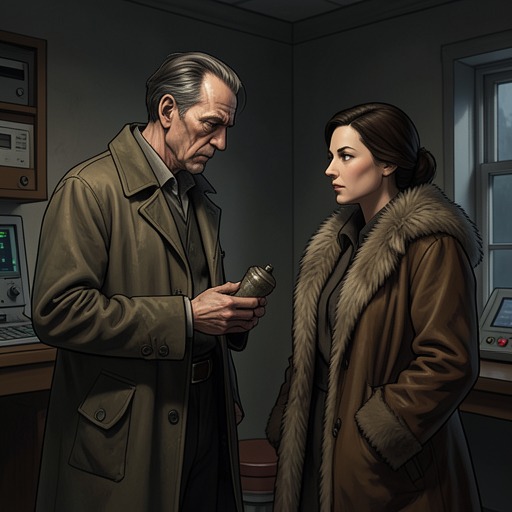
The Power of the Dog (Thomas Savage Edition)The Old Gentleman Burbank is the retired father of Phil Burbank and George Burbank and, alongside the Old Lady, one of the long-time operators of the Burbank Ranch. Once part of the valley’s most important ranching family, he is living in Salt Lake City by the time the story opens. His later appearance is quiet and spare: a watch checked to the minute, a departure from a grave, and a familiar card game on the train home. These small actions give the aging patriarch a presence shaped less by explanation than by restraint and ritual.
Identity and Background
The Old Gentleman and the Old Lady are wealthy easterners who spent years maintaining a relatively luxurious life on the Burbank Ranch. They had operated the property for many years before their sons took over its management. When the story opens in 1924, the parents have retired to a suite in a Salt Lake City hotel. The account leaves the circumstances of their departure unexplained except for an undescribed contretemps with Phil; it does not specify what happened or assign the older man a particular part in the dispute.
That family history places him at a remove from the working ranch. George and Phil now divide its administration between them: George handles the books and business dealings, while Phil oversees haying and equipment. The Old Gentleman belongs to the generation that established the family’s place in the valley, but the evidence does not show him directing the ranch in its present operation. His retirement is therefore also a shift in the family’s practical authority, even as the sons continue to live within the habits and structures their parents helped create.
Departure from the Grave
After leaving a grave, the Old Gentleman and the Old Lady go directly to the railroad depot. They decide that there is nothing else to do but take the next train to Herndon, where George has telegraphed that he will meet them; otherwise, they would have to spend the night in Herndon. The scene gives their journey a precise, practical shape: a telegram establishes the meeting, the train provides the next step, and the couple leave without stopping to speak to anyone.
At the depot, the Old Gentleman reaches into his vest pocket for his watch and announces that it is exactly five thirty-seven. The small act of checking and stating the time stands out against the surrounding silence. The account says that there is nothing to say to anyone and that the Old Folks know it. His attention to the minute does not explain his feelings, but it shows him holding to a concrete measure while the scene withholds any fuller account of what he or the Old Lady is experiencing.
His few words are quiet and restrained. At one point he whispers, and elsewhere he softly reminds another person of the same consideration that has been raised to him. The exchange is not expanded into a statement of his views or a confrontation. Instead, the brief responses preserve the scene’s subdued register: he speaks, but does not turn the departure into an occasion for public explanation.
Return to Salt Lake City
The Old Gentleman and the Old Lady travel back to Salt Lake City in a single large drawing room aboard a fast, olive-green train. The private accommodation allows the Old Lady to weep for a while without an audience. The Old Gentleman does not interrupt or explain her grief in the account; after she has stopped, he rises, steadies himself as the train leans into a curve, and opens one of their bags.
From it he takes two monogrammed decks of playing cards. He presses the button for the porter, who brings a table and sets it up, and the couple begin a game of Russian Bank beside the window. The sequence is carefully concrete: the train’s movement, the bag, the cards, the call for a table, and the game. It presents a shared routine following a private interval of sorrow, without suggesting that the game cancels or resolves what has happened. The Old Gentleman’s response is practical and companionable; he makes space for the Old Lady’s private weeping and then resumes an activity they can do together.
Character and Narrative Significance
The Old Gentleman is drawn through a small set of actions rather than an extended account of his inner life. He checks the time, keeps the journey moving, answers softly, and arranges a card game. Those details suggest self-command and familiarity with routine, but the narrative does not establish a full portrait of his temperament or explain his view of the family’s conflict. His restraint matters precisely because the scene does not fill in what he leaves unsaid.
His presence also marks the distance between the retired parents and the sons who now run the ranch. The family’s wealth and history are established, yet the older couple’s life in Salt Lake City contrasts with the sons’ continuing responsibilities in the valley. At the same time, the train scene gives the Old Gentleman and the Old Lady a private relationship beyond their former role as ranch operators: after a difficult departure, they travel together, make room for grief, and return to a shared game. The character’s significance rests in that compact contrast between public family history and quiet domestic routine.