
The State's Criminal Mirror
The Power of the DogThis thread follows the novel's erosion of the boundary between public authority and criminal power, from local bargains to covert policy and political protection.
increasing Bearing strength in each event
 decreasing
Bearing strength in each eventdecreasingThe Uncle's Political Architecture
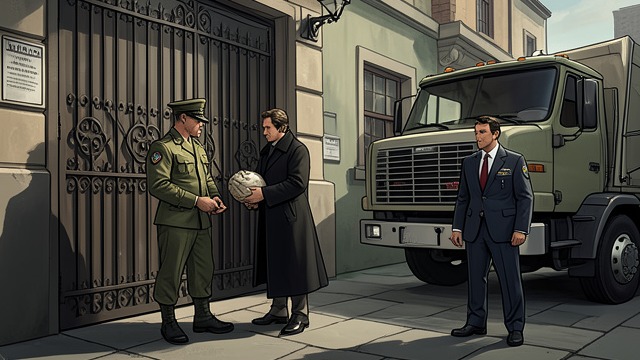
Power Through Partnership
A personal channel
Miguel Ángel Barrera understands that foreign agents and local officials operate by different rules. He offers Art Keller a relationship that fills the gaps left by formal institutions, presenting personal trust as the practical route to cooperation. Art accepts the arrangement while believing that it helps him dismantle the drug trade.
The hidden result
Barrera uses the intelligence and enforcement actions to remove rivals and consolidate authority. The partnership produces visible arrests and seizures, but it also helps prepare the ground for the Federación. An official operation and a criminal strategy can therefore run in parallel without either participant fully admitting what the other is building.
The novel treats corruption not merely as a bribe changing hands but as a governing method. Personal access decides who is protected, who is exposed, and which version of success is reported. Once Keller becomes useful to Barrera, the line between cooperation and manipulation becomes difficult to recover.
The Republic for Sale
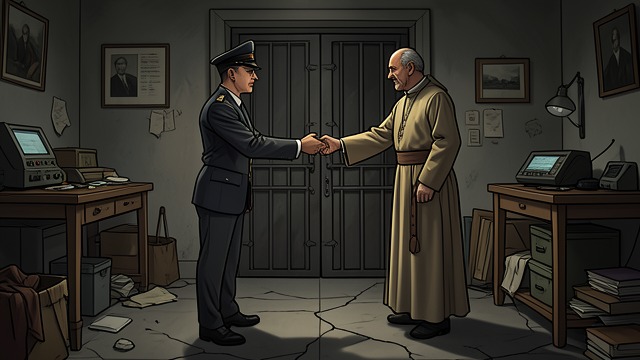
Crisis as Bargaining Power
Relief and leverage
After the Mexico City earthquake, the government needs money to rebuild and turns to institutions capable of supplying it quickly. The Church and the traffickers both become sources of funds, each seeking influence in return. Emergency need becomes a bargaining table rather than a clean civic obligation.
Elections and protection
The Federación later helps sustain the ruling party through political money and violence surrounding the disputed 1988 election. The new administration then gives the traffickers reason to expect protection, while public institutions present the result as ordinary political continuity. Access to the state becomes part of the cartel's business model.
These episodes reveal a state that is neither simply conquered by criminals nor wholly separate from them. Its officials can resist, bargain, or collaborate according to changing pressure. The public language of national recovery and democratic legitimacy coexists with private arrangements that trade money, safety, and political outcomes.
Cerberus and Official Silence
A Secret War's Cover
The covert alliance
Operation Cerberus connects drug money, arms transfers, and support for the Contras. Art Keller discovers that the apparent criminal supply chain also serves a political project, while John Hobbs frames the arrangement as a necessary response to Communist influence. The secret war makes ordinary legal categories seem expendable to its architects.
Testimony withheld
When congressional investigators ask about the operation, Keller lies under oath. He has evidence that could expose the relationship, but the political cost of disclosure and his own compromised position keep him silent. His silence protects the covert apparatus and deepens his estrangement from Althea Patterson.
The thread asks how patriotism can become a shield for wrongdoing. Officials invoke national security to conceal deals that undermine public law, and Keller's personal choice demonstrates how complicity is sustained not only by perpetrators but also by people who believe they are preventing something worse.
The Church in the Political Contest
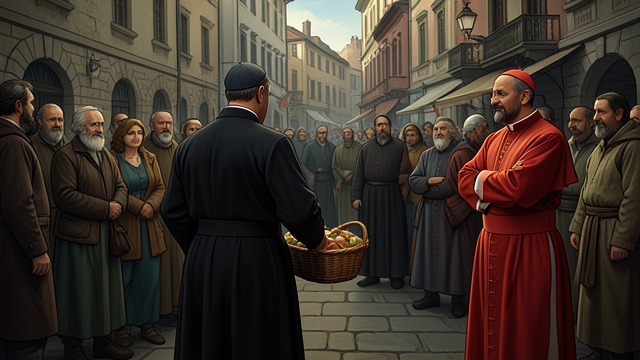
Faith Inside Politics
Service under pressure
Bishop Juan Parada responds to the earthquake by organizing practical relief, challenging the notion that spiritual authority should concern itself only with souls. He negotiates for money, food, medicine, and institutional access, and his work gradually draws him toward liberation theology and the needs of impoverished communities.
Competing churches and states
Parada clashes with Cardinal Antonucci, who sees political accommodation as a path to restoring the Church's formal standing in Mexico. Parada instead insists that faith must answer material suffering. Later, he tries to mediate between Adán Barrera and Blondie, attempting to limit violence even when his involvement brings him into the line of fire.
The Church is not presented as a single moral voice. Its officials can practice service, pursue institutional power, or tolerate political compromise. Parada's fate shows the danger of a faith that steps into the space between armed interests, but his example also refuses the idea that neutrality is always innocence.
The Tainted Bargain

Immunity as Currency
An ending negotiated
After the violence surrounding Parada's death and the political crisis around Colosio, the surviving power brokers seek arrangements that protect their interests. Adán Barrera offers evidence that could expose government and covert operations, while John Hobbs and Miguel Ángel Barrera seek to prevent that information from reaching court.
A deal instead of accountability
Art Keller rejects the proposed immunity and tries to bring Adán to justice, but institutional actors treat the case as a threat to their own exposure. The final bridge meeting becomes a private negotiation over prisoners, informants, and silence, with Nora Hayden's freedom used as leverage.
The pattern culminates in a grim exchange: the state wants the danger contained, not necessarily the truth made public. Individual acts of refusal matter, but they do not instantly undo a system built from reciprocal protection. The novel ends its political argument by showing how justice can be postponed whenever powerful participants can turn evidence into bargaining currency.
1975 to 1977, during and after Operation Condor
1985 to 1988, from the earthquake relief negotiations through election fraud
1985 to 1992, from the Contra operation to congressional inquiry
1985 to 1997, from earthquake relief to Parada's death
1998 to 1999, from the bridge meeting to the final exchange
