
Ghosts, Solitude, and the Search for Truth
The Power of the DogThis thread traces how memory, isolation, and the recurring presence of the dead reshape the characters' understanding of identity and responsibility.
increasing Bearing strength in each event
 decreasing
Bearing strength in each eventdecreasingThe Self-Reliant Agent
The YOYO Inheritance
A practiced distance
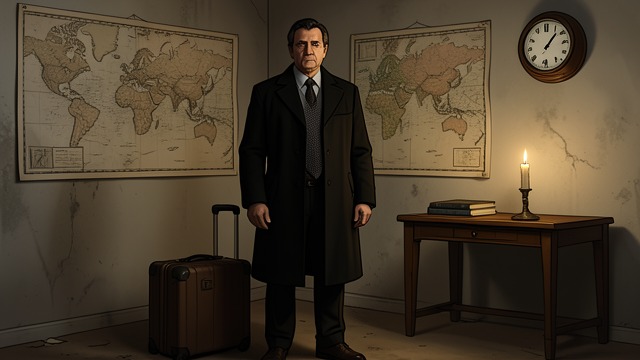
Art Keller learns early that he is on his own, first through an unreliable father and later through professional training in secrecy and compartmentalization. His YOYO doctrine helps him function across cultures and institutions, but it also makes intimacy difficult, including with Althea Patterson.
The cost of isolation
In Guadalajara, Keller tells himself that he can solve the drug problem through individual persistence, even as colleagues exclude him and officials deny the evidence before him. His independence becomes both a source of resilience and a barrier to trust. He returns to the Mexican operation partly because he cannot leave his unfinished business alone.
The novel treats self-reliance as an adaptation that gradually hardens into a trap. Keller can act without institutional support, but he also finds it difficult to admit dependence, confess failure, or accept limits. The very discipline that makes him effective leaves him increasingly isolated from the people who might help him live differently.
A Father Remade
The Family He Cannot Keep
A possible redemption
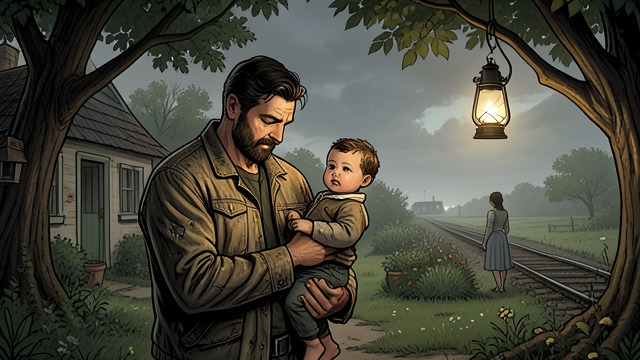
The birth of Cassie and Michael breaks through Keller's old emotional defenses. He becomes a warm father and a more present husband, believing that being a good father can answer the injury of having had a bad one. His family gives him a form of redemption that neither professional success nor religious routine has provided.
Duty chosen over home
When the Barrera conflict escalates, Althea asks him to leave Mexico with her and the children. Keller cannot do it. He believes his past complicity obligates him to continue the fight, and the family leaves without him. His decision is framed as duty, but it also reveals how guilt can disguise itself as an unavoidable calling.
The separation turns a moral crusade into a personal cost. Keller keeps his work and loses the ordinary moments that once made family life possible. His later willingness to accept isolation is therefore not new; it is an extension of a choice that began when he refused to return to his wife and children.
The Dead in the Room
Memory as Company
Visitors from the past
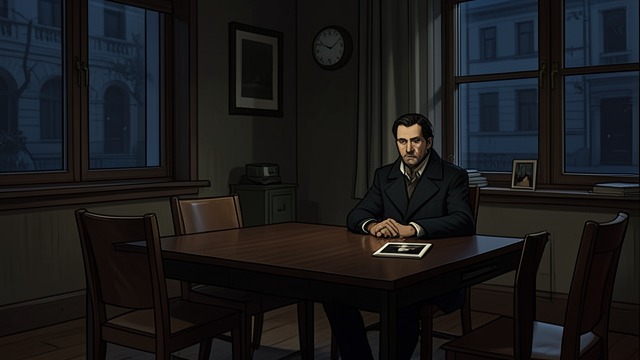
After Ernie Hidalgo's torture and death, Keller cannot stop seeing the cost of his pursuit of the Barreras. The killing of Juan Parada adds another presence, along with Pilar Talavera and her children. The dead become part of Keller's nightly life, asking whether his campaign was worth the lives it consumed.
Memory changes the mission
Keller continues the pursuit even as he recognizes that his obsession has helped create some of the conditions for further violence. He tells himself that the deaths demand action, but the dead do not provide a simple instruction. Each new act of revenge brings additional people into the room of memory.
The ghosts are not supernatural solutions; they are the psychological form of moral accounting. Keller's solitude is full of those he could not save and those harmed by his choices. The images force the reader to question whether pursuing an enemy can ever settle a debt created by violence.
The Beekeeper's Silence
Quiet After the Wars
A life reduced to routine
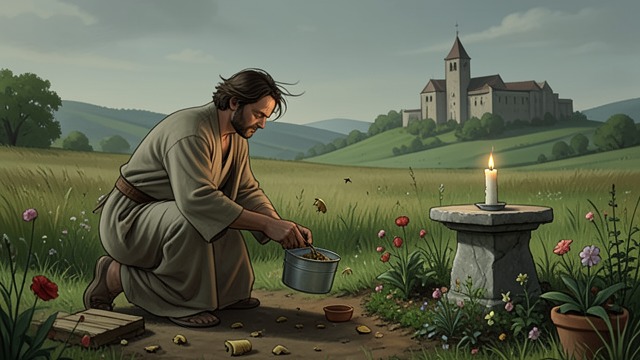
In the epilogue, Keller lives under protection at the Monastery of Christ in the Desert after years of testimony and concealment. He tends bees, prays with the monks, and accepts a daily discipline of work and silence. He no longer controls the public course of the drug war or his own freedom of movement.
Hope without certainty
Keller does not claim that he has recovered faith. Instead, he admits that he has hope of a God, and that maintaining a garden may be the most honest work available to him. The poppies he waters carry the irony of his past, while his care for them suggests a modest practice of attention rather than mastery.
The ending offers no simple absolution. Keller remains surrounded by ghosts, and the drug trade continues after his victories. His altered life is a form of penance, but the book leaves open whether penance can repair harm. What remains is the choice to tend something living and keep hoping despite contrary evidence.
A Daughter's Final Loss
The Future Becomes the Past
A last journey
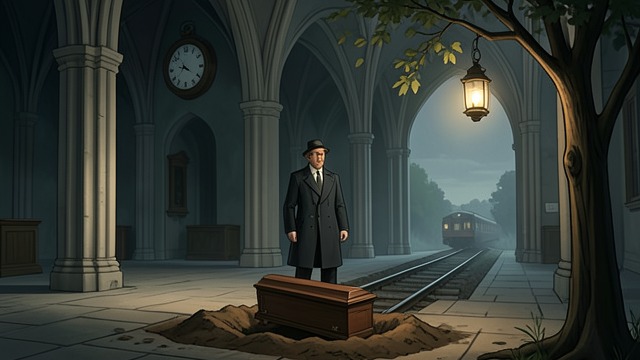
After years of separation, Adán Barrera risks crossing the border to see Gloria as she lies on life support. He enters the United States hidden in a box, accepting the danger because he cannot bear to remain absent from his daughter at the moment of her death. Art Keller is waiting at the hospital and arrests him before he reaches her.
Loss without repair
The authorities allow Adán to attend Gloria's funeral in exchange for cooperation. He sits in a nearly empty cathedral, then watches her casket lowered into the ground. Afterward he offers a bounty for Keller, making clear that prison has not ended the cycle of revenge or his attachment to the past.
Gloria's death collapses the distinction between the future he hoped to protect and the losses he has already caused. Adán cannot purchase a normal life for her, and his power cannot secure even a final farewell without bargaining. The episode makes grief both intimate and political: the state can arrange a funeral, but it cannot undo years of fear, separation, and violence.
1975 to 1984, from Keller's recruitment through his return to Guadalajara
1984 to 1985, after Keller's children are born
1994 to 1997, after the deaths of Ernie Hidalgo and Juan Parada
2000 to May 2004, at the Monastery of Christ in the Desert
2004, during Gloria's funeral and Barrera's return to custody
