Art Keller
The Power of the DogArt Keller’s career is shaped by a friendship that becomes an enmity, and by the knowledge that his own silence helped make his adversary powerful. An idealistic drug-enforcement agent, he spends years pursuing the Barrera organization while confronting the personal and political consequences of the war he once believed in. His story does not separate law enforcement from complicity: the same man who promises to pursue justice has helped set violence in motion, works through compromised institutions, and ultimately meets Don Adán Barrera in a confrontation rooted in their shared past.
Identity and Early Ties
Keller enters the story within the expanding American War on Drugs. The Drug Enforcement Administration was still a young organization, created after Richard Nixon declared the campaign and staffed by recruits from older narcotics agencies, police departments, and, in some cases, the Central Intelligence Agency. This institutional setting places Keller inside a mission whose reach and methods extend beyond ordinary policing, even as he is remembered by Don Adán Barrera as a true believer in its ideals.
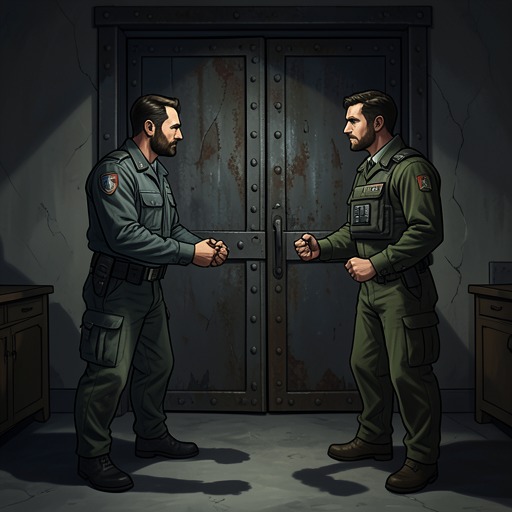
Keller and Tío Barrera first become friends through an encounter in the gym that Tío and his brother Raúl Barrera ran. Keller, then energetic and ambitious, sparred with them, and the friendship grew from that ordinary contact. He was introduced to Tío’s uncle, a leading police officer in Sinaloa who was also a major opium grower. The narrative’s brief reflection that friendships form in unexpected ways sits beside its identification of Keller and Tío as a pair: their personal bond is the starting point for a conflict that will outlast the trust on which it was built.
Their friendship gives Keller an unusually close view of the people and networks that will become his targets. It also makes the later rupture more than a professional rivalry. From Don Adán Barrera’s retrospective perspective, Keller’s ideals were precisely what made their betrayal consequential: the collapse of belief in the cause, rather than simple opposition between an agent and a trafficker, is what he could never forgive.
Complicity, Guilt, and the Pursuit of Tío
Keller’s connection to Tío is not only emotional. After an ambush in Badiraguato, six prisoners were executed, and Keller kept silent about what had happened. That silence helped Tío form the Federación, which later sent crack into American streets. Keller eventually tells Althea Keller about the ambush, the executions, his own silence, and the responsibility he believes he now has to act. He understands his pursuit of the organization as an attempt to answer for a past in which he did not speak when he should have.
That sense of responsibility does not free him from attachment to Tío. Keller recognizes that he is drawn toward him with the force of an addiction, and at another point he lies awake. The combination of fixation and remorse helps explain why the chase remains personal even when Keller’s duties become institutional. In confronting a former friend, he is also confronting the part of himself that once accepted silence and the ideals that he fears have been betrayed.
Keller’s later conduct shows how insistently he tries to turn guilt into action. He threatens to expose what he knows about the covert operation Cerberus, telling his counterpart that the information is enough to bring him down. After the Sandinistas are removed from power and the secret war ends, Keller goes to John Hobbs to claim the reward he believes he has earned. The sequence links his participation in a secret war to the professional recognition he seeks afterward, without making that reward a clean moral resolution.
The costs of the cartel war reach beyond Keller and his intended targets. He reads the position of a dead mother’s body over her baby as evidence that she instinctively tried to shield her child from gunfire. The image makes civilian vulnerability concrete: a parent’s body cannot stop automatic-rifle fire, yet the protective gesture remains. Keller’s work is conducted in a world where the consequences of organized violence fall on people who have no power to control it.
A Campaign Against Criminal and Political Power
As his pursuit develops, Keller’s role grows from agent to coordinator. He becomes head of the Southwest Border Task Force, overseeing a large San Diego office and a coordinating group in which the Drug Enforcement Administration, Federal Bureau of Investigation, U.S. Border Patrol, Customs and Immigration, and local and state police report to him. The breadth of that command signals both the scale of the campaign and the burden placed on one official to coordinate agencies with different responsibilities.
The power Keller is trying to confront is not confined to drug shipments or street violence. Don Adán Barrera offers García Abrego protection and the promise that his friends will become García Abrego’s friends, presenting cartel power as a system of reciprocal alliances. The Federación’s reach becomes starkly visible in the 1994 peso crisis: after the new Mexican president took office on December 1, two brokerage houses controlled by the organization bought government tesobonos; the cartels then withdrew capital from the national bank, the peso was devalued by 50 percent, and the Federación cashed in its bonds as the economy collapsed. Don Adán Barrera later made the return of his narco-dollars conditional on a favorable trade environment. These events show the political and financial terrain surrounding Keller’s campaign: the organization he pursues can exert pressure through institutions and markets as well as force.
Keller’s operations move across borders and through different kinds of surveillance. In Tegucigalpa, he watches a man in a maroon Adidas tracksuit leave a building from a park bench across the street. He later goes to Tijuana, where he invokes Ernie Hidalgo as a close friend and brother in blood while confronting someone connected to the betrayal that has driven him there. The sequence presents personal loyalty as one of Keller’s measures of wrongdoing, even as the larger investigation requires him to work through informants, intelligence, and covert arrangements.
When a drug tunnel approaches the United States, Keller goes back to the surface to make calls rather than simply continuing underground. Two hours later he descends again, following the other man into the shaft with members of the Special Tactical Group and Drug Enforcement Administration agents behind them. The operation is coordinated across the border and combines Keller’s direct presence with a larger armed team. Elsewhere, he waits on the American side of the border, a recurring position that places him at the line his work is organized to police.
Keller also witnesses the political demand for accountability from outside the machinery of his own task force. In a church, people reject corruption and call on their country’s powerful leader to deliver justice. Keller does not join their chanting, but he watches in amazement and privately resolves to help bring about the justice they demand. The moment aligns his personal promise with a public protest, while leaving open the question of whether official enforcement can meet the standard those people set.
Informants, Operations, and the Cost of the Work
Keller’s relationship with Nora Hayden develops through secret contact and investigative pressure. For more than two years, she has left him messages in dead drops around the city; a red dress signals that she needs to meet him in person. Keller parks several blocks from the White House before walking to the meeting. Elsewhere, he approaches her with his badge and tells her that they need to talk. He relies on her information but refuses to disclose her identity to John Hobbs, even when Hobbs makes extensive resources available to find her.
When Nora disappears, Keller searches through satellite photographs, listening posts, and Internet sweeps, but the efforts initially produce nothing. The search is a measure of both his commitment to finding her and the limits of the surveillance network at his disposal. Eventually a phone call changes the outcome: Keller puts down the phone, lowers his head, then looks up smiling and says they have found her. The relief is direct, but it does not erase the danger or uncertainty that preceded it.
Keller’s field work is not confined to observation. At the GOSCO harbor facility, he maintains surveillance and prepares for an operation by tightening his Kevlar vest, switching off the safety on his M-16, and giving the order to proceed. In another operation, he restrains Fabián Martínez with plastic telephone ties. The contrast between patient surveillance and decisive physical action describes a working method that depends on preparation, coordination, and force, rather than on a single dramatic pursuit.
The work also takes a visible personal toll. At one point, Little Peaches identifies Keller as a man who has been drinking in a disreputable bar and living at the Golden West Hotel, and challenges him about how far he has fallen. The episode places Keller outside the confident public identity of a senior official. Later, Keller takes money and leaves; the scene’s spare action supplies no further explanation, so its significance lies in the abruptness with which he exits rather than in any stated motive.
His marriage also bears the weight of his past. After receiving word that Pilar Méndez and her two children have been killed, Keller signs divorce papers that had been sitting on his desk for months. He questions whether signing is merely an acknowledgment of an inevitable reality or an act of penance. He believes he shares responsibility for the children’s deaths because he whispered false information to Tío, identifying Güero Méndez as the nonexistent Source Chupar. When intelligence channels carry rumors that the Barreras killed Pilar and threw her children from a bridge in Colombia, the old lie and its consequences converge with the end of Keller’s marriage. He does not claim sole responsibility, but he cannot treat himself as untouched by the chain of events.
Capture, Betrayal, and the Meaning of the Friendship
The final pursuit brings Keller and Don Adán Barrera back into direct contact. Keller is typing on a laptop while Don Adán lies handcuffed to a bed; when Don Adán wakes, he realizes that his captivity is not a nightmare. In the epilogue, Keller waits for him in a hospital parking lot. Keller tells him that Gloria is fine, then sedates him, ending the encounter with Don Adán once again in Keller’s custody.
Don Adán’s account makes the emotional history behind that capture explicit. He recalls that he and Keller were once friends, remembers Keller entering the brothers’ gym and sparring with them, and describes how Keller met Tío through him. Don Adán blames Keller for the betrayal of his ideals and for what followed. The perspective does not undo Keller’s role as an agent pursuing the Barreras; it reveals that the conflict is also remembered by his adversary as the destruction of a friendship and a faith.
That double meaning defines Keller’s narrative role. He represents the promise of law enforcement, but his own history includes silence that helped a criminal organization rise, covert work rewarded after a secret war, dependence on concealed informants, and a private life damaged by the consequences of his choices. His pursuit of the Barreras is therefore neither a simple story of an innocent lawman against criminals nor a confession that the two sides are interchangeable. The old friendship remains legible beneath the arrests and betrayals, making each act of pursuit carry the memory of what Keller once believed, what he failed to do, and what he now insists must be done.