Callan
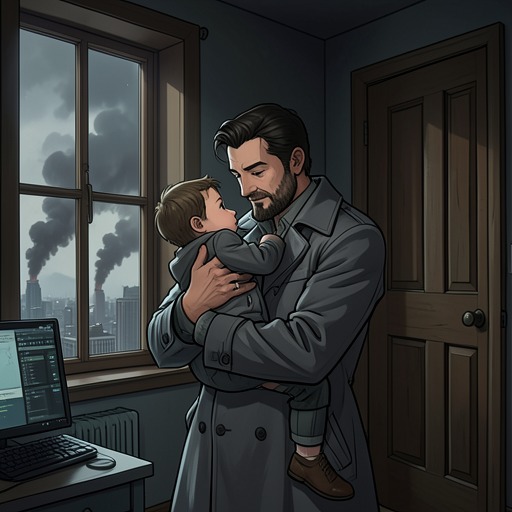
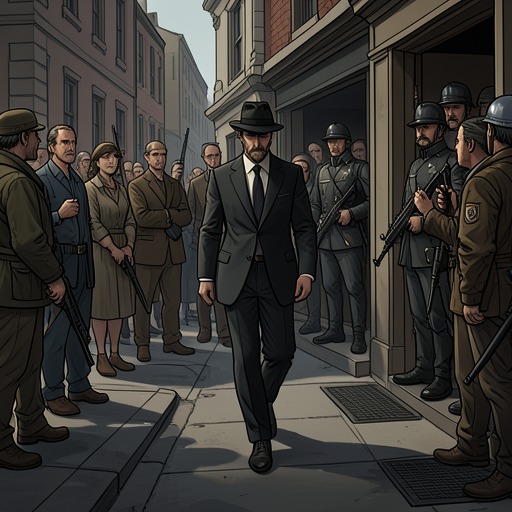
The Power of the DogCallan is an Irish American gangster shaped by a childhood saturated with religious and nationalist stories of martyrdom. His life moves between inherited tales of sacrifice and the practical bargains of organized crime: he kills Eddie Friel rather than side with him, offers Paulie Calabrese a share in labor and loan-sharking interests, and later tries to leave Sal Scachi’s orbit. His history with Nora Hayden adds a more intimate measure of that divided life, as her memories hold both his earlier exploitation and his later care.
Identity and Formation
In New York City in 1977, Callan grows up amid what the narrative calls bloody fables. Irish nationalism and Catholicism overlap in the pictures and stories surrounding him, from Irish political martyrs and the Kennedys to Christ on the Cross. The images are not presented as a tidy lesson or a single doctrine; they form the atmosphere of his childhood, in the small West Side walk-up and at St. Bridget’s Elementary. The surrounding culture gives martyrdom a crowded, ordinary presence, placing political violence, religious suffering, and family identity side by side.
That inheritance makes the story’s recurring language of loyalty and sacrifice especially charged, but the evidence does not make Callan a simple product of his upbringing. His later choices are practical and immediate. He weighs alliances, makes offers, and attempts to set terms for his own involvement, even as the violence around him repeatedly narrows the available choices.
Choices in the Criminal World
When Eddie Friel presses Callan to choose between their side and an opposing figure, Callan answers by shooting Eddie and killing him. The decision is sudden and decisive: instead of accepting the allegiance Eddie demands, Callan acts against him. O-Bop then takes the weapon from Eddie and fires it, crying and shouting obscenities. Callan’s choice changes the immediate balance in the room, but it also places him in a world where a declaration of loyalty is made through lethal action.
In another confrontation, Callan tries to secure his survival and influence through a business proposal to Paulie Calabrese. He argues that he and his associates can provide more value than Matt Sheehan: a share of the Javits Center, a Teamsters local, and a construction local, together with ten percent of the loan-sharking money they move on the street. In return, they will handle the operation without requiring Paulie to take an active role. The offer turns criminal power into a negotiated arrangement of access, income, and delegated work. Callan watches Paulie consider it, and the pause matters: the proposal is not an order, but a bid whose success depends on another man’s judgment.
Nora Hayden and the Memory of Care
Callan introduces himself to Nora Hayden simply as Callan. When she asks whether he has a first name, he tells her Sean, and she greets him as Sean. The exchange gives their encounter a measure of personal recognition, but Nora’s later recollection makes clear that their history is not uncomplicated.
Nora remembers Callan as Brown Eyes and recalls their first encounter as brutal and exploitative. Later, after she has been brought to a place where she can recover from pills, she gradually recognizes him. The man she remembers from that earlier night is also the person who helps her through withdrawal: he brings ice chips when she cannot keep food down, strokes her hair, talks with her during sleepless hours, plays cards, encourages her to eat, and makes her toast, broth, and tapioca pudding. These acts do not erase her earlier experience; the force of her memory comes from holding the two versions together. Callan has harmed her, and he has also tended to her when she was ill and vulnerable.
Attempts to Leave and the Return of the Job
Later, Callan walks from the beach to the cottage he is renting on the Northern California coast. On a cool, foggy day, the setting suits him, and the narration says that it feels good. Inside, he draws his .22 and points it when Sal Scachi appears, then hears Sal say that they are all right. Their conversation reveals the tension beneath that reassurance: Sal says Callan should have spoken to him before walking away from the operation, while Callan asks whether Sal would have let him go. Sal says he would have, with the right precautions. The exchange confirms that Callan has tried to leave, but that departure remains framed as something to be negotiated with Sal rather than an uncomplicated break.
Callan also recognizes the men gathered with Scachi as Red Mist operatives, including some of his old bunkmates from Las Tangas. They are waiting to interdict a terrorist arms supply at its source, an assignment Scachi has described in those terms. Callan understands who these outside resources are; his familiarity with the men connects the operation to his own past rather than presenting it as an entirely new world.
The pattern returns in the final evidence of his trajectory. Scachi tells Callan that he has one last job. As Callan walks through Balboa Park, he thinks that such promises are always framed as one last job, yet believes he has no choice but to trust Scachi. The qualification is central to his ending: Callan recognizes the repetition, but recognition alone does not release him from it. His story joins the childhood presence of martyrdom to an adult life of bargains and attempted exits, where freedom is repeatedly offered as a condition and deferred by the next assignment.