Contras
The Power of the DogThe Contras are an anti-Sandinista force operating within the larger covert struggle over Central America. In the novel, they are not treated only as a local insurgency: they are supported by the United States as an instrument against Nicaragua’s Sandinista government, and their activity is entangled with military advising, secret programs, and competing claims about national security. Their significance lies in this double role—as combatants in a regional conflict and as a means through which American policy pursues objectives it cannot openly acknowledge.
Position in the Central American conflict
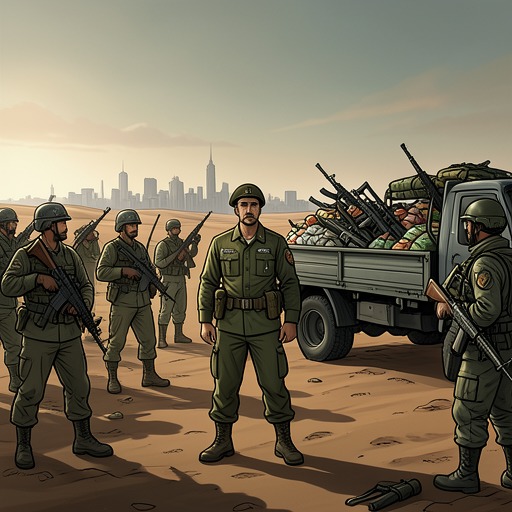
The Contras are described as surrounding Nicaragua from neighboring countries: from Honduras to the north and from Costa Rica to the south. Their presence is part of the strategic geography that makes Nicaragua, in the eyes of United States officials, more than an isolated political problem. John Hobbs argues that Nicaragua sits within a vulnerable Central American isthmus, close to the Panama Canal and bordered by countries facing their own instability and insurgencies. He presents the possibility of communist influence spreading northward as a threat to the United States, and casts the Contras as a force willing to fight so American troops need not do so directly.
That security argument is not the novel’s only view of their role. Art Keller rejects Hobbs’s proposed choice between the Contras and the deployment of American soldiers, pointing to the possibility that the force is implicated in drug pushing and placing it beside Cuban terrorists and Salvadoran death squads. The exchange makes the Contras a point of moral and political conflict: Hobbs treats them as a practical answer to an urgent strategic danger, while Art sees the cost of accepting that answer and the compromised actors it legitimizes.
United States support and political constraints
The novel depicts American backing as part of a broader military presence in the region. Since the Sandinistas took power, El Salvador has become a center for United States military activity. American advisers assist the Salvadoran Army in its war against the FLMN guerrillas, while other American personnel advise the Contras. The narrative places those activities alongside the work of intelligence officers and embassy staff, presenting a regional apparatus whose military, diplomatic, and covert functions coexist.
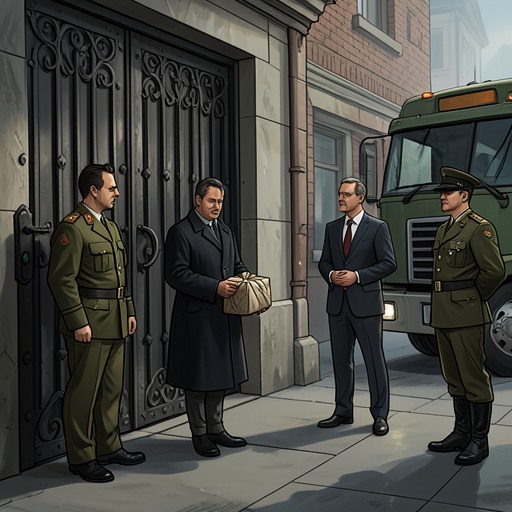
That support operates under political limits. After Congress passes the Boland Amendment, military aid to the Contras is prohibited. The restriction does not end the administration’s anti-communist objectives; instead, it sharpens the distinction between the public justification for assistance and the underlying strategic purpose. Hobbs describes a structure in which National Security Directive Number Three authorizes the vice president to direct activities against communist terrorists in Latin America. The vice president then forms the Terrorist Incident Working Group, based in El Salvador, Honduras, and Costa Rica, which establishes the National Humanitarian Assistance Operation.
Hobbs characterizes the operation’s stated purpose as nonlethal humanitarian aid to Nicaraguan refugees, while identifying the Contras as the intended beneficiaries behind that description. The label and the covert purpose sit uneasily together: humanitarian assistance provides a permissible public form for support connected to armed opposition. The narrative thereby shows how a legal and political restriction can redirect an operation’s language and administrative channel without displacing the policy goal.
Connection to the covert-action network
The Contras appear within a wider system of anti-left operations rather than as a self-contained organization. Sal Scachi serves as John Hobbs’s intermediary in Red Mist, a coordination effort intended to synchronize operations against left-wing movements across Latin America. Its reach includes right-wing militias, drug-lord sponsors, military officers, troops, intelligence agencies, police forces, and the Church. The evidence does not reduce all those participants to one organization; instead, it shows how multiple actors and institutions can be coordinated within a common anti-communist campaign.
The Contras’ place in this regional pattern helps explain why their support matters beyond the battlefield. The same strategic logic that Hobbs applies to Nicaragua treats armed opposition as one element in a larger effort to contain left-wing movements. In his account, allowing the Sandinista government to remain is an unacceptable risk; Art’s objections expose how that emergency framing can make compromised allies appear necessary. The disagreement is not simply over whether Nicaragua poses a danger, but over which actions and partners can be excused in the name of preventing it.
Continuing pattern and narrative significance
The novel later returns to the intersection of anti-communist policy and officially authorized programs in its treatment of Mexico. Hobbs sees the Zapatistas and the Popular Revolutionary Army as possible parts of a spreading insurgency, while the Mexican government declines his offer of direct assistance. A package of helicopters and aircraft that Congress would not authorize openly for use against those left-wing groups has already been funded under the War on Drugs and is to be transferred quietly to the Mexican Army. This episode concerns a different country and different movements, not the Contras themselves, but it echoes the earlier problem: security programs can provide cover for a politically sensitive military purpose.
The Contras consequently serve as a revealing case in the novel’s portrayal of covert power. They are presented as an armed answer to the Sandinistas, but also as beneficiaries of a system that recasts support through humanitarian language and situates regional conflict within a wider secret apparatus. Their narrative importance comes from the gap between the declared purpose of policy and the means used to carry it out—a gap that Art challenges and Hobbs defends as necessary.