Culiacán, Sinaloa
The Power of the DogCuliacán, Sinaloa, is introduced as the center of the novel’s drug economy and as a city bound to the personal histories of both Art Keller and the Barrera family. Art arrives there as a newly appointed federal agent, while Adán Barrera and Raúl Barrera know it as home. That contrast gives Culiacán its force: it is not merely a remote destination for an investigation, but a place where family life, religious devotion, and organized power occupy the same landscape.
A City at the Center of the Trade
After graduating as a Special Agent of the Drug Enforcement Administration, Art receives two weeks of vacation and is sent directly to Culiacán. The narrative defines the city in compressed, emphatic terms: the capital of the Western Hemisphere drug trade, an opium market town, and the belly of the beast. His posting is therefore also an initiation. The place he must investigate is presented from the outset as the center of the system, not an outlying point on its map.
The description makes the city a measure of the scale of Art’s assignment. He has training in surveillance, covert meetings, intelligence gathering, and interrogation, but Culiacán places those skills inside the world they are meant to penetrate. Its role is not only geographical: the city embodies the convergence of the drug business and the institutions, loyalties, and daily routines surrounding it. Art’s work begins here, where the trade is already woven into the setting rather than encountered as a distant abstraction.
Art Keller’s First Encounters
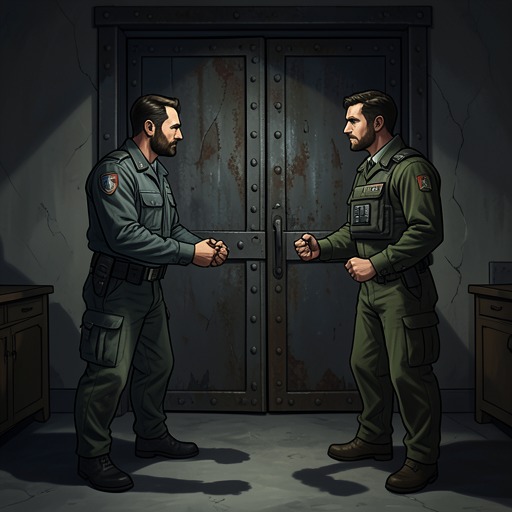
Culiacán is also where Art’s professional entry becomes personal. In one early encounter, Adán invites him to have beers. Art accepts, and the two spend the night drinking together in a cafetín. Years later, Art will look back on that night and wish he had killed Adán then. The remembered possibility casts the meeting in a double light: it begins as an ordinary social evening, but hindsight reveals the moment as an early opening in a relationship that will become lethal opposition.
That shift matters to the city’s portrayal. Culiacán is where Art meets Adán not first as an emblem of the drug trade, but as a drinking companion. Their shared night makes the later conflict harder to reduce to a clean division between investigator and criminal. The city holds both the casual beginning of their acquaintance and the knowledge, supplied by Art’s later regret, of what that connection will cost.
Devotion and the Santo Jesús Malverde Shrine
Art’s first response to a problem he cannot yet name is to go to the Santo Jesús Malverde Shrine. The shrine’s legend belongs to Sinaloa: Santo Jesús Malverde is remembered as a daring bandit who gave to the poor, was hanged by the federales in 1909, and became the focus of a popular devotion. The shrine grew from flowers and a picture into a rough-plank building erected at night by poor people. Fear that Malverde’s spirit inhabited the place helped prevent the police from tearing it down.
Pilgrims bring requests and promises, or mandas, seeking favors that range from a good crop and protection from enemies to healing and escape from arrest. Notes of gratitude cover the shrine’s walls, recording relief from illness, unexpected rent money, overturned convictions, safe returns from El Norte, and murders avoided or avenged. In this setting, criminal danger and devotional hope are not separated: the favors people seek include both protection from violence and vengeance within it.
Art’s visit also connects Culiacán to his own religious past. He waits in line with other pilgrims, and his familiarity with saints recalls the Catholic practices of his childhood in Barrio Logan and his own earlier devotion. But his faith has been eroded by his work: he marks men for death and sometimes kills them himself, while confession offers him no credible promise that he will stop. His visit to the shrine brings that conflict into the city’s religious landscape without resolving it.
The Barrera Brothers’ Home
For Adán and Raúl, Culiacán is the city of their upbringing. After their father died, when Adán was four, their uncle Tío took responsibility for the boys, bringing money into the household, speaking to them like a father, and trying to guide them. As Tío advanced in the force, the family’s standard of living rose. By Adán’s early teens, the brothers had a solidly middle-class life in the city.
Their childhood was urban rather than that of the rural gomeros. They went to school in Culiacán and attended pool parties there, while also going to beach parties in Mazatlán and spending hot summers at Tío’s hacienda in Badiraguato. The shift between those settings is part of their early world: city routines and social life existed alongside visits to the mountains, where they rode bikes to lakes, dived into quarry water, and were cared for by a dozen aunts. Culiacán thus anchors the brothers’ family history without containing all of it; their life in the city was connected to a broader family world reaching into Badiraguato.
Emergency Destination and Narrative Significance
The city remains a practical destination in moments of danger. After a violent incident, Art orders the helicopter pilot to take the injured man to a hospital in Culiacán and hurry. The command gives the city another function beyond the drug economy and childhood memory: it is the destination for urgent medical care when events in the surrounding world turn catastrophic.
Across these episodes, Culiacán gathers the novel’s central contrasts without becoming a simple backdrop. It is introduced as the belly of the drug trade, yet it is also where two future adversaries share beers, where the Barrera brothers grew up under Tío’s care, where pilgrims seek favors at Malverde’s shrine, and where the wounded may be taken for treatment. The city’s significance rests in those overlaps. The same place that serves as the threshold of Art’s investigation is already home to the people and institutions his work will bring into conflict.