Operation Cerberus
The Power of the DogOperation Cerberus is the covert campaign to fund, equip, and train the Contras through cocaine trafficking and arms transfers. What begins as an anti-Communist operation expands into a transnational business linking U.S. officials, Mexican and Colombian drug organizations, Mafia dealers, and military personnel. Its significance is not only the network it creates, but the way a declared security objective becomes entangled with criminal commerce and concealed government authority.
Origin and declared purpose
The operation is introduced through the work of Sal Scachi, a former Special Forces soldier assigned to a CIA operation called Cerberus. During the preceding months, Scachi and other military personnel had been putting up three radio towers in the Colombian jungle and watching over them to prevent Communist guerrillas from destroying them. The towers appear, at first, to be part of a limited intelligence or communications task. Their significance changes when Art Keller connects them to the movement of SETCO aircraft.
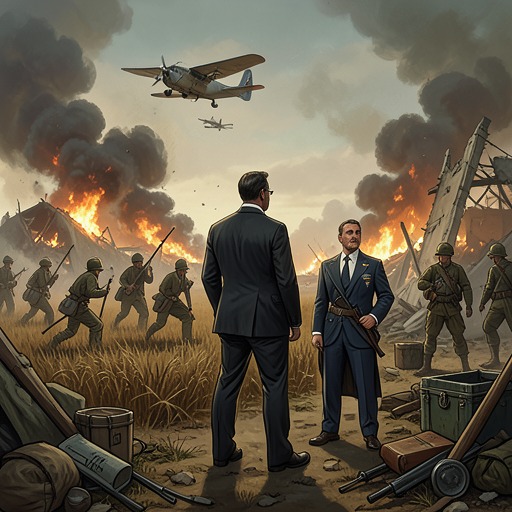
The political rationale offered for Cerberus rests on the claim that Nicaragua presents a strategic danger. John Hobbs depicts the country as a Soviet client state whose position in Central America could expose the surrounding region and the United States to military threats. He points to arms moving across Nicaragua’s borders and raises the possibility of Soviet forces and missiles in the region. In this account, the threat is framed as urgent enough to require action beyond ordinary channels. That framing helps explain the operation’s reach, but also shows how an argument about national security can make exceptional measures appear necessary.
Hobbs tells Art that Cerberus originates at the highest level of government, rather than with the CIA. His account traces an authorization chain from the vice president’s office: National Security Directive Number Three permits the vice president to direct activities against Communist terrorists in Latin America; the Terrorist Incident Working Group operates from El Salvador, Honduras, and Costa Rica; and a National Humanitarian Assistance Operation is ostensibly set up to provide nonlethal aid to Nicaraguan refugees, identified as the Contras. Hobbs says Scachi reports to him and that he reports to the vice president. The account places the operation within a formal political structure even as the methods associated with it depart sharply from its stated humanitarian purpose.
The cocaine-and-arms network
Art’s investigation turns the radio towers into a clue. Chris Conti, the regional chief in Colombia, brings up three towers in the jungle north of Bogotá and says he cannot get close enough to examine them. Art considers whether the Medellín organization could have built the technology and whether the towers might emit VOR signals to guide SETCO planes. This is presented as Art’s explanation for how the aircraft could fly without being detected, not as a technical conclusion independently confirmed in the account.
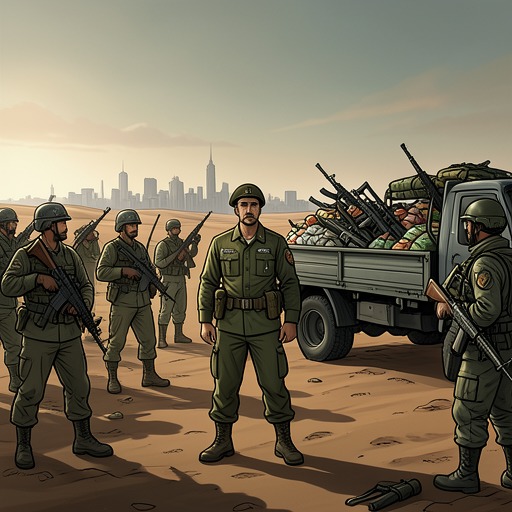
The suspicion takes more concrete form at Ilopongo Airport. Art sees armed men unloading cargo from a SETCO plane in a busy hangar. Among those present is David Núñez, who opens a crate and lifts out a grenade launcher. Art reads Núñez’s attachment to the weapon in light of his past at the Bay of Pigs and his desire for retribution. The scene gives the arms shipment a human and political dimension: the weapons are not merely cargo but part of a struggle whose participants bring older conflicts with them.
Art recognizes the arrangement as a renewed Cuba–Miami–Mafia drug connection. Cocaine is moved from Colombia through Central America and Mexico to Mafia dealers in the United States, while the Mafia pays in arms that are sent to the Contras. The operation therefore joins two flows: drugs moving north toward U.S. markets and weapons moving south toward the Nicaraguan conflict. The SETCO flights and the towers provide possible infrastructure for that network, while the trafficking organizations supply routes and capacity that an official aid program alone could not provide.
The larger commercial arrangement between the Federación and the Colombian cartels helps explain Mexico’s role. Rather than grow the cocaine, the Mexican organization undertakes its transportation. The Colombians pay $1,000 for each kilo safely delivered to them inside the United States. Mexican traffickers take delivery, move cocaine to staging areas near the border, carry it across, and transfer it to safe houses; Colombian operators then collect it and take it to laboratories for processing. Art reflects that the two-thousand-mile border itself has become the valuable resource: a product worth little on one side can command vastly more just across it. In this structure, the Federación profits from controlling movement across the border, while the Colombians retain the processing and distribution stages described in the account.
Authority, secrecy, and parallel operations
Cerberus is distinct from Operation Red Mist, although the two belong to the same wider landscape of covert action. Red Mist coordinates operations intended to neutralize left-wing movements across Latin America. Sal Scachi’s role there is to share intelligence, distribute resources, coordinate targets, and prevent participating operations from interfering with one another; some of those operations do not know they are part of a larger campaign. Cerberus, by contrast, is specifically described as a conspiracy to fund, equip, and train the Contras through cocaine sales. The distinction matters: one program coordinates political and intelligence activity across a region, while the other uses the drug-and-arms trade to sustain a particular armed force.
The operation’s authority is also presented through competing institutional accounts. Hobbs insists that Cerberus does not run through the CIA, but through the vice president’s office, and says that Scachi reports through him. Art’s own experience complicates the certainty of that explanation. As he watches federal agents, he understands Operation Condor as having spread the Sinaloan organization rather than eradicated it. The cartel’s dispersed transportation network can survive the destruction of particular land, crops, or communities because the border remains. Cerberus thus sits within a broader pattern in which official efforts to combat one threat can strengthen or redirect the systems that make illicit trade possible.
Exposure and consequences
The operation’s consequences extend beyond its immediate arms shipments. Years later, Adán Barrera has copies of the material from Juan Parada’s briefcase stored in a safe-deposit box in Grand Cayman. The documents include evidence of Cerberus and the Federación’s cooperation with Americans in the Contra drugs-for-arms operation. They also describe Operation Red Mist, alleged sponsorship by Mexico City, Washington, and drug cartels of assassinations of left-wing figures in Latin America, and evidence of assassinations connected to the fixing of Mexican presidential elections. The material presents Cerberus not as an isolated breach, but as one part of a much larger entanglement of state and criminal power.
The evidence is dangerous to more than one government. Adán also retains knowledge that is not in the briefcase, including information about the assassination of Luis Donaldo Colosio and Art’s perjury before the congressional committee investigating Cerberus. Art acknowledges that he had already been offered a deal, but says he refused it: he intends to take Adán to the district attorney and tell everything about Operation Condor, Cerberus, and Red Mist. His decision turns the operation from concealed history into a matter of prospective public testimony, while exposing his own role in its aftermath.
Cerberus also bears on the fate of Juan Parada. Art concludes that Parada was killed as part of Red Mist, whose operations Parada threatened to expose to the world. The distinction between Cerberus and Red Mist remains, but the programs’ histories converge through the evidence Parada sought to pass on and the danger created by disclosure. The network’s legacy is therefore both material and political: weapons, cocaine, and transport routes sustain the Contra effort, while the records of those transactions threaten to reveal how official authority and criminal organizations helped sustain it.