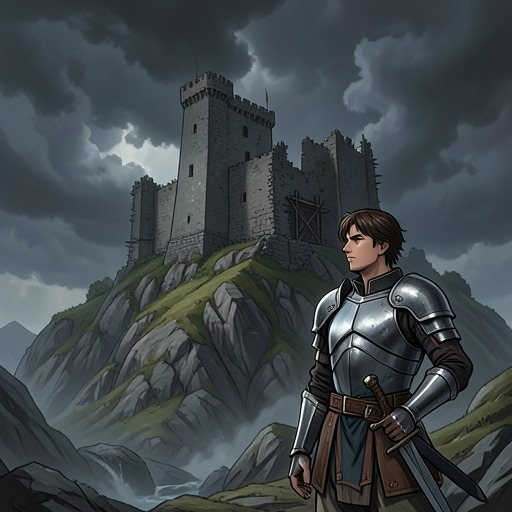
Cesare Borgia Conquers Romagna
The PrinceCesare Borgia's conquest of Romagna was presented as a model of how a new prince could transform an externally assisted seizure into an organized and apparently secure state. Its decisive significance lay not simply in the speed of the conquest, but in the political work that followed: Borgia exploited French intervention to enter Romagna, neutralized competing factions, established his own military dependence, and reshaped disorderly territories into a unified dominion whose inhabitants began to recognize the advantages of his rule.
Causes and Political Background
Alexander VI faced severe obstacles in seeking to enlarge his son Cesare Borgia's power. The available territories belonged largely to the Church, yet the Duke of Milan and Venice would not readily permit an expansion that threatened their interests; Faenza and Rimini were already under Venetian protection. The military resources of Italy were also controlled by the Orsini, the Colonnesi, and their followers, all of whom had reasons to fear the growth of Borgia's authority. Alexander therefore needed to alter the existing political order and throw Italy into confusion before a territorial acquisition could safely be made.
The opportunity came through Venice's plan to bring France back into Italy. Alexander did not oppose that design. Instead, he advanced it by annulling the first marriage of Louis XII of France, thereby helping clear the way for the French intervention. Louis entered Italy at the instance of Venice and with the consent of Pope Alexander. Once the French king had taken Milan, Alexander obtained French troops for his son's campaign in Romagna. The province, impressed by the reputation of French arms, submitted at once.
The conquest thus began through auxiliary power rather than through forces entirely controlled by Borgia. This initial dependence gave him territory but not full security. The Orsini might refuse further service or even take back what he had gained, while the shifting policy of France could halt his advance. The distinction between acquisition and possession became the central problem of the campaign.
Course of the Conquest
After acquiring Romagna and suppressing the Colonnesi, Borgia sought to extend his conquests. The weakness of his military position became visible during the attack on Bologna, when the Orsini participated reluctantly. French policy became equally restrictive after Borgia seized the Duchy of Urbino and attempted to move against Tuscany; Louis forced him to abandon that plan. These reversals convinced Borgia that he could no longer rely on the arms or fortune of others.
His first corrective measure was to weaken the Orsini and Colonnesi factions in Rome. The Colonnesi had already been scattered. Members of the rival following who were of good birth were drawn into Borgia's service as his gentlemen, receiving generous provision and commands or offices suited to their rank. Within a few months, their former partisan loyalties had faded, and their hopes became attached to the Duke alone. Borgia did not merely defeat a faction in the field; he attempted to redirect the social ambitions that had sustained it.
He then waited for an opportunity to destroy the Orsini leadership. That opportunity followed the council held at Magione in the territory of Perugia, where the Orsini recognized that the power of Borgia and the Church threatened their survival. The meeting produced the revolt of Urbino, disturbances in Romagna, and numerous dangers for the Duke. French assistance enabled him to overcome these crises and restore his reputation, but he still wished to avoid dependence on France or any other foreign power.
Borgia consequently turned to stratagem. Through the mediation of Paolo, whom he secured with repeated personal attentions, including clothes, money, and horses, he concealed his intentions well enough to draw the Orsini leaders into his hands at Sinigaglia. Once the leaders had been removed and their followers won over, Borgia held Romagna together with the Duchy of Urbino. The political result was more important than the isolated act of capture: rival command structures had been broken, while much of the opposition's supporting network had been absorbed into the Duke's own order.
Military Dependence and Independent Power
Borgia's changing armies revealed the broader logic of the conquest. He first entered Romagna with French men-at-arms serving as auxiliaries and used them to take Imola and Forli. Finding these troops unreliable for his longer-term purposes, he turned to mercenaries, hiring the Orsini and the Vitelli family. When these forces likewise proved fickle, false, and treacherous, he dismissed them and relied on troops raised under his own authority.
His reputation increased with each movement toward military independence. He was respected least when his power rested on French forces, more highly when he commanded mercenary troops, and most highly when observers saw that he alone controlled his army and resources. The conquest therefore involved an institutional transformation: territory initially obtained through foreign arms became more secure only when Borgia reduced the military autonomy of external commanders and created a force personally answerable to him.
This progression was contrasted with the example of Hiero II of Syracuse, who, after recognizing that mercenary soldiers were useless, had them all cut to pieces and thereafter made war with native troops alone. The comparison emphasizes that Borgia's achievement was not simply battlefield success. It was the conversion of military power from an unstable coalition into an instrument of princely command.
Administration, Coercion, and Consent
Romagna had previously been ruled by weak lords who cared more about plundering their subjects than correcting them. Their government produced division rather than union, and the province was overwhelmed by robbery, tumult, and every form of outrage. Borgia judged that conquest would remain vulnerable unless the territory became peaceful and obedient.
He therefore appointed Remiro d'Orco, a stern and prompt governor, and granted him the fullest powers. In a short time Remiro restored tranquillity and order, demonstrating the immediate effectiveness of concentrated authority. Yet the same severity that stabilized the province risked making the Duke hated. Borgia consequently judged that unlimited powers were no longer necessary and established a civil tribunal in the center of Romagna, with an excellent president and an advocate representing every town.
The administrative change allowed Borgia to separate the benefits of order from the resentment produced by the methods used to impose it. Because earlier severities had generated hostility toward himself, he sought to persuade the population that the cruelty had come from the harsh disposition of his minister rather than from the Duke. He then used that explanation as a pretext to have Remiro beheaded and displayed in Cesena's marketplace beside a block and a bloody axe. The spectacle simultaneously punished the agent of repression, dramatized the Duke's control over justice, and satisfied a populace that had experienced both disorder and harsh restoration.
The treatment of Romagna thus combined force with political presentation. Borgia's power was made visible through the execution, while the tribunal offered a more regular form of governance. The people were not described as merely subdued; once the province had been pacified and its rival powers neutralized, they began to see that they were better off under the Duke. Popular goodwill became part of the foundation of a dominion that had begun in foreign conquest.
Consequences and Historical Significance
Borgia's conquest demonstrated the difference between taking a province and securing it. French intervention opened Romagna to him, but French policy also constrained his ambitions; the Orsini and mercenary commanders supplied military assistance, but their independent interests made them dangerous. Durable authority required the Duke to eliminate or absorb rival factions, rely on troops of his own raising, and create institutions capable of replacing both local disorder and personal terror.
The episode was used to exemplify the wider rule that a prince who acquires a state must lay foundations early, since a power received through another's arms and fortune is unstable. Borgia's measures showed how those foundations might be built after an initially weak beginning: by changing the allegiance of noble followers, crushing conspiratorial leadership, controlling the army, and presenting severe acts as the necessary work of subordinate ministers rather than as the ruler's own appetite for cruelty.
His final success remained vulnerable to Fortune, but the vulnerability did not erase the quality of his political construction. Romagna and Urbino had been brought under his authority, the population had been reconciled to order, and the military reputation of the Duke had risen as his dependence on foreign and hired forces diminished. The conquest therefore stands in the narrative as a concentrated study of princely state-building: a violent acquisition made politically meaningful by the creation of obedience, administration, and a reputation for commanding his own power.