French invasion of Italy (1494)
The PrinceFrench invasion of Italy (1494) was the opening intervention through which France sought a foothold in a politically divided Italy. In the analysis of the invasion, its significance lies less in the movement of armies alone than in the alliances, expectations, and institutional differences that determined whether conquest could be acquired and retained.
Causes and Political Setting
The invasion arose from the ambitions of Charles VIII of France, whose conduct had left France without dependable friends in Italy. When Louis XII of France later pursued similar designs, he was brought into Italy by the Venetians, who hoped that French intervention would win them half of Lombardy. Because France desired an Italian foothold and had few allies available, accepting Venetian friendship was presented as understandable rather than inherently mistaken.
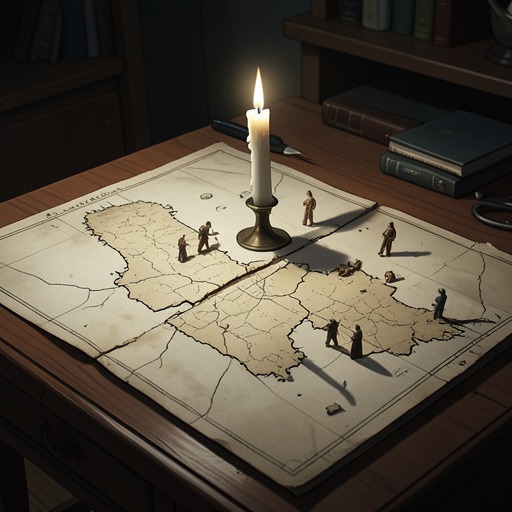
The wider Italian balance was organized around several powers: the Pope, Venice, the King of Naples, the Duke of Milan, and Florence. Their central concerns were to prevent an armed foreigner from invading Italy and to prevent any one Italian power from expanding too far. The Venetians were checked through collective resistance, as in the defense of Ferrara, while the Pope was constrained by the divided Roman Barons, especially the Orsini and Colonnesi factions. This arrangement kept the Papal temporal authority weak and insecure before the French intervention altered the balance.
Entry and Initial Success
The French entry demonstrated how internal divisions could open a country to an outside power. France’s lack of Italian friends was itself a consequence of Charles VIII’s earlier conduct, which had closed doors that might otherwise have offered support. The invasion therefore depended on a political opening created by Italian rivalries and by the calculations of states hoping to profit from French strength.
The immediate French advance produced a dramatic restoration of French prestige. After the recovery of Lombardy, Genoa submitted, Florence reached terms, and the Marquis of Mantua, the Duke of Ferrara, the Bentivogli, the Countess of Forli, the Lords of Faenza, Pesaro, Rimini, Camerino, and Piombino, and the citizens of Lucca, Pisa, and Siena offered friendship. The Venetians, having exchanged substantial assistance for the prospect of only a few towns in Lombardy, found that they had helped make the French King master of two-thirds of Italy.
Yet the ease of entry concealed the harder problem of consolidation. A new ruler offended inhabitants through stationed troops and the many burdens associated with acquisition, while those who had expected improved conditions could turn against the conqueror when their hopes were disappointed. The people who opened the gates to France were therefore capable of becoming opponents once French rule appeared to bring insolence rather than benefit.
Strategic Errors and the Expansion of the Church
The French failure was attributed to a mistaken method of governing foreign territory. Rather than securing and protecting the many Italian friends who were weak, fearful, and compelled by circumstance to attach themselves to France, Louis XII of France assisted Pope Alexander VI in occupying Romagna. This strengthened the Church by adding temporal power to its spiritual authority while alienating the allies whose support could have protected French possessions against another powerful state.
The first error generated further commitments. Having strengthened the Church, France had to continue along the path created by its own decision, and the resulting expansion of the Church and Spain in Italy came at France’s expense. The invasion thus became an example of a conqueror creating the power that would later undermine him. Its central political lesson is that a ruler who makes another power great may prepare his own ruin, because the subordinate power will eventually possess either the skill or the strength to distrust and resist its former patron.
Comparisons with Other Conquests
The invasion is interpreted alongside contrasting examples of conquest. Alexander the Great conquered Asia rapidly, and after his death his successors retained it because the conquered kingdom had been organized under a single dominant ruler, Darius III, whose authority could be destroyed decisively. The later disorders arose from the successors’ ambition and mutual jealousy rather than from resistance by the subject population. The comparison suggests that the political structure of the conquered state, not merely the conqueror’s military merit, determines the difficulty of occupation.
The same distinction explains why acquisitions resembling France, with powerful local Barons and persistent memories of separate rule, are more difficult to hold. Spain, Gaul, and Greece repeatedly rose against Rome while their small Princedoms remained politically remembered; only after the authority and long continuance of Roman rule had erased the old dynastic memory did Rome secure its hold. By contrast, a territory differing in language, customs, and laws requires exceptional fortune and address, with personal residence by the conqueror identified as one of the most effective safeguards.
Free cities present an even sharper danger. A city accustomed to its own laws and freedom can be held only by destruction, personal residence, or the preservation of its laws under a dependent local government and tribute. The examples of Athens and Thebes under the Spartans, and of Capua, Carthage, and Numantia under the Romans, distinguish temporary control from durable possession. Pisa’s revolt against Florence after a century of servitude illustrates how the memory of liberty and ancient laws can survive long submission and reappear when the ruling power suffers misfortune.
Military and Historical Consequences
The invasion established the conditions for repeated French intervention and repeated loss. Louis XII of France gained Milan quickly and lost it quickly; on the first occasion Ludovico Sforza was able to recover it with his own forces after the local population became disillusioned with French rule. After rebellion had been suppressed, however, France’s position was more deeply entrenched, and recovering Milan a second time required the combined force of the world against France, with French armies destroyed and driven out of Italy. The kingdom nevertheless lost Milan again, showing that military recovery could not compensate for defective political management.
The conduct of Cesare Borgia offers a contrasting lesson in military dependence. He entered Romagna with French auxiliary men-at-arms and used them to take Imola and Forli. Finding auxiliary forces unreliable, he replaced them with mercenaries drawn from the Orsini and Vitelli; discovering those troops to be fickle, false, and treacherous, he dismissed them and relied on forces of his own raising. His reputation increased as he became master of his own army, illustrating the broader principle that foreign aid may win a victory without providing secure political power.
The invasion therefore functions as a case study in the difference between access and possession. Foreign alliances can open the gates, local discontent can accelerate conquest, and military superiority can produce spectacular gains. But unless the conqueror preserves useful friendships, understands the laws and political structure of the acquired territory, and develops forces under his own control, the first success creates obligations and enemies that later make retention impossible. The French intervention changed the balance of Italy, yet its most lasting result was to reveal how conquest can strengthen the very institutions and rivals that eventually destroy the conqueror.