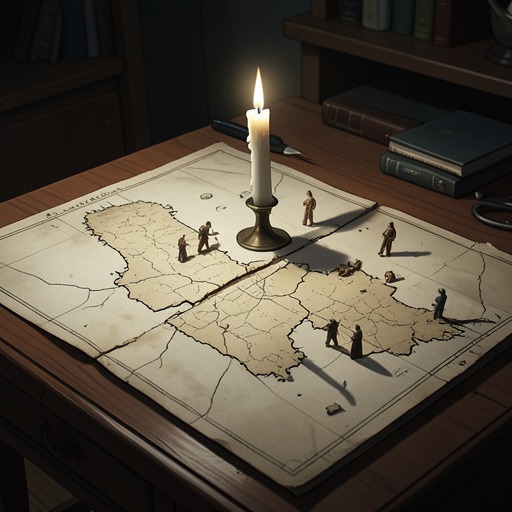
Own arms
The PrinceOwn arms are the military forces raised from a Prince’s own subjects, citizens, and dependents. In the argument of The Prince, they are not merely one option among several forms of soldiery but the foundation on which every durable State must rest. Good laws and good arms are described as the principal foundations of new, old, and mixed States; because laws cannot be securely maintained without force, the discussion turns especially to the question of who bears that force. A ruler who entrusts his survival to men bound to the State itself possesses a basis for independent action, whereas one who relies on hired or foreign troops places his security in the hands of others.
Definition and Political Function
Own arms differ from mercenary armies and auxiliary troops because their members belong to the political community they defend. Mercenaries fight for pay, while auxiliaries are supplied by a foreign potentate and remain under their own officers. National forces, by contrast, are composed of the Prince’s subjects, citizens, and dependents. Their military service connects defence, political allegiance, and the survival of the State rather than treating war as a contract or temporary expedition.
This connection gives own arms a collective strength that exceeds the quality of isolated soldiers. In the appeal to the future rulers of Italy, the text argues that no soldiers can be braver, truer, or more faithful than those drawn from the country itself. Each individual may already possess military ability, but the force becomes stronger when its members are commanded by their own Prince and are honoured and valued by him. Military power therefore depends not only on weapons or discipline but also on the relationship between the army, its commander, and the community whose existence is at stake.
Own arms also allow a ruler to stand alone. A Prince is considered strong when the men and money at his disposal enable him to assemble an army capable of taking the field against an assailant. A ruler who cannot do this must retreat behind fortified walls and depend on circumstances outside his control. National forces turn military capacity into a form of political independence: the State can meet danger directly instead of waiting for a benefactor, bargaining with a captain, or accepting the conditions imposed by a foreign army.
Contrast with Mercenaries and Auxiliaries
The case against mercenaries rests on their divided allegiance and defective incentives. They are portrayed as disunited, ambitious, insubordinate, treacherous, insolent among friends, cowardly before enemies, and lacking any bond strong enough to make them risk their lives. Their only firm motive is pay. In peace they may burden the State by plundering it; when war begins, they may disappear. The military weakness of Italy is attributed to its long dependence on such forces, whose apparent strength against one another dissolved when foreign enemies appeared. France was consequently allowed to conquer Italy with striking ease, while the Princes who had relied on mercenaries paid the penalty for that dependence.
Mercenary commanders create a second danger. If a captain is capable, the Prince cannot safely trust him, because victory may enlarge the captain’s power until he can overthrow his master or act against the master’s wishes. If the captain is incapable, his incompetence may ruin the State. A Prince or a Republic using its own arms should therefore command in person, or, in a republic, appoint a citizen who can be replaced if incompetent and restrained by law if successful. Own arms do not eliminate the need for command, but they keep the commander within a political structure answerable to the State.
Auxiliaries are even more dangerous because they arrive united and remain under the control of their own officers. Their failure destroys the Prince who summoned them; their victory may make him their prisoner. Pope Julius II’s attempt to take Ferrara illustrates the hazard. After the poor performance of his mercenaries, he called on Ferdinand of Spain for horse and foot soldiers. The auxiliaries were defeated at Ravenna, and the Pope escaped only because the Swiss unexpectedly drove the victors from the country. His survival came from forces other than those on which he had recklessly depended.
The text therefore distinguishes the principal risks of the two foreign systems. Mercenaries threaten through inertness and cowardice; auxiliaries threaten through valour that belongs to someone else. A wise Prince should prefer defeat with own arms to victory obtained through foreign forces, because a victory dependent on another power is not a true victory. Foreign aid may produce an immediate success while leaving the State weaker, more exposed, and less capable of acting independently afterward.
Examples of National Military Power
Cesare Borgia’s military development supplies the clearest example of the movement from dependence to self-command. He first entered Romagna with French auxiliaries and used them to take Imola and Forli. When he judged those troops unreliable, he replaced them with mercenaries, hiring the Orsini and Vitelli. Finding these forces fickle, false, and treacherous as well, he removed them and turned to troops raised under his own authority. His reputation increased at each stage, but it was greatest when everyone understood that he alone controlled his forces. The change in military foundation changed the political meaning of his power: he was no longer merely the beneficiary of French arms or the employer of uncertain captains, but the master of an army attached to his own resources.
Hiero II of Syracuse offers a harsher version of the same lesson. After being appointed captain of the Syracusans’ armies, he recognized that the mercenary force supplied by men resembling Italian condottieri was useless to the State. Since he could neither retain nor safely disband them, he had them all cut to pieces. He then conducted war with native soldiers alone. The episode presents own arms not as a mild administrative preference but as a decisive break with a military organization whose continued existence threatened political security.
The history of Rome and Sparta is used to associate national arms with long political endurance. Both remained armed and free for ages, while the Swiss are presented as both the best armed and the freest people in the world. The point is not that military strength automatically creates liberty, but that a community capable of defending itself is less vulnerable to the arbitrary will of a hired captain or foreign patron. When the people who bear arms are integrated into the State, military power can reinforce political independence rather than replace it.
Venice demonstrates the danger of abandoning that connection. Its power grew with glory and safety while subjects of every rank bore arms in its wars, particularly before its enterprises expanded onto the mainland. Once Venice adopted the Italian practice of making war through hired captains, it moved away from the methods in which it had excelled. Carmagnola first appeared as a valiant and skilful leader when he defeated the Duke of Milan, but later became slack in prosecuting the war. The Venetians feared dismissing him because of what he might do with his military power and were ultimately forced to put him to death to protect themselves.
The subsequent Venetian experience made the imbalance still clearer. Under captains such as Bartolommeo of Bergamo, Roberto of San Severino, and the Count of Pitigliano, the danger came not from victories that might empower the commanders but from defeats. At Vaila, Venice lost in one day what had taken eight hundred years to acquire. Mercenary gains were slow, late, and inconsiderable; their losses were sudden and astounding. Own arms are thus defended not only as a source of honour but as protection against the catastrophic asymmetry created when a State pays others to control the means of its survival.
Institutional Reform and Long-Term Security
The French monarchy shows how national arms can be built and then weakened by short-sighted reform. Charles VII, father of Louis XII, recognized the necessity of strengthening France with a national army after freeing the country from the English through good fortune and valour. He issued ordinances regulating the service of both men-at-arms and foot soldiers throughout the kingdom. His successor abolished the national infantry and began hiring Swiss mercenaries. Later Princes followed the same error, increasing the reputation of the Swiss while degrading France’s own military resources.
The consequences reached beyond the infantry itself. French men-at-arms became dependent on foreign assistance and learned to believe that they could accomplish nothing without the Swiss. France consequently could not match the Swiss and could not succeed against others without them. Its army became mixed, partly national and partly mercenary. Such a force was better than a purely mercenary or purely auxiliary army, but still inferior to one composed entirely of national troops. Had the military ordinances of Charles VII been retained and extended, the realm of France would, in the text’s judgment, have been invincible.
The Roman Empire supplies the broadest historical warning. Its first overthrow is traced to the employment of Gothic mercenaries. From that point, Roman strength began to decline, and the military virtue that had belonged to the Romans passed to the Goths. The conclusion is categorical: without national arms no Princedom is safe. A State without them is dependent on Fortune because it lacks the strength required to defend itself in adversity. A reputation for power that is not founded on a national army is described as infirm and fleeting, however impressive it may look during peace or under favourable circumstances.
This principle also applies to the wider problem of political foundations. A ruler who rises suddenly through the favour or fortune of another may acquire a State without the knowledge, power, or loyal troops needed to preserve it. Such a ruler can survive only by learning quickly how to lay the foundations that a more established Prince laid in advance. Own arms are one of those foundations because they convert borrowed power into organized capacity. They make the State less dependent on the patron who created it and less vulnerable when Fortune changes.
Popular Support, Command, and Italian Reform
The military argument is linked to the political bond between Prince and people. A ruler who remains on good terms with his subjects possesses a resource in adversity that cannot be replaced by appearances of loyalty during peace. Nabis of Sparta defended his country and crown against the combined forces of Greece and a victorious Roman army; when danger approached, only a few subjects required watching. Had the people been hostile, that small circle of loyalists would not have been enough. National defence therefore depends on more than recruitment. It requires a community that regards the State and its ruler as worth defending.
The same lesson appears in the warning about civil Princedoms. Citizens may promise to serve the State freely when danger is remote, and in tranquil times many may even declare themselves willing to die for it. When the State actually needs them, however, few may be found if their loyalty has not been secured beforehand. A wise Prince must devise means by which subjects feel their continuing need for the State and for him in both favourable and adverse conditions. Own arms are the institutional expression of that continuing relationship: they mobilize the people, but they also reveal whether political attachment exists beyond ceremony and promise.
The proposed remedy for Italy is therefore both military and political. Its armies have repeatedly failed not because Italians lack individual strength, dexterity, or intelligence, but because their leaders are defective and skilled soldiers will not obey a commander who has not established unquestioned merit or authority. Purely Italian armies have been beaten over twenty years at Taro, Alessandria, Capua, Genoa, Vaila, Bologna, and Mestri. The answer is not simply to acquire more foreign troops. The ruling house must create national forces and place them under a Prince capable of commanding them.
The text nevertheless allows for deliberate institutional improvement rather than blind attachment to an existing system. Swiss and Spanish infantry each possess formidable qualities, but each also has weaknesses: the Spaniards cannot resist cavalry, while the Swiss may yield to resolute infantry in close combat. At Ravenna, Spanish infantry forced its way beneath German pikes with agility and the aid of bucklers, bringing the Germans to the point at which they could no longer defend themselves before cavalry intervened. A new national army could therefore be trained on a different system, designed to withstand cavalry and not fear infantry. Reforming old forces, rather than inventing entirely new ones, would give a new Prince reputation and importance.
Own arms ultimately represent the conversion of political authority into durable State capacity. They lower dependence on foreign patrons, limit the power of military intermediaries, connect the people’s security with the ruler’s command, and make preparation possible before crisis arrives. Their value is tested precisely when Fortune turns against the Prince: at that moment mercenaries may flee, auxiliaries may dominate, and promises made in peaceful times may evaporate. National forces cannot guarantee success, but without them military reputation, political security, and the independence of the State remain borrowed goods.