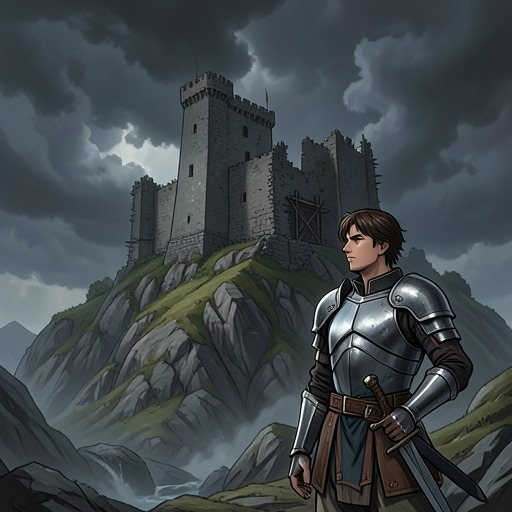
Ramiro d'Orco
The PrinceRamiro d'Orco is the severe and capable governor whom Cesare Borgia uses to transform disorderly Romagna into an obedient and tranquil province. His decisive significance lies in the contradiction embodied by his office: he is effective precisely because he exercises concentrated authority, yet that authority becomes politically dangerous unless Cesare Borgia can redirect public resentment away from himself. Ramiro d'Orco therefore appears not as an independent political actor but as the instrument, and ultimately the sacrificial instrument, of a broader strategy of conquest, pacification, and reputation management.
Appointment and Political Setting
Ramiro d'Orco enters the narrative after Cesare Borgia has taken Romagna and found it badly governed by weak Lords. Those rulers had cared more about plundering their subjects than correcting them, and their administration had produced division rather than unity. The province was consequently overrun with robbery, tumult, and every kind of outrage. Cesare Borgia judged that conquest alone would not secure the territory: Romagna required a government capable of imposing peace and obedience on a population accustomed to disorder.
To meet that need, Cesare Borgia placed Romagna under Ramiro d'Orco, described as a stern and prompt ruler. The appointment gave him the fullest powers. Ramiro d'Orco was thus not presented as a constitutional representative or a negotiator among local interests, but as a concentrated administrative force whose authority could reach across a fragmented province. His mandate was practical and immediate: make Romagna governable, restore tranquillity, and bind it to Cesare Borgia's rule.
Pacification of Romagna
Ramiro d'Orco fulfilled the purpose for which he had been appointed. In a very short time, and with much credit to himself, he restored Romagna to tranquillity and order. The speed of this transformation is essential to his characterization. His severity is not treated as random brutality; within Cesare Borgia's political calculation, it is a method that answers a specific administrative crisis. The province's earlier violence is met by a stronger, more disciplined authority.
His success also shows why Cesare Borgia relies on a minister rather than exercising every act of coercion personally. Ramiro d'Orco absorbs the visible harshness of the new regime while Cesare Borgia benefits from the resulting peace. The arrangement permits the Duke to appear as the source of stable government without bearing the entire immediate burden of punishment. Yet the very effectiveness of the governor creates a second problem: unlimited delegated power may become odious, and the population may associate the restored order with the man who imposed it.
Public Execution at Cesena
After Romagna had been pacified, Cesare Borgia came to fear that Ramiro d'Orco's unlimited authority would itself provoke hatred. The Duke therefore concluded that the governor was no longer needed in the same form. He replaced the earlier concentration of power with a civil Tribunal established in the centre of the province. The Tribunal had an excellent President, and every town was represented by its advocate. This institutional change allowed Cesare Borgia to present orderly justice as the province's new political face after the emergency period of stern rule.
Cesare Borgia then used Ramiro d'Orco to purge the population's resentment against himself. Past severities had generated ill-feeling, and the Duke sought to persuade the people that the cruelty they had suffered came not from him but from the harsh disposition of his minister. One morning he caused Ramiro d'Orco to be beheaded and exposed in the market place of Cesena. A block and bloody axe were placed beside the body, turning the execution into a deliberately arranged public spectacle rather than a concealed removal.
The spectacle produced a double response: it astounded the populace and satisfied it. Ramiro d'Orco's death therefore functions as political theatre. The same authority that had been useful in restoring order is converted into evidence of the minister's excess, while Cesare Borgia presents himself as the ruler capable of correcting that excess. The execution transfers blame downward, preserves the benefits of pacification, and helps the Duke gain the good-will of people who had recently experienced severe government.
Administrative Instrument and Sacrificial Figure
Ramiro d'Orco's relationship with Cesare Borgia is defined by delegated power and calculated expendability. He receives broad authority because a fragmented and violent province requires decisive intervention; he is destroyed because that intervention has accumulated resentment. His political value is therefore temporary but substantial. He is indispensable during the coercive phase of consolidation and disposable once Cesare Borgia needs to replace emergency severity with a more regular civil appearance.
The episode also illustrates the wider distinction between controlling a territory and securing it. Cesare Borgia does not merely conquer Romagna militarily. He first imposes order through Ramiro d'Orco, then establishes a Tribunal, and finally stages the governor's punishment. These successive measures combine force, administration, and public perception. The province is made peaceful, its government is given a civil form, and its anger is directed toward a single official rather than toward the prince who designed the entire process.
Narrative and Political Significance
Ramiro d'Orco's brief appearance carries a general lesson about rule by ministers. A ruler may need an agent willing to perform harsh acts that restore obedience, but the ruler must also control the reputation produced by those acts. Ramiro d'Orco succeeds as an administrator and fails as a politically sustainable public face. His fate demonstrates that effective coercion can be both the foundation of security and the source of hatred.
The episode is also a concrete instance of the principle that cruelty can be politically managed when it is concentrated, purposeful, and followed by measures that make the population feel protected. The narrative does not erase the violence of Ramiro d'Orco's government; the bloody axe and exposed body make it impossible to overlook. Instead, it shows how Cesare Borgia converts violence into a sequence of political effects: disorder is suppressed, civil administration replaces extraordinary power, resentment is assigned to the minister, and the prince emerges with increased public acceptance. Ramiro d'Orco remains memorable because his execution reveals the hidden cost of that transformation: the governor who makes order possible becomes the object sacrificed so that the prince may appear to embody it.