Venice
The PrinceVenice is depicted as a major power in Italian politics whose pursuit of limited territorial gains helped transform the balance of power in Italy. Its decision to bring Louis XII of France into Italy in expectation of acquiring part of Lombardy briefly made France dominant, but the resulting expansion also created the conditions for Venice’s own strategic danger. Later, the Venetian practice of fostering internal factions in subject cities became an example of how political manipulation can fail when confronted with war.
Venice and the French Entry into Italy
Venice helped bring Louis XII of France into Italy because it hoped to gain half of Lombardy. The arrangement gave France an opening in a country where it otherwise had no friends: after the conduct of Charles VIII of France, every door had effectively been closed to the French. The alliance therefore began as a calculated exchange, with Venice seeking territorial advantage and Louis seeking a foothold.
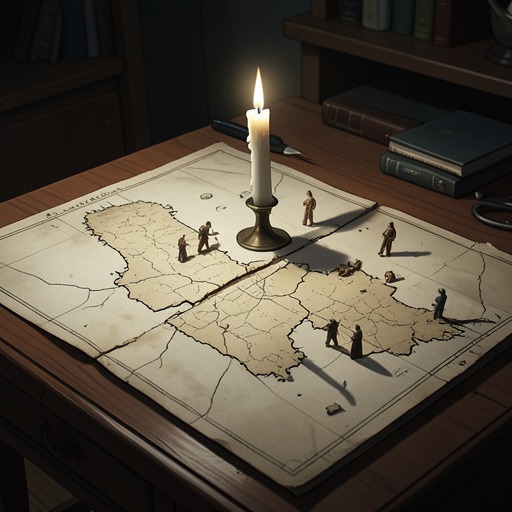
The immediate result exceeded Venice’s apparent expectations. When Louis recovered Lombardy, he regained the political credit that Charles had lost. Genoa submitted, Florence came to terms, and the Marquis of Mantua, the Duke of Ferrara, the Bentivogli, the Countess of Forlì, the Lords of Faenza, Pesaro, Rimini, Camerino, and Piombino, together with the citizens of Lucca, Pisa, and Siena, offered friendship. The text consequently portrays Venice as having made the French King master of two-thirds of Italy in exchange for a couple of towns in Lombardy. The Venetians were left with reason to regret the scale of the bargain: the limited prize they sought had enabled the creation of a much larger foreign power.
Venice in the Struggle for Lombardy
Venice’s strength initially served as a barrier against further attempts on Lombardy. While the Venetians remained powerful, they could restrain others from attacking the region. They would not have accepted such an enterprise except on terms that made themselves masters of it, while a rival power would not readily seize Lombardy for the purpose of handing it to Venice, nor would it easily risk confronting both Venice and France.
This strategic position made Louis XII of France’s later decision to destroy Venice especially damaging to France. By the time Louis had strengthened the Church through Pope Alexander VI and had brought Spain into Italy by dividing the Kingdom of Naples with Ferdinand II of Aragon, he had already created powerful rivals and alienated potential friends. Under those circumstances, the destruction of Venice removed one of the forces that had helped keep other powers away from Lombardy. The lesson is not that Venice was harmless, but that a strong neighboring power could sometimes function as a restraint on still more dangerous intervention.
The text rejects the claim that Louis acted wisely by conceding Romagna to Pope Alexander VI and Naples to Spain in order to avoid war. War, it argues, is not thereby avoided but merely deferred to the disadvantage of the side that postpones it. The same reasoning condemns the ruin of Venice: once France had enlarged the Church and introduced Spain into Italy, it should not also have consented to eliminate Venice as a counterweight.
Factional Rule in Venetian Territories
Venice is also associated with a deliberate policy of managing subject cities through internal division. The Venetians fostered the factions of Guelf and Ghibelline in cities under their control. They did not allow bloodshed, but they encouraged the disputes so that the citizens, absorbed in factional quarrels, would be less likely to unite in conspiracy against Venetian rule.
The policy appeared useful in peaceful conditions because divided subjects were easier to manage. Its weakness emerged when Venice suffered defeat at Vaila. One of the two factions, suddenly gaining courage, deprived Venice of its entire territory. The result turns the policy against its authors: the divisions that had seemed to secure obedience instead supplied an opening through which Venetian authority collapsed.
The episode supports a broader criticism of rule by manufactured faction. Such a method signals weakness because a strong government would not need to preserve its dominance by deliberately dividing its subjects. Factionalism may restrain opposition while danger is remote, but when an enemy approaches, the weaker faction can side with the invader and the stronger faction may be unable to stand alone. Venice’s experience therefore contrasts peacetime control with wartime security and shows that political quiet is not the same as durable loyalty.
Venice in the Book’s Comparative Politics
Venice belongs to a wider comparative argument about how states retain acquired territories. The text contrasts the flexible but hazardous political conditions of kingdoms organized around powerful local nobles with more centralized systems in which authority flows directly from a single Prince through dependent servants. In this framework, Venice represents a power whose influence depended not only on its own strength but also on the management of neighboring states, alliances, and internal divisions.
The examples of Alexander the Great, Darius III, France, and Rome establish that the character of a state affects the difficulty of conquest and retention. Rome’s treatment of Greece is presented as the opposite of careless dependence: Rome used weaker powers without allowing them to become too strong, humbled the great, and prevented a formidable stranger from acquiring influence. Venice, by contrast, helped create the French position in Italy and later relied on factional manipulation in its subject cities, both of which demonstrate the danger of empowering forces that may later escape control.
Venice’s significance is therefore double. As an external power, it made a short-term alliance that enlarged France beyond the scale the bargain seemed to require. As a territorial ruler, it used division as an instrument of control but discovered that divided cities could not reliably defend Venetian authority. In both roles, Venice illustrates the same political pattern: an expedient that solves an immediate problem may alter the surrounding balance of power and prepare a later reversal.