War as the Prince’s Primary Art
The PrinceWar as the Prince’s Primary Art presents military readiness as the foundation of princely power rather than one governmental concern among many. A Prince who neglects war risks losing both his dominion and the respect of his subjects and soldiers; one who makes war his disciplined study can acquire power, preserve it, and meet adversity without relying on Fortune or another ruler’s strength.
Definition and Political Purpose
The rule is stated most directly in the discussion of a Prince’s duty in respect of military affairs: a ruler should have no care or thought but for war and the regulations and training it requires. War is described as the sole art expected of one who rules. Its efficacy is proved in both directions. Military renown raised Francesco Sforza from a private station to become Duke of Milan, while his descendants, seeking to avoid the hardships and fatigues of military life, declined from princely rank back into privacy.
Military competence therefore has a political as well as a battlefield function. The unarmed Prince is exposed to contempt, because the armed man has no rational reason to submit voluntarily to one who cannot defend himself. At the same time, the unarmed ruler cannot safely trust armed retainers. Contempt on one side and distrust on the other destroy the conditions required for cooperation. A Prince ignorant of military affairs is consequently unable either to command the respect of his soldiers or to rely upon them.
Practice in Peace
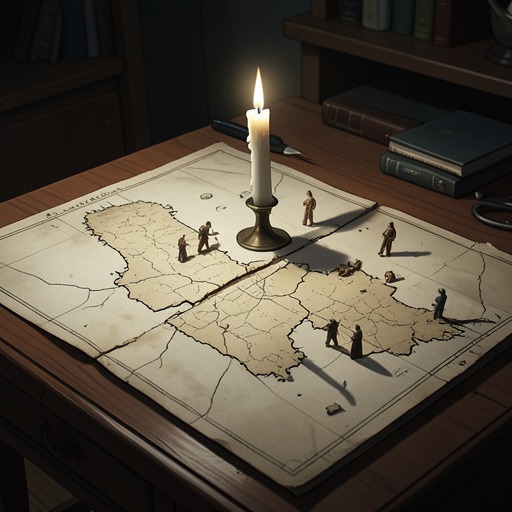
The rule requires a Prince to pursue military preparation even more in peace than in war. The practical discipline has two parts: bodily practice and the study of places. Soldiers must be kept trained and disciplined, while the Prince should be constantly engaged in the chase. Hunting hardens the body to hardship and fatigue, but its political value extends beyond physical endurance: it teaches the ruler to observe how mountains slope, valleys open, plains spread, and rivers and marshes shape movement.
Knowledge of terrain serves two related purposes. It teaches a Prince how his own country may be defended, and it enables him to understand unfamiliar districts when he first encounters them. The natural features of Tuscany are offered as an example: familiarity with that province’s hills, valleys, plains, rivers, and marshes can help the Prince recognize analogous features elsewhere. Such geographical knowledge is presented as the first qualification of a good captain because it informs surprise, encampment, marching, battle formation, and the positioning of forces for a siege.
The model of Philopoemon, Prince of the Achaians, makes this preparation vivid. In peace, while walking through the country with his friends, he would stop to consider hypothetical military situations: the enemy posted on a hill, an army positioned below it, the safest advance, the direction of retreat, and the manner of pursuit if the enemy withdrew. He listened to others, offered his own judgments, and supported them with reasons. Because he rehearsed such contingencies continually, actual command presented no complication for which he had not prepared.
Study, Imitation, and Historical Judgment
Military preparation is also mental. A Prince should read histories, examine the conduct of great men in war, and study the causes of their victories and defeats. The purpose is practical rather than antiquarian: defeats are to be avoided, victories imitated, and successful models kept constantly before the mind. A wise ruler follows the roads taken by exceptional predecessors even though he cannot reproduce their achievements exactly, just as a skilled archer aims above a distant mark so that the arrow may descend upon the intended point.
The exemplary chain includes Alexander the Great seeking to resemble Achilles, Julius Caesar seeking to resemble Alexander, and Scipio Africanus seeking to resemble Cyrus the Great. The life of Scipio is said to reveal the influence of Cyrus as described by Xenophon, particularly in chastity, affability, kindliness, and generosity. Military imitation therefore includes character and conduct as well as tactics: the Prince studies how eminent rulers behaved, not merely how they arranged armies.
The resulting discipline converts peace into preparation. A wise Prince does not remain idle when no battle is being fought. He uses peaceful intervals to build strength for danger, so that if Fortuna turns against him he can resist her blows. Military art thus becomes a continuous form of political foresight, linking present habits to future survival.
National Arms and Dependence
The rule also implies that military power must rest on the Prince’s own subjects, citizens, and dependents rather than on mercenaries or auxiliary forces. Without national arms, no Princedom is secure: it becomes dependent on Fortuna because it lacks an internal strength capable of defending it in adversity. A reputation for power that is not founded upon a national army is characterized as infirm and fleeting.
This argument explains why military knowledge cannot be reduced to hiring professional fighters. The Prince must understand the organization and disposition of a national army, and the methods for doing so can be learned from Philip II of Macedon, father of Alexander the Great, as well as from other Princes and Republics. Military rule is therefore both personal and institutional: the ruler must cultivate his own expertise while ensuring that the state’s defensive capacity is rooted in its population.
War, Conquest, and Political Foresight
Military art operates alongside the broader problem of holding acquired territories. A Prince who acquires a State joined to his hereditary dominions must preserve its existing laws and taxes while eliminating the old ruling line if he intends to incorporate it securely. When language, customs, and laws differ, the difficulty increases; residence in the acquired Province, colonies placed at strategic points, and control over stronger neighboring powers are presented as methods of securing possession. These are political applications of the same principle: power must be present, informed, and prepared before disorder becomes unmanageable.
The treatment of free cities makes the military stakes still sharper. A city accustomed to its own laws and freedom may be destroyed, occupied by the Prince, or left under its laws with tribute and a dependent local government. The histories of Athens, Thebes, Capua, Carthage, Numantia, and Greece illustrate the alternatives. Republics retain a fiercer memory of liberty and a keener thirst for revenge; unless destroyed or occupied directly, their former freedom can become the language through which rebellion organizes itself.
The rule culminates in the insistence that political dangers must be addressed while still remote. The Romans anticipated future threats, weakened dangerous powers, and chose to fight Philip V of Macedon and Antiochus III the Great in Greece rather than allow those threats to mature in Italy. War, in this logic, is not avoided by postponement; it is merely deferred to the advantage of the other side. The Prince must distinguish degrees of disadvantage and accept a present cost when delay would produce a greater future danger. Military art is therefore the active form of foresight: it joins training, historical study, national arms, territorial administration, and timely action into one discipline of rule.