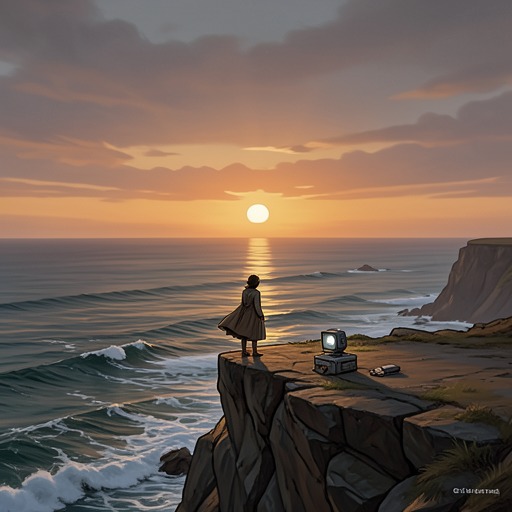
Life, and all that lives, is conceived in the mist and not in the crystal
The Prophet“Life, and all that lives, is conceived in the mist and not in the crystal” is an expression about beginnings: it casts life as something that first takes shape in obscurity and possibility, rather than in the crystal’s sharply defined form. The surrounding passage extends the contrast into a meditation on how beginnings should be understood and remembered.
Image and Contrast
The sentence sets “mist” against “crystal.” Mist suggests what is vague and not yet resolved; crystal stands for something clear and formed. The passage does not treat vagueness as a defect that must be corrected. It insists instead that obscurity belongs to the beginning of things, while leaving their eventual course open.
The next line complicates the opposition: “And who knows but a crystal is mist in decay?” A crystal’s clarity may not be an independent ideal but the remnant of an earlier, less settled state. The question turns apparent firmness into a possible sign of change or diminishment, without defining exactly what that change entails.
Place in the Passage
The expression follows a refusal to clarify words judged vague, then the statement that “Vague and nebulous is the beginning of all things, but not their end.” It thus develops a sequence: indistinctness marks an origin, but does not prescribe an indistinct outcome. The claim concerns not only life in the broad sense but “all that lives,” extending the image from life’s conception to living things as a whole.
The passage then asks its listeners to remember the speaker “as a beginning.” The expression helps shape that request: what is being offered is not presented as a final, crystalline account, but as an origin from which understanding may continue. In this context, the image of mist connects the nature of life’s beginnings to the way the speaker wishes to be remembered.
Significance
The expression reverses the usual preference for certainty by giving the uncertain beginning priority over the finished, sharply outlined form. Its claim is not that life remains vague forever: the passage explicitly distinguishes beginnings from ends. Rather, it resists treating what is not yet clear as weak or worthless simply because it has not acquired a settled shape.
The crystal question keeps the contrast from becoming a simple opposition between inferior obscurity and superior clarity. A crystal may itself be “mist in decay,” so the finished form can be understood as continuous with what preceded it, and perhaps as marked by loss. The passage leaves that possibility open, making the image a compact reflection on beginnings, change, and the limits of certainty.