The Vast Man
The ProphetThe Vast Man names a presence larger than any single person yet dwelling within all people: individuals are its cells and sinews, while their separate voices become part of its encompassing song. The image makes human connection more than a moral ideal. It presents shared life as a scale of being through which people become vast, and through which mortality is answered by endurance beyond the individual.
A Larger Being Within Each Person
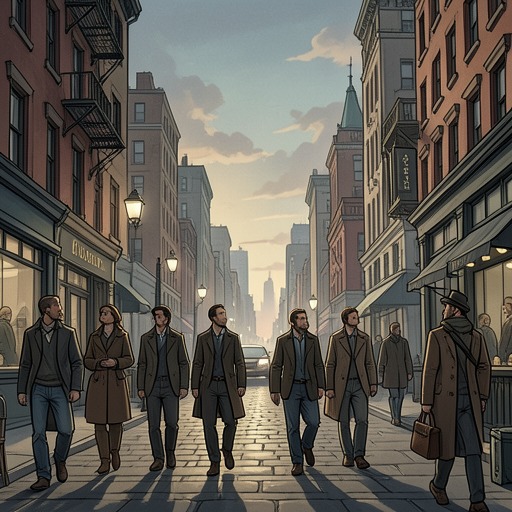
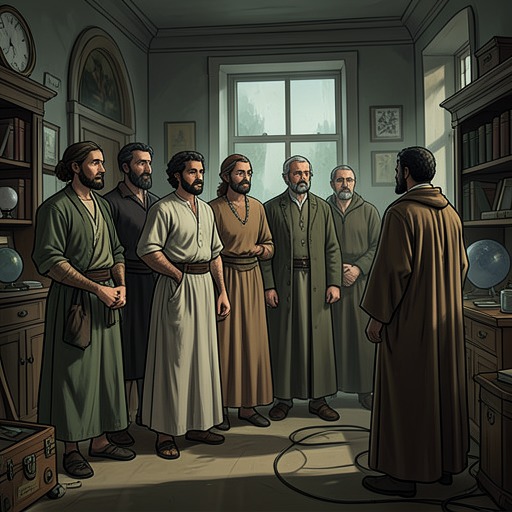
The teaching introduces The Vast Man as a figure in whom the audience is gathered into a single living body. The comparison is intimate and physical: people are not merely gathered around him but constitute his cells and sinews. Their individual existence is therefore neither erased nor self-sufficient. Each remains a distinct part, while the figure gives their plurality a common body and a scale that no one person could possess alone.
The same relation is expressed through sound. The Vast Man has a chant in which the people’s singing is only a soundless throbbing. This contrast does not make their songs worthless; it places them inside a larger music that exceeds what any isolated voice can hear or express. The image turns a crowd of separate lives into an inward pulse of a shared being, at once more encompassing and less audible than its component voices.
Images of Scale and Connection
The poem’s most expansive image is an enormous oak covered with apple blossoms. The tree combines mass and delicacy: an oak suggests strength and duration, while its blossoms suggest life appearing in many particular forms. The Vast Man is not represented as a remote abstraction but as a living structure in which rootedness and renewal coexist. The image holds together what might otherwise seem opposed: the great and the small, the enduring and the momentarily beautiful.
Its three-part description gives that structure distinct effects. The Vast Man’s mind binds people to the earth; his fragrance lifts them into space; his durability makes them deathless. These are not interchangeable promises. They place human life in a sequence of attachments and extensions: thought grounds it, fragrance draws it beyond the ground, and persistence carries it past an individual lifespan. The figure’s reach is thus both bodily and spiritual, joining earthly location to imaginative ascent and continuity.
Other teachings in the poem use related metaphors to make invisible relations perceptible. In the passage on work, the worker becomes a flute through whose heart the whispering of the hours turns to music. Work is figured not simply as an individual product but as a medium that gives audible form to something moving through time. Elsewhere, the house is described as a larger body, extending the idea of life beyond the visible human frame into a dwelling that grows in sunlight and sleeps at night. These images do not identify the worker or the house with The Vast Man; they share a poetic method of locating individual life within processes and forms larger than itself.
Individual Limits and the Boundless Self
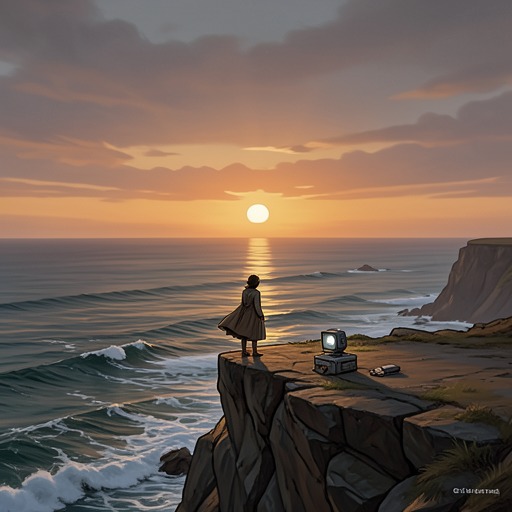
The teaching also resists the idea that inward life can be fully measured or possessed. The poem describes self as a sea without boundaries or measure and cautions against claiming to have found the truth as though it were singular and complete. This sea image complements The Vast Man without collapsing the two into one. The vast collective figure gives human lives a shared scale; the measureless sea emphasizes how little any person can delimit the depths of being.
A further image, in a passage about reason and passion, calls them the rudder and sails of the seafaring soul. If either is broken, the vessel can only toss and drift. The metaphor makes inner life a coordinated voyage rather than a contest in which one faculty must defeat the other. Set beside The Vast Man, it suggests a difference of scale: each person must navigate through a balance of inward powers, yet individual navigation takes place within a larger human existence that no solitary course can contain.
Recurrence and Significance
The Vast Man returns in the poem’s late movement, where the language of boundlessness, collective embodiment, song, and the flowering oak gathers together again. The repetition gives the image structural weight: it is not a passing comparison but a culminating way of seeing the people addressed. Their importance lies both in their individual lives and in the larger being that those lives compose. The return also renews the movement from multiplicity to unity, without reducing the many voices to a single ordinary person.
The final emphasis on durability gives the image its answer to death. The Vast Man’s endurance is said to make the people deathless, but the claim is grounded in their participation in him, not in a promise that each separate body lasts forever. The poem therefore locates permanence in relationship and shared life. Its central paradox is that individuals become greater not by standing alone above others, but by recognizing themselves as parts of a being whose reach includes them all.