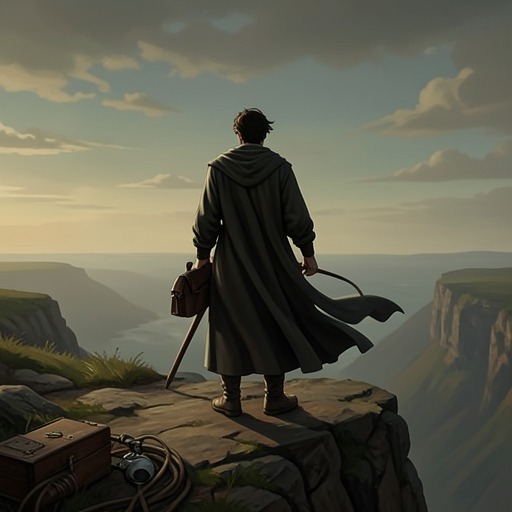
What is it to die but to stand naked in the wind and to melt into the sun
The ProphetWhat is it to die but to stand naked in the wind and to melt into the sun is a poetic expression of death as transformation rather than simple cessation. Its decisive movement is from the limits of embodied life toward release: the passage describes breath becoming unencumbered, able to rise, expand, and seek God.
Image and Meaning
The expression joins exposure with dissolution. Its images suggest a relinquishing of ordinary boundaries, but the passage does not present that change as annihilation; it turns instead toward a state of greater openness. Death is framed as a transition whose significance lies in what is released, not only in what ends.
Breath as Release
The lines that follow clarify this idea through breath. Ceasing to breathe is recast as freeing breath from its restless tides, allowing it to rise and expand in pursuit of God. The image makes the body’s ending part of a larger spiritual movement, while leaving that movement poetic rather than explaining it as a literal process.
The Closing Movement
The expression belongs to a sequence that continues from release into silence, song, and further ascent. The speaker connects drinking from the river of silence with the ability to sing, then makes reaching a mountain summit the beginning of another climb. In this context, death’s transformation is not a final stopping point: the passage’s upward motion continues beyond apparent arrival.