Abstainer
The RadleysAbstainer describes a vampire engaged in the continuing process of overcoming blood addiction. It is not a permanent cure or a simple dietary preference: abstention has to be renewed, while craving, depression, exposure, and the presence of blood keep testing it. For the Radleys, the condition is both an ethical discipline against killing and converting others and a demanding way of maintaining the appearance of an ordinary human life.
Definition and governing principle
The glossary in The Abstainer’s Handbook defines an abstainer as a hereditary or converted vampire continually working to overcome blood addiction. The definition makes the status active rather than settled. Abstention names sustained effort, not proof that the appetite has disappeared. The family’s account of its way of life likewise joins restraint to conduct: Peter explains that abstainers no longer kill or convert anyone and present themselves to outsiders as average human beings.
The handbook’s central warning is that blood intensifies craving rather than satisfying it. That principle makes abstention a practice of refusing the apparent remedy. Drinking can bring immediate pleasure or relief, but the book presents that relief as an unreliable guide to what follows. Even abstaining from killing while drinking the blood of other vampires is treated as a dangerous compromise: the consequences for personality and future behavior cannot be predicted. The desired steadiness of abstainer life is therefore set against the many possibilities opened by drinking.
Rules for ordinary life
Abstention requires managing the conditions of daily living, not just refusing blood. The handbook acknowledges that living normally without blood while avoiding daylight is nearly impossible. Sunlight is a health risk for abstainers as well as for practicing vampires, and the skin-care guidance advises staying in the shade as much as possible. The rule is practical and revealing: the ordinary routines that make a human life possible must be organized around a body that cannot safely inhabit the day without precautions.
Social integration is another part of the discipline. When Rowan is bullied, Peter and Helen consider homeschooling him, which would keep him in constant shade and remove him from his tormentors. Helen ultimately argues against it, following the handbook’s plea to integrate where possible. Integration may help the children make lives among other people, but it cannot insulate them from gossip, temptation, or the risk that classmates will provoke an uncontrolled blood-thirst episode. The family’s efforts at normality thus involve a recurring trade-off: concealment offers protection, while isolation threatens the very ordinary life abstention is meant to preserve.
Secrecy, health, and family strain
The Radleys’ public respectability depends on explanations that hide the truth. Peter’s work as a doctor brings that conflict into his consultations. During a day at the clinic, while waiting behind a modesty curtain between patients, he tries to think of a medical reason that might persuade Clara to return to eating meat. His concern is not only immediate health: he worries that second opinions, including one prompted by Rowan’s skin rash, might expose the family’s account of itself. The children may read his concealment as indifference, although he experiences it as a restriction on how openly he can care for them.
Peter justifies some of the deception through his medical knowledge of reassurance and placebo effects. He thinks of a lie as a way of coloring the truth, as a tablet’s color can influence a patient’s response. But the metaphor does not settle his doubts; he finds the justification harder to sustain with time. Abstainer life therefore imposes a cost beyond vigilance over blood or daylight: the family must use ordinary medical and social explanations to protect a secret, even when those explanations interfere with trust between parent and child.
The handbook also identifies suicidal depression as common among those who abstain. Rowan encounters that warning after a moment of tentative social connection, reading the handbook’s note in his bedroom while listening to Meat Is Murder. The text does not turn the condition into a simple cause for every difficulty he faces, but it places depression within the pressures of abstention. His distress is also bound up with bullying, isolation, and the burden of living in a family whose true needs cannot be made public.
Craving, relapse, and the limits of control
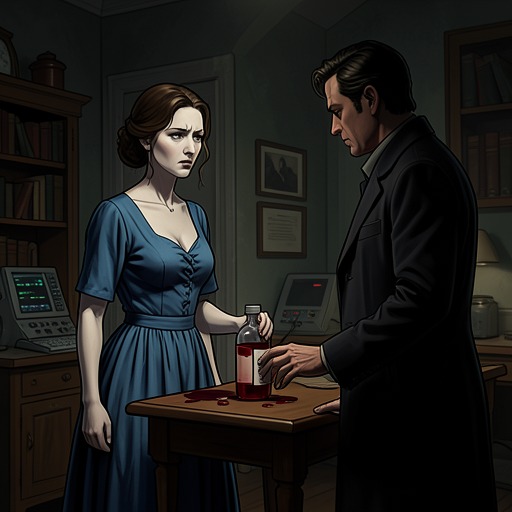
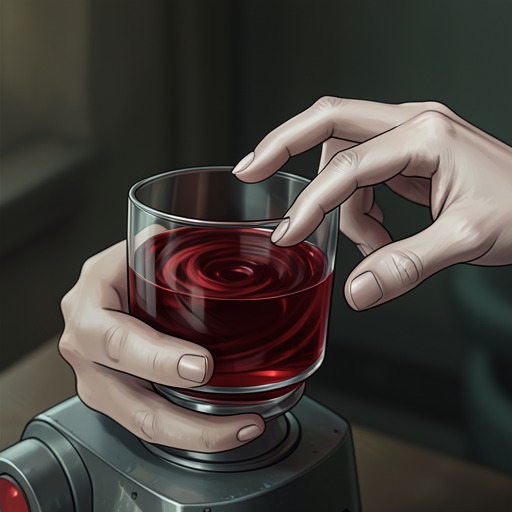
Rowan’s first drinking of Vampire blood shows how a lapse can follow both emotional distress and the promise of physical relief. He first holds a bottle in his bedroom and wonders whether he can take only a small sip, hiding it when he hears Clara nearby. Later, after recalling how Stuart Harper and other boys had crushed and mocked him, he picks the bottle up in response to that memory and drinks. The immediate effect is powerful: his worries and tension recede, and aches and ailments he has long known disappear. That short-term relief makes the handbook’s warning consequential rather than abstract. Blood seems to solve a present pain while making abstention harder to sustain.
The temptation remains active even for adults who understand the rules. Peter retrieves The Abstainer’s Handbook from Rowan’s room before a possible intimate encounter with Lorna, using its advice on breathing and sensory attention to manage the risk that his instincts will take over. The episode places abstention inside an ordinary human situation: Peter is not confronting a public crisis but trying to preserve control amid attraction and anticipated closeness. The handbook offers procedures, yet the need to consult them shows that control cannot be assumed.
The danger is also physical and unequal. Alison Glenny’s operation against Will is planned with police pressure, surprise, and a backup team equipped with protective clothing and crossbows. Even so, she recognizes that an abstainer facing a fully practicing vampire is at a disadvantage. Helen’s apparent lack of control over her own desires troubles Alison as much as the imbalance in strength. Abstainer status may govern intention, but it does not make an abstainer invulnerable to a practicing vampire or resolve the conflict between restraint and attachment.
Blood, conversion, and significance
Blood carries meanings that abstention cannot reduce to appetite alone. In the account of Helen and Will before Paris, their first sexual intimacy precedes Will’s first bite of her, an encounter remembered for its intensity and unexpected pleasure. The episode connects conversion and blood to intimacy, helping explain why the handbook treats a converted vampire’s relation to a maker as more than a matter of rules. Later, when Eve is gravely injured, Helen warns Jared that giving Eve blood will make her a vampire and that she may feel strongly toward the person whose blood is used. Rowan gives Eve his blood to save her; as she recovers, she recognizes a profound bond with him. The act makes blood at once a threat to abstainer discipline and a means of rescue and attachment.
Abstainer is therefore a precarious status held between principle and need. Its rules seek to prevent killing, conversion, and a return to uncontrolled appetite, while its everyday demands reach into health care, parenting, schooling, intimacy, and secrecy. The handbook offers instructions, but the Radleys’ lives expose the limits of instruction: craving can return, emotional distress can sharpen temptation, and blood can bind people even when abstention requires resisting it. The condition’s defining achievement is not freedom from these pressures, but the repeated effort to live responsibly within them.