Abstainer Code
The RadleysThe Abstainer Code is the set of principles by which vampires who refuse to kill or convert others try to govern their lives. Presented through The Abstainer’s Handbook (second edition), it treats restraint not as a natural state but as a repeated discipline: instinct must be resisted, ordinary routines maintained, and the craving for blood denied. The code gives abstention a social purpose, yet its own warnings—and the choices made by Rowan Radley—show how difficult that discipline can be to sustain.
Doctrine and Moral Premise
The Handbook’s central claim is that instinct is not a sufficient guide to conduct. It contrasts human civilization with the survival instincts of predatory animals and argues that social life depends on suppressing dark desires rather than obeying them. The rule therefore frames abstention as an ethical obligation: refusing the impulse to feed is part of refusing to live as a beast.
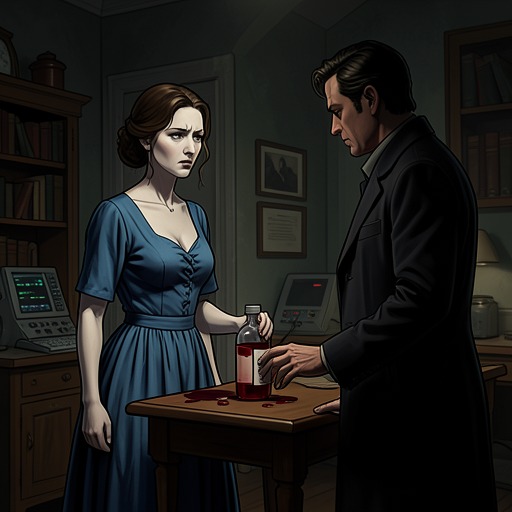
That principle appears in a practical context when Helen Radley urges Peter Radley to follow the Handbook after they have to decide what to do with a body. Helen argues for taking it away and burying it in a human manner, and recalls the teaching that civilization depends on the suppression of instinct. Peter initially reacts with disbelief, but then agrees that she is right. The exchange makes the code more than advice for private self-control: it offers a standard for deciding how to act when the pressures of vampire life collide with human customs.
The code also defines abstention by what its adherents no longer do. Peter explains that abstainers do not kill or convert anyone anymore, and that they appear to the outside world to be average human beings. This account links restraint to a collective identity. It distinguishes abstainers from vampires who continue to feed and make new vampires, while describing concealment and ordinary conduct as part of their public life.
Ordinary Life as Discipline
The Handbook turns its moral premise into a daily regimen. It recommends keeping daylight hours, holding regular employment, and spending time with people who have a stable sense of right and wrong. These are not presented merely as convenient habits: they create a pattern of conduct that counters the secrecy and appetite associated with vampire existence. The code’s ideal is a life that can pass, outwardly, as human and ordinary.
The emphasis on routine also gives abstention a social dimension. Daytime activity and regular work place the abstainer among people whose moral expectations can serve as a point of reference. In this way, the Handbook presents self-restraint as something practiced in relation to a community, not solely as an inward act of will. Its advice asks vampires to organize their days and company around the life they are trying to maintain.
Yet the instructions do not promise that restraint will feel easy or become permanent through habit. The Handbook warns that blood does not satisfy craving but magnifies it. That warning rejects the idea that a small indulgence would necessarily bring appetite under control. Instead, it describes consumption as capable of intensifying the desire that abstainers are trying to govern, giving the code a clear reason to insist on refusal rather than moderation.
Depression, Craving, and Rowan’s Test
The Handbook acknowledges a cost to abstention as well as a danger in breaking it. In a note Rowan Radley finds through the index, it identifies suicidal depression as common among abstainers. The admission complicates the code’s promise of self-mastery: refusing blood does not simply restore an uncomplicated human life. The rulebook recognizes that abstention can coexist with serious despair, even as its broader teaching demands continued resistance.
Rowan’s experiences bring those tensions into the story. After considering a bottle of vampire blood, he cradles it in his hands and wonders whether he could take only a small sip and stop there. He hides it under his bed when he hears his sister approaching. The episode shows both attraction and concealment: the possibility of drinking has entered his thoughts, but he has not yet acted in that moment.
Later, Rowan recalls being knocked down and held to the ground by Harper while other boys, including Toby Felt, laughed. He remembers wanting to disappear into the earth rather than fight back. He then picks up the bottle and drinks, dedicating the act in his thoughts to Harper. The sequence connects the immediate choice to an earlier experience of humiliation and helplessness. It also places the Handbook’s warning about craving beside a concrete breach of abstention: Rowan drinks in response to distress, rather than as an abstract experiment in vampire appetite.
Limits and Significance
The code’s authority depends on principles that its own examples expose as vulnerable. It insists that instincts must be suppressed, but also records that abstainers may suffer depression and that blood can intensify craving. Helen can invoke the Handbook to guide Peter toward conduct she regards as human; Rowan, by contrast, moves from wondering about a sip to drinking after recalling an injury to his dignity. In both cases, the rule supplies a moral vocabulary, but following it remains a choice under pressure.
The Abstainer Code thus governs several connected boundaries: between impulse and restraint, between vampire identity and an ordinary public life, and between abstention and relapse. Its instructions define the life abstainers hope to lead, while its warnings refuse to disguise the strain of maintaining that life. Rowan’s choice does not erase the code; it reveals the distance between knowing its rule and being able to live by it.