Conversion bond
The RadleysThe Conversion bond is the lasting emotional attachment associated with vampire conversion. The exchange does more than change a person’s condition: it makes the person converted love the vampire whose blood is used, while exposing the convertor to an attachment of their own. The bond gives blood an intimate and consequential role in the novel, joining survival and transformation to a relationship neither party can treat as emotionally neutral.
How the Bond Is Formed
Conversion is described as a reciprocal exchange: the vampire drinks the other person’s blood, and that person then drinks the vampire’s. Will Radley explains that conversion is serious because the converted person will crave and love the vampire responsible, even if they understand that loving them may be harmful. The attachment is presented as something the converted person cannot simply reason away or choose to end.
The account distinguishes conversion from merely being born a vampire. When Rowan Radley asks whether his father was converted, Peter Radley says the Radleys have been vampires for generations. He then contrasts that inherited condition with Helen Radley’s conversion. The exchange therefore marks a particular route into vampirism, one that creates a personal tie as well as a change in status.
The Convertor’s Cost
The bond is not entirely one-sided. Will reflects that conversion has significant consequences for the convertor as well as the person converted. After tasting another person’s blood, the convertor must bleed in turn, and doing so in substantial quantities so soon afterward weakens them emotionally. The process gives the convertor an attachment almost as strong as the converted person’s attachment to them.
This cost helps explain Will’s earlier resistance to conversion. He regards it as physically possible, and knows it occurs, but has not understood why anyone would choose to incur such a powerful reciprocal bond. His curiosity about Peter’s romantic life changes the abstract question into a personal one: Will wonders who could have captured the heart of a full-blooded Radley. The bond is thus presented both as a mechanism of conversion and as a force capable of reorganizing intimate loyalties.
Blood, Craving, and a Different Kind of Attachment
The novel places the Conversion bond beside the danger of drinking vampire blood without equating the two. The Abstainer’s Handbook warns that blood magnifies cravings rather than satisfying them, and Rowan later encounters its appeal while holding a bottle of vampire blood. His struggle over whether to drink, followed by his decision to do so, belongs to a pattern of craving and relapse; the evidence does not establish that this consumption alone creates a Conversion bond.
That distinction matters. Blood can intensify appetite, but conversion requires an exchange and carries a specifically relational consequence. The bond turns blood from a source of temptation into a medium through which one person’s life and emotional future become entangled with another’s. The novel’s attention to abstainer depression and Rowan’s vulnerable state supplies a contrasting context: blood may offer immediate relief while also deepening the pull that makes restraint difficult.
Helen and Will
Will’s memories of Helen Radley connect the general account of conversion to their history. He recalls their intimacy in the van on the night before Paris and remembers the first time he tasted her blood. The recollection makes their past romance inseparable from the bodily act that precedes her conversion, while the broader account of the bond clarifies why that transformation could not be only a change in what Helen was.
Will’s own view of conversion also gives their history a tension between choice and consequence. He had regarded the process as an unlikely commitment, in part because it would attach the convertor emotionally to the person they changed. The bond therefore complicates his relationship with Helen: the same exchange that made her a vampire also created a durable attachment whose force cannot be reduced to her understanding of Will or to any judgment she might make about him.
Rowan and Eve
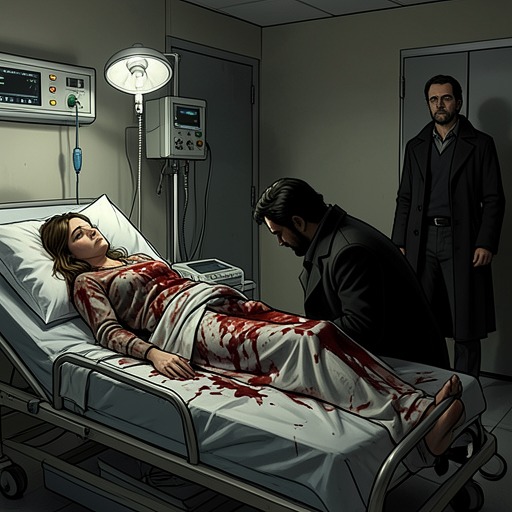
The bond’s implications become immediate when Eve Copeland is near death. Rowan asks his father to give her blood, and Helen warns Jared Copeland that using someone’s blood will make Eve a vampire and is likely to give her very strong feelings toward that donor. The warning turns the rescue into a consequential choice: the source of the blood will shape not only Eve’s survival but also the relationship created by her conversion.
Eve chooses Rowan’s blood. As it saves her, she recognizes him in a way that exceeds ordinary knowledge of someone’s biography. The scene gives the bond a reciprocal emotional dimension without treating Eve as merely acted upon: she understands that Rowan wants to save her, and the choice of whose blood she asks for is hers. Conversion thus joins a life-preserving act to a new attachment, making the bond both an imposed consequence of the exchange and a relationship entered through Eve’s own decision.