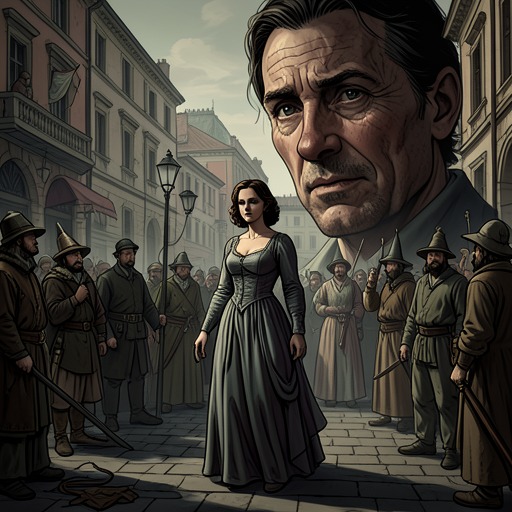
Helen’s conversion in Paris
The RadleysHelen Radley’s conversion by Will Radley in Paris in 1992 is the beginning of her life as a vampire and the defining origin of her bond with Will. The novel presents it not as an isolated supernatural change but as a moment whose intimacy, unequal consequences, and hold on memory continue to shape their relationship years later.
Background and circumstances
Helen’s history contrasts with that of the Radleys. When Rowan Radley asks whether his mother was converted, Peter Radley explains that the Radleys have been vampires for generations, while Helen’s case is different. Her conversion makes her an outsider to the family’s inherited condition even as it binds her to the vampire world and to the person who changed her.
The recollection places an important beginning immediately before the journey to Paris: Helen and Will were together in a van the night before they went. Will remembers the first bite as an unexpected intensity, marking the moment when their closeness became entangled with blood. The account links this encounter to her conversion without dwelling on its physical details.
The conversion and its bond
The event gives blood a double role: it changes Helen’s nature and establishes a relationship that neither character later experiences as easily forgotten. Years afterward, Will says he has remained mentally fixed on that Paris night for seventeen years. He recalls trying to keep away, seeking blood elsewhere, and still being unable to forget Helen. His recollection makes the conversion’s consequence more than a change of identity: it is also the starting point of a persistent attachment.
The novel elsewhere explains that a person converted through another’s blood is likely to feel strongly toward the one whose blood effects the change. Helen warns Jared Copeland of this when Eve Copeland is near death. This rule gives the Paris event a wider significance: conversion can create an emotional tie alongside a new supernatural state. Will’s later language presents their relationship as mutual in its lasting power, though his account also carries resentment about the choices and separations that followed.
Later meanings of blood
The Paris conversion is distinct from the later exchange through which Helen and Peter Radley begin to reconcile. After years of fear and doubt, they taste each other’s blood willingly, and their marriage briefly becomes a source of warmth and renewed closeness. The contrast reframes blood: it first marks Helen’s conversion and her enduring connection to Will; later, shared blood becomes part of a tentative return to intimacy within her marriage.
That contrast does not erase the original event’s lasting weight. Will’s recollection shows that the night remains a fixed point for him, while the family’s account of Helen’s origins identifies her as the one who entered vampirism through conversion rather than birth. In the novel’s treatment of blood, transformation is therefore both a change in what a person is and the beginning of relationships whose consequences can persist long after the initiating moment.