Helen's letters to Will and Rowan's childhood photographs
The RadleysHelen's letters to Will and Rowan's childhood photographs are both evidence of a concealed family history and objects that change hands as that history comes to light. Their significance lies not only in what they disclose about Rowan's parentage, but in the opposed responses they provoke: Will reads Rowan's photograph through hostility, while Rowan ultimately burns the letters and photographs to protect Helen and restore his sense of family.
Physical Form and Discovery
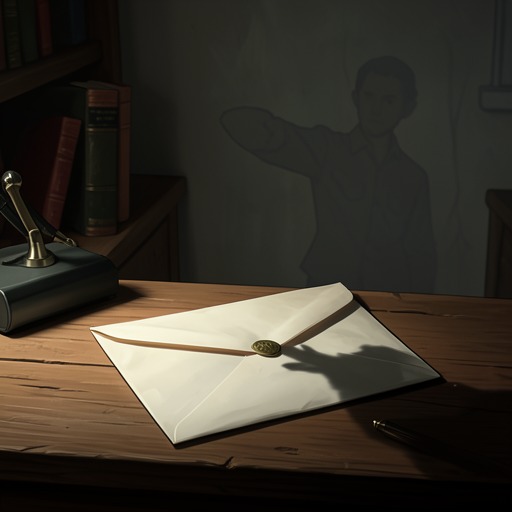
The objects are kept in a shoebox, but they do not remain neatly contained. When Will searches for something in the sleeping bag and finds only its cotton padding, he looks around in alarm. The shoebox is open; a letter lies on the floor as if someone dropped it, and a photograph is there too. That untidy arrangement makes the concealed past suddenly present. The records are no longer safely put away: they have been disturbed, and Will encounters them at a moment when he is searching for what has gone missing.
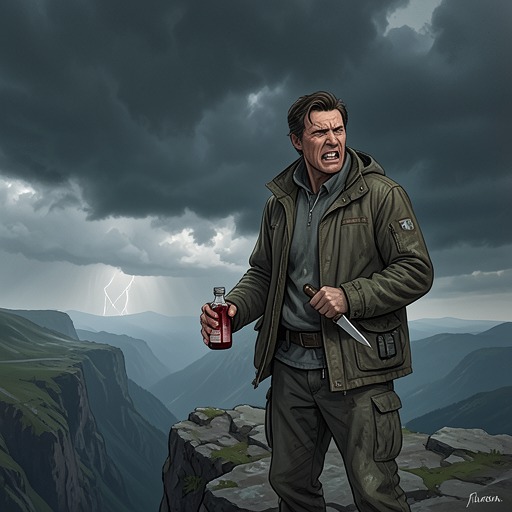
The photograph shows Rowan as a four-year-old. Will picks it up and looks into the child's eyes. The image offers a contrast between a child's apparent innocence and the resentment Will brings to the act of looking. Rather than seeing the photograph as a neutral record of Rowan's childhood, he interprets the child as a rival for Helen's love. The photograph therefore reveals as much about Will's attitude as it does about Rowan: an image of a child becomes, in his hands, a focus for an old and possessive family conflict.
What the Documents Reveal
The letters are associated with Helen's correspondence with Will in the early and mid-1990s, and with the history Helen has kept from Rowan. Their importance becomes clear when Rowan reads one of Helen's letters and understands that Will is his father. At the cinema in Thirsk, seven miles from home, he sits beside Eve Copeland with that knowledge and the sense that his mother's lies are now part of him. The revelation changes his understanding of his own family even as the ordinary outing continues around him.
The documents do not simply supply a fact about biological parentage. They connect that fact to Helen's long concealment and to Will's place in the family's past. Their discovery leaves Rowan confronting both who his father is and what his mother chose not to tell him. The narrative links the letters and the childhood photograph without making them interchangeable: the letter carries the history that can disclose the relationship, while the photograph gives that history a visible image of Rowan as a small child. Together, they make family secrecy tangible.
Concealment and Rowan's Response
Later, after tasting Helen's blood, Rowan no longer feels angry with her about the secrets contained in the letters and photographs. He understands her concealment as an attempt to protect him, and this new empathy changes what the documents mean to him. They still record a truth that has unsettled his understanding of the family, but they no longer function only as evidence against Helen. Rowan sees that she hid them for his sake and decides that he can protect her in return.
That decision takes place amid an effort to keep the family's nature and history from outsiders. While Deputy Commissioner Alison Glenny and members of the Unnamed Predator Unit assess and remove Will's body from the pond at the Radley home, Rowan slips away and enters Will's camper van for the second time that day. The police do not find the photographs or Helen's letters there. Rowan's disappearance and the documents' continued concealment show that the objects remain consequential after their contents are known: they could expose a private history, so Rowan takes responsibility for deciding what happens to them.
Destruction and Significance
Rowan retrieves the letters and photographs along with a box of matches he had used to light a fire on Friday night. He passes through a gap in the bushes to the field behind Orchard Lane and burns the papers. The act is deliberate. Rather than leave the records for the police to discover or preserve them as proof of what he has learned, Rowan removes them from circulation. Their destruction closes off one material route by which the family past might be exposed.
Rowan experiences the burning as a way of making Peter his father again. The phrase describes an emotional and familial choice, not a change to the fact he has discovered: Will remains his biological father, but Rowan wants to restore Peter's place in his understanding of family. The act also feels to him like a step into adulthood, defined by knowing which secrets to keep and which lies might protect people he loves. The letters and photographs thus move through three distinct roles: concealed records, revelations that unsettle Rowan, and evidence he chooses to destroy. Their final significance rests in that change. What begins as Helen's hidden past becomes Rowan's own decision about secrecy, loyalty, and the family he will claim.