OBT (Uncontrolled Blood-Thirst Episode)
The RadleysOBT (Uncontrolled Blood-Thirst Episode) names the acute danger that blood craving poses to vampires who abstain. The concept is not simply hunger: the handbook warns that blood magnifies cravings, and its guidance links prevention to recognizing vulnerability and creating distance from possible triggers. Rowan Radley’s experience gives that warning a personal dimension, while Clara Radley’s fear around another person’s blood shows how threatening the pull can feel even before she acts on it.
Definition and the abstainer’s risk
The second edition of The Abstainer’s Handbook describes overwhelming blood thirst as the single most common danger facing abstainers. Its formulation challenges the assumption that drinking blood settles a craving. Instead, blood makes the desire stronger, turning an attempted remedy into a potential escalation. The distinction matters: the immediate attraction of blood may promise relief, but the handbook frames it as something that can deepen the very condition the abstainer is trying to manage.
The book addresses related pressures beyond acute thirst. Rowan finds its discussion of suicide in an index entry stating that suicidal depression is common among those who abstain. That statement establishes abstention as a sustained psychological burden in the handbook’s account, not merely a series of isolated moments of self-control. It does not establish that Rowan has been diagnosed with depression, but it places his difficulty within a wider warning about the costs abstainers may face.
Warning signs and emotional triggers
Rowan’s crisis unfolds alongside physical discomfort. He struggles to concentrate, notices blotches spreading across his chest and shoulders, and finds that his attention will not stay on the words he is reading. These changes precede his decision to drink and make his vulnerability concrete: restraint is being tested while he is already feeling unwell, rather than in a calm or neutral moment.
His thoughts turn to bullying at school. He recalls Stuart Harper knocking him down near the horse chestnut trees, holding him down while other boys, including Toby Felt, laughed. Rowan remembers not wanting to fight back; he wanted instead to sink into the ground and disappear. The memory gives his craving an immediate emotional context. The bottle is taken up after that recollection, and Rowan directs the act toward Stuart Harper in his thoughts. The scene connects the urge to drink with humiliation and helplessness without suggesting that the blood resolves the history behind them.
Rowan Radley’s drinking and its effect
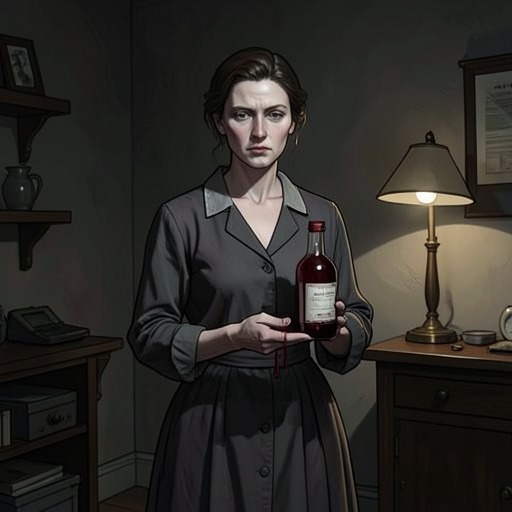
Before drinking, Rowan sits with a bottle of vampire blood in his hands and tries to imagine limiting himself to a single small sip. He hides it when he hears his sister moving, placing it beneath his bed beside a childhood papier-mâché puppet of Saturn. The concealment and the effort to set a limit show that he understands the act as something to keep private and fears that one taste could lead to more.
When he later picks the bottle up, the memory of Stuart Harper’s bullying is close in his mind. He drinks, and the change he experiences is immediate: his worries and tension recede, his familiar aches and ailments disappear, and he feels alert. That short-term relief helps explain the pull of blood without overturning the handbook’s warning. The episode presents reinforcement and risk together: drinking makes Rowan feel better in the moment, while the book’s rule suggests that the craving itself may be amplified rather than satisfied.
Prevention and the limits of control
The handbook’s section on preventing OBT offers practical measures for someone who feels an attack approaching. The first is to move away from people, whether unbloods or vampires, and find a quiet place alone. The second is to switch on the lights, because attacks are described as more common at night or in darkness. These instructions treat distance and surroundings as immediate parts of managing danger. They do not promise that the craving will vanish; they direct the abstainer to alter the conditions in which it could become overwhelming.
A later encounter with the bottle repeats Rowan’s struggle in a different setting. After spending hours among household waste, he holds the blood near him and weighs it against the disgust and self-reproach attached to drinking. He tells himself he cannot do it, then bargains with the possibility of only the tiniest sip. The passage ends with the bottle at his lips, without confirming what happens next. Its unfinished movement makes the conflict itself the point: understanding the danger has not removed the temptation.
Clara Radley and the threat of relapse
Clara Radley offers a related but distinct picture of blood’s attraction. When she notices the visible veins at another girl’s wrist, she becomes aware of the richness of that person’s blood and is frightened by how easily she might give in to instinct. She gives a casual explanation for her changed appearance, referring to a change in diet and supplements from her father, rather than disclosing what she has experienced. The scene does not identify her response as an OBT attack, but it shows how the prospect of losing control can arise through proximity to blood and remain difficult to explain openly.
Together, Rowan’s drinking, his later hesitation, and Clara’s fear distinguish the craving from a simple choice between abstinence and consumption. Rowan experiences immediate relief after drinking, yet the handbook warns that blood intensifies desire; Clara, meanwhile, recognizes the danger without acting on it in the scene. OBT therefore gives the story a vocabulary for a recurring conflict between the promise of bodily and emotional relief and the risk that yielding to blood will make restraint harder.