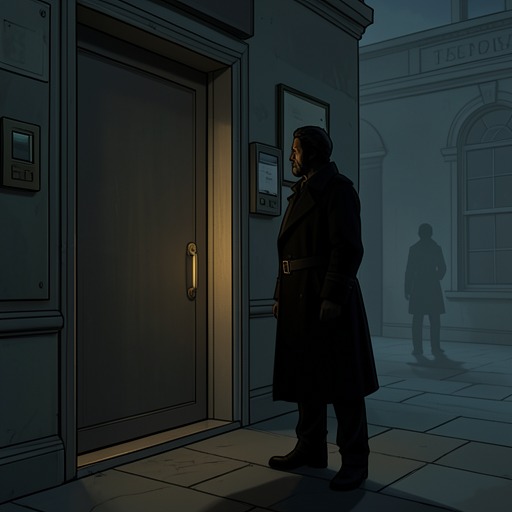
Otto Child
The RadleysOtto Child is Isobel Child’s brother and the overseer of the Sheridan Society's list of untouchables. His importance lies in the collision between family influence and institutional power: Will Radley is believed to enjoy protection because of Isobel’s affection for him, yet Otto regards Will with marked hostility and may be the person Will fears could remove him from the list.
Identity and Position
Otto is introduced as one of Isobel’s friends in the vampire community and as her brother. When Will is among the group gathered around bodies, Otto is there with the others, his face blood-smeared and his expression cold. The scene offers little direct access to Otto’s thoughts or speech; instead, his look and Will’s attention to him establish the tension between them.
His formal position is more consequential. Otto oversees the Sheridan Society's list of untouchables, a register that protects practicing murderous blood addicts from police action. The arrangement is not simply a personal favor: the police could not act against listed vampires without risking the Society’s trust and correspondence, and, through it, relations with the wider vampire community. Otto therefore occupies a point where internal authority and the community’s dealings with law enforcement meet.
Conflict with Will Radley
Otto’s hostility toward Will is tied to Isobel’s affections. He has never liked Will, or any man who wins his sister’s heart; when Will sees him among the others, the hatred in Otto’s eyes appears especially strong. The account establishes resentment, but does not show Otto confronting Will or explain the full history of that resentment. His characterization remains pointedly indirect: Will reads his expression as a threat, while Otto himself is not given a speech in the scene.
That perceived threat becomes explicit when Isobel warns Will that people think he is becoming careless. Will looks toward Otto and concludes that Otto wants to take him off the list. This is Will’s interpretation, not confirmation that Otto has made such a decision. Isobel’s warning, however, makes the possibility credible within the immediate conflict: Will’s conduct risks not only police attention but also the protection his status may provide.
The Untouchables List and Its Stakes
The Society’s protection has rules. A killing considered legitimate under its framework must avoid cameras, leave no body, and involve a victim unlikely to attract public sympathy or scrutiny. People in vulnerable circumstances are treated as acceptable targets, while victims whose deaths might provoke attention are not. The list thus reflects an effort to manage predation according to what the authorities and public are likely to notice, rather than to prevent it.
Will has long failed to keep his appetites within that framework. He takes bites without regard to whether his victims are vampires, and his recent carelessness—including killings caught on camera—has increased pressure on the Society. In that context, Otto’s oversight has practical weight: Will’s place on the list represents protection within a system strained by his behavior. The evidence does not establish that Otto personally enforces the Society’s rules or that he is responsible for Will’s eventual removal; it does establish why Will sees him as a potential source of danger.
Influence and Limits
Fifteen days before Alison Glenny receives a call informing her that Will is off the list, the Society’s members largely believe he will remain protected. They expect Isobel’s popularity and her affection for Will to count in his favor, while Otto’s position as overseer strengthens that expectation. Yet the call reports Will’s removal, and the caller’s identity is not established in the account. The sequence distinguishes perceived protection from actual security: neither Isobel’s affection nor Otto’s office guarantees Will’s standing.
Otto consequently functions as a concentrated expression of the story’s uneasy overlap between kinship and institutional power. To the Society, his relationship with Isobel appears to make Will safer; to Will, Otto’s hostility makes the same relationship feel precarious. That contrast gives Otto significance even in the absence of a direct confrontation: he embodies the possibility that a system’s protection can be conditional, contested, and withdrawn.