Rowan Radley
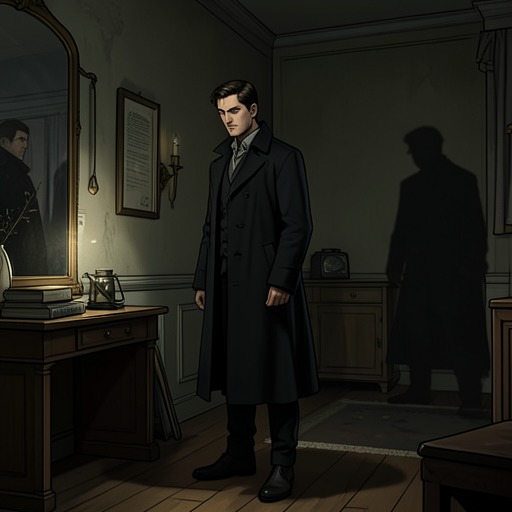
The RadleysRowan Radley, the elder of the Radley children, is a withdrawn, chronically exhausted teenager whose growing dependence on vampire blood brings him close to repeating the violence he fears. His arc turns on the difference between possessing power and choosing how to use it: he refuses to kill Toby Felt when he could, kills his father Will Radley during a threat to the family, and later uses his own blood to bring Eve Copeland back to life.
Identity and Background
Rowan is introduced awake at three in the morning after taking six times the recommended dose of Night Nurse. His sleeplessness is not an isolated inconvenience: exhaustion arrives in waves, and even a night with about two hours of sleep counts as better than his average. At moments he imagines the ease with which his sister, Clara Radley, can talk to Eve Copeland, measuring his own isolation against the ordinary sociability he thinks he lacks.
That vulnerability is made visible in his history with Toby Felt. A thin boy, Toby once urinated on Rowan’s leg after Rowan had spent too long trying to use the adjacent urinal. The incident establishes a humiliating imbalance that continues into the present. Toby later boasts about pursuing Eve Copeland, while Rowan remains a spectator, unable to defend his sister even as he imagines Toby and Stuart Harper punished for their conduct. The fantasy does not become action; Rowan instead turns his anger inward and wonders what Lord Byron might have done.
Despair and the Limits of Abstention
Rowan’s distress becomes a direct threat to his survival. He says that he wants to die, and later sits hidden behind a yew tree in a churchyard after taking a whole packet of ibuprofen. The overdose does not produce the change he might have expected: he feels as he did half an hour earlier, except that his headache has gone. The scene gives his despair a stark physical circumstance without presenting death as an accomplished or effective escape.
Hours later, in his bedroom, he listens to Meat Is Murder by the Smiths and consults page 140 of The Abstainer’s Handbook. The sequence links his crisis to the rules and explanations by which vampires attempt to live without blood. One of the handbook’s central warnings is that blood does not settle craving but magnifies it. For Rowan, this is not merely doctrine: the possibility of drinking becomes a recurring temptation, and understanding the danger does not by itself remove it.
His eventual drinking is deliberate and emotionally charged. He holds a bottle of vampire blood in both hands before picking it up and drinking in memory of Stuart Harper. The dedication connects the act to resentment and loss, but the bottle also marks a change in his relation to blood: a substance he had approached as a danger becomes something he takes into himself. The moment is not framed as a cure. The warning that craving grows stronger makes the choice the beginning of a more perilous dependence, not its resolution.
Eve Copeland and the Risk of Harm
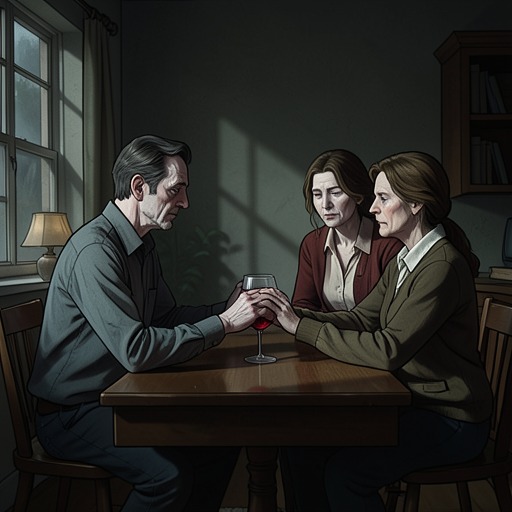
Rowan’s connection to Eve Copeland brings his private struggle into contact with another person’s immediate vulnerability. He abandons a poem he is trying to finish, titled Life, and other Eternal Hells, when he hears a commotion in the hallway and sees Eve resisting her father, Jared Copeland. The sight shakes Rowan badly enough that he cannot remain in the house. His reaction registers both his concern for Eve and his difficulty staying composed when confronted with force directed at someone close to him.
Later, he and Eve travel to Thirsk Palace Cinema, seven miles from home. Rowan carries a bottle of blood in his bag but has not yet drunk from it. He had intended to do so at the bus stop after seeing another piece of graffiti insulting him; Toby Felt had written this version in more elaborate, three-dimensional block letters. Eve’s arrival and the bus interrupt that intention. The change is concrete but not a simple cure: her presence delays the act, while the bottle remains with him.
The cinema outing also exposes the danger in Rowan’s attraction to Eve. After coming close to losing control, he thinks he should never see her again. His instinct is to treat distance as protection, because he fears what he might do in her presence. Yet the relationship does not end there. By the close of the story Eve is beside him, her head resting on his shoulder, and Rowan understands that his capacity to affect her life has not only made him dangerous; it has also made her return possible.
Power, Violence, and Refusal
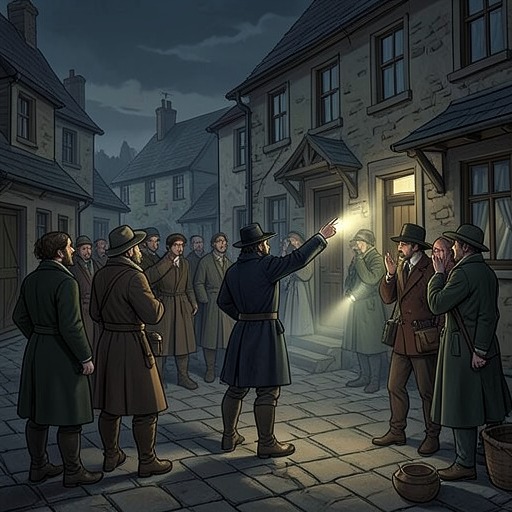
Rowan’s flight gives physical form to a power that can be used for either violence or restraint. When he catches up with Toby, who is trying to brake and turn on his bicycle, Rowan seizes the front of Toby’s jacket and lifts him high into the air; Toby’s bicycle rises with him as he clings to its handlebars. Rowan has the strength to make the encounter fatal. He cannot do so. He recognizes that, even if he is a monster, he is a different kind from his father.
That distinction is tested more severely when Will Radley attacks the family. Rowan hears Helen Radley scream. In the ensuing struggle, he brings an axe into the fight and kills Will, forcing him back into the water and holding him there. The act is violent, but its context differs from the imagined punishment he once directed at Toby: Rowan acts against a father who is attacking his family, rather than converting power into a means of tormenting someone weaker. His earlier refusal to kill Toby therefore gives the confrontation with Will its moral contrast. Rowan does not reject force altogether; he refuses to make cruelty his governing principle.
Change and Narrative Significance
Rowan’s transformation from isolated observer to decisive actor is accompanied by a changed understanding of what his strength means. At the end, he waits beside Eve Copeland outside the nightclub for his parents to reappear. With Eve leaning against his shoulder, he believes they have done the right thing. He can no longer see himself simply as a monster: Eve is alive because of what he is able to do, and he cannot regret possessing the power that brought her back.
The ending does not erase the risks established by his exhaustion, despair, and drinking. Instead, it places those risks beside choices that distinguish Rowan from Will. He has been humiliated, has imagined retaliation, has feared his own loss of control, and has used blood despite knowing that it intensifies craving. Yet he spares Toby, protects his family from Will, and turns his power toward Eve’s return to life. Rowan’s significance lies in that unresolved but decisive contrast: he inherits dangerous capacities without accepting that they must dictate his conduct.