Rowan discovers that Will is his father
The RadleysRowan Radley discovers that Will Radley is his father through a box of childhood photographs and letters hidden in Will Radley’s camper van hideout. The discovery links Rowan Radley’s ordinary family memories to a concealed relationship between Will Radley and Helen Radley, and makes the bloodline behind his identity impossible to ignore. Its force lies not only in the fact of parentage, but in the evidence that Will Radley knew of Rowan Radley’s childhood while remaining apart from it.
Context and Earlier Knowledge
The revelation arrives after Rowan Radley has begun asking how vampirism works within the family. When he asks Peter Radley whether he was converted, Peter Radley explains that he was born a vampire and that the Radley family has been so for generations. The distinction makes the word conversion newly significant to Rowan Radley: it describes a change that might have happened to someone else in his family, rather than an inherited condition shared by every member.
That conversation leaves Rowan Radley asking whether Helen Radley was converted. It foreshadows the difference between the parents’ histories: Peter Radley belongs to a vampire lineage, while Helen Radley’s history with Will Radley involves conversion as well as a past relationship. The later discovery supplies another distinction, this time between the father Rowan Radley has known at home and the biological father whose letters and photographs have been kept out of sight.
The Search in Will Radley’s Van
On a Monday evening, Rowan Radley prepares to go out with a poem for Eve Copeland in his bag. He wants a fresh bottle of blood, but the bottle he finds in the van is empty. Searching further, he lifts Will Radley’s mattress and finds journals that cannot satisfy his thirst. An unopened bottle is tucked inside a rolled sleeping bag; as Rowan Radley takes it, the lid slips from a shoebox and reveals the family’s telephone number.
Inside the box, a bundle of photographs is held together by an elastic band. The first shows a sleeping baby boy on a sheepskin rug. Rowan Radley recognizes the infant as himself. The photographs continue through his early childhood, ending when he was about five or six. One image belongs to his birthday; in another, his face bears the rash Helen Radley had identified as German measles. These mundane records make the discovery intimate and specific: Will Radley has not merely heard that a child exists, but has kept images of Rowan Radley growing up.
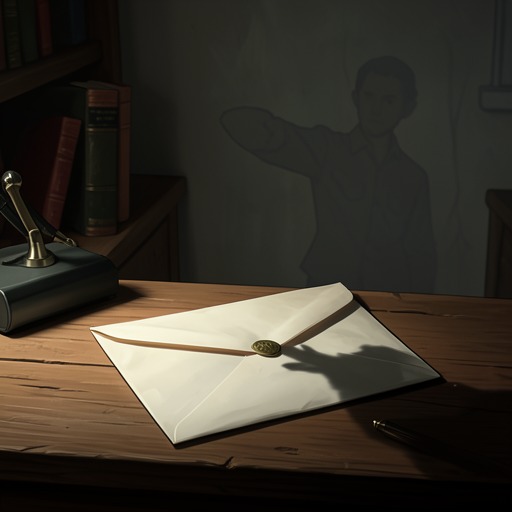
The photographs prompt Rowan Radley to read the letters beneath them. The first is dated 17 September 1998 and addressed to Will Radley. Helen Radley describes it as her final letter, written as Rowan Radley starts school and as she tries to resume family life without Will Radley. Its date fixes the correspondence to a particular period in Rowan Radley’s childhood, turning the box from an unexplained collection into a record of a relationship and separation that preceded his understanding of either.
What Helen Radley’s Letter Reveals
Helen Radley writes that caring for the children sometimes lets her feel almost normal, or like an unblood. Her account places daily parenting against the past she is trying to leave behind: looking after Rowan Radley and Clara Radley offers a way to attend to their lives rather than remain absorbed by Will Radley. The letter presents that effort as ongoing rather than complete; ordinary care can bring relief, but it cannot erase the history that led to it.
She also recalls Will Radley’s response when she told him she was pregnant. He had been horrified, she writes, and she interprets that reaction alongside his unwillingness to live as a faithful partner or give up the thrill of new blood. She believes he dislikes responsibility, while she needs it. The contrast gives Rowan Radley a painful account of his parents’ different commitments: Helen Radley chose the obligations of raising him, while she believed Will Radley had wanted neither that responsibility nor a settled partnership.
The letter makes the resemblance between Rowan Radley and Will Radley another source of unease. Helen Radley says Rowan Radley looks more like Will Radley day by day, though she considers his temperament different and sees it as her responsibility to guide him. Her hope that Will Radley might eventually find a moral center is tempered by her request that he not try to see her or Rowan Radley. She frames their separation as a promise they must keep for everyone’s sake. The photographs preserve the child she was raising; the letter records why she did not want the father to return.
Immediate Aftermath and Significance
The combined evidence overwhelms Rowan Radley. He lets the letter fall, takes the bottle of blood, and leaves the van. On Orchard Lane he encounters Will Radley, who greets him casually. Rowan Radley cannot speak. He holds onto his hatred and continues toward the bus stop, toward Eve Copeland and the hope of forgetting. The movement away from Will Radley does not resolve the revelation; it shows Rowan Radley trying to carry it without yet being able to answer it.
The scene later gains a grim counterpoint when Will Radley finds the shoebox open, with a letter and photograph of Rowan Radley on the floor. Looking at Rowan Radley as a four-year-old, Will Radley refuses to see innocence, instead judging him as spoiled and manipulative. The contrast is stark: Helen Radley’s photographs preserve a child she raised and worried over, while Will Radley’s response reduces the same child to a rival for affection. The discovery therefore reveals not just biological paternity but the absence of a shared, caring relationship.
Blood becomes a different kind of family connection later, when Eve Copeland is dying and Rowan Radley asks Peter Radley to save her. Helen Radley warns that converting Eve Copeland with someone’s blood may create strong feelings toward that donor. Eve Copeland chooses Rowan Radley’s blood, and on waking she feels that she knows him at a deep level. Set beside Rowan Radley’s discovery of Will Radley, this later moment distinguishes inherited parentage from a bond formed through choice and care: the fact of being a father does not itself create the intimacy that Rowan Radley and Eve Copeland come to share.