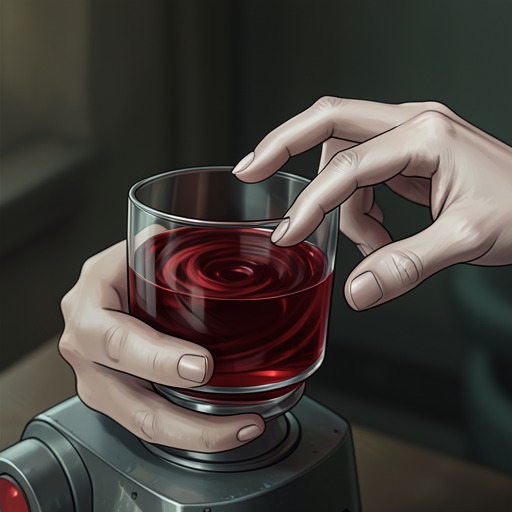
Rowan discovers the blood is Helen’s
The RadleysRowan Radley’s discovery that the blood in Will Radley’s bottle is Helen Radley’s makes his first attraction to vampire blood inseparable from the family secret behind it. At Thirsk Palace Cinema, Rowan drinks before inspecting the label; when he reads THE ETERNAL—1992, the year he was born, he understands whose blood he has taken. The realization interrupts the pleasure of drinking with horror and rage, and he smashes the bottle rather than carry its secret onward.
Causes and Background
The discovery follows a gradual movement from abstention toward drinking. The warning Rowan encounters in The Abstainer’s Handbook (second edition) is that blood does not end craving but intensifies it. The book also identifies suicidal depression as a common burden among abstainers. These statements give his later choice a context: the blood is not simply an unfamiliar temptation but something he has been taught to fear while struggling with a bleakness the handbook describes as part of abstention.
That bleakness has a particular history for Rowan. He remembers Stuart Harper knocking him down at school while other boys, including Toby Felt, laughed. Rowan’s recollection is not just of being bullied; he remembers not wanting to resist and wishing he could disappear into the ground. Against that experience, drinking becomes associated with relief. When he first takes blood, his worries and tension recede and his familiar aches ease. The short-term comfort gives the bottle a force that the handbook’s warning cannot, by itself, cancel.
The bottle remains a focus of hesitation as well as desire. Before drinking at the cinema, Rowan debates whether he can take only a little, even as he recognizes that the blood is the very thing he has taught himself to hate. He has previously sat with the bottle in his hands, contemplating a sip and hiding it when he hears his sister nearby. That earlier concealment establishes the conflict as private: his desire to try the blood grows alongside his awareness that it carries a danger he does not yet understand.
Drinking and Recognition
In the cinema’s men’s toilets, Rowan takes the bottle from his bag and uncorks it. He drinks before examining it closely. The episode begins as an attempt to satisfy an intense thirst and to enter again into the relief he has experienced before; at first, the act gives him pleasure rather than an answer. Only when he pauses does he look properly at the label.
The label bears the name THE ETERNAL and the year 1992. The year is the decisive detail: it is the year Rowan was born. The wording and date turn the bottle from anonymous vampire blood into evidence of a personal connection. Rowan gradually understands that the blood is Helen’s. His recognition is expressed as an immediate bodily and emotional fact: she is in his mouth and throat. What he has consumed is not merely a substance associated with the vampire world but his mother’s blood, preserved by Will.
The revelation depends on the order of the scene. Rowan drinks first, drawn by thirst and the promise of relief; he reads the label afterward. Knowledge arrives too late to prevent the act, so the discovery cannot be separated from what he has already done. The label supplies the fact, but the year of Rowan’s birth makes that fact intimate: the bottle links his own beginning to the blood he has just taken.
Consequences and Aftermath
Once the meaning of the label becomes clear, Rowan’s response reverses the scene’s earlier pleasure. The bottle trembles in his hands as he reacts with horror and rage, then he hurls it against the tiled wall. It breaks, and blood runs down the tiles and gathers on the floor. The destruction is decisive but cannot undo the drinking or erase the recognition the label has produced.
Rowan walks around the spilled blood and leaves the toilets. In the foyer, a man behind the box-office desk appears suspicious, apparently having heard the bottle smash, but returns to the Racing Post. The ordinary public setting continues around Rowan’s private crisis: the attendant’s attention is brief, and Rowan gets out without anyone confronting him. The scene ends not with an explanation from Will or Helen, but with Rowan carrying the knowledge away from the broken bottle.
Significance
The episode joins craving, relief, and family identity in one reversal. The handbook’s warning that blood magnifies desire is borne out by Rowan’s repeated return to the bottle, while the label reveals that the object of his appetite has a history he could not recognize by taste alone. His first response to blood had seemed to promise temporary escape from distress; at the cinema, the same act exposes a connection to Helen and to the year of his birth.
The shattered bottle marks the limit of Rowan’s attempt to treat drinking as a private experiment. He can destroy the container after learning what it holds, but he cannot make the discovery impersonal again. The event therefore changes the meaning of his drinking: the blood is no longer only a source of pleasure or a violation of abstention, but a material link between Rowan, Helen, and Will’s concealed past.