Sheridan Society
The RadleysThe Sheridan Society is a vampire organization that acts as both a community network and an intermediary with law enforcement. Based in Manchester, it negotiates a system in which selected vampires receive protection from police intervention in exchange for rules intended to limit their activities. Its central instrument, the list of untouchables, gives that bargain practical force while exposing its moral cost: institutional protection may go to the most notorious practitioners, not to vampires whose conduct is less dangerous.
Formation and Structure
The Society emerged as vampires mobilized around the mid-1990s to address their dealings with the police. Its Manchester-based UK wing developed relations with the Unnamed Predator Unit, making dialogue between the two organizations a foundation of police-vampire communication. The Society is described as loosely structured rather than as a tightly administered body, but it still has recognized hierarchy and the capacity to represent vampires collectively.
Will Radley presents the organization to Peter Radley and Helen Radley as a collective of practicing vampires that looks after its members. He compares its protective function to that of a trade union, while emphasizing its particular membership and culture. In his account, the Society sends its list to the police every year, and police then stay away from the people named on it. The arrangement turns a dispersed community into a negotiating counterpart: the Society can offer the police an organized channel, while individual members gain a measure of security through collective standing.
Membership is not presented as a general shelter for every vampire. Will says the Society admits only hard-core practitioners, and his description of its culture links membership with the possibility of going out to feed. This emphasis helps explain why its influence does not simply amount to a universal vampire-rights service. Its practical constituency is the practicing population, while abstainers and more moderate vampires may remain outside the protection its agreement makes available.
The Untouchables List
The list is the clearest expression of the Society's power. It identifies practicing vampires whom the police cannot touch without risking the wider relationship: losing the Society's trust could also end the police's contact with the vampire community as a whole. The list therefore protects named individuals, but its significance extends beyond them. It functions as leverage in negotiations and as a channel through which the Society can claim to regulate members whose actions might otherwise provoke direct police intervention.
The system arose against a history of concealment and lethal enforcement. Police had traditionally used officers trained in crossbow skills to exterminate vampires, who then disappeared from public view. That zero-tolerance approach was judged counterproductive: it increased the rate of vampire conversion and raised the prospect of an expansive, public conflict. The police consequently paired coercive power with an inducement, offering protection to certain vampires if they followed specified rules.
The bargain carries an explicit ethical imbalance. In working with the Society, the police effectively reward some of the most notorious and bloodthirsty vampires, while abstainers and more moderate practitioners are left unprotected. The police rationale is strategic: immunity gives them influence over people who might otherwise be difficult to restrain and may help curb some activity. The protection is thus not described as a judgment that listed vampires are harmless, nor as equal treatment across the vampire community. It is an instrument of management, purchased at the cost of unequal safety.
Police Partnership and Institutional Strain
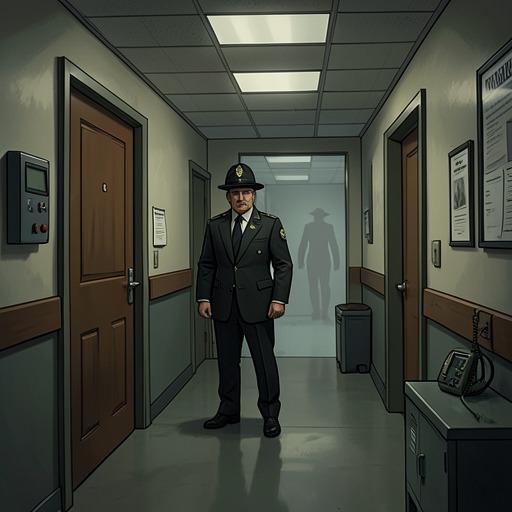
The relationship between the police and the Society centers on dialogue between the Unnamed Predator Unit and the Society's Manchester-based UK wing. Alison Glenny explains that the police have reduced incidents by nearly half through mutual rules and respect, and that they prefer third-party solutions, including vampire action against vampire. Their principal public-facing aim is to handle the matter without public knowledge. This approach depends on cooperation: police accept limits on direct intervention, while the Society's standing gives it a role in containing the conduct of its members.
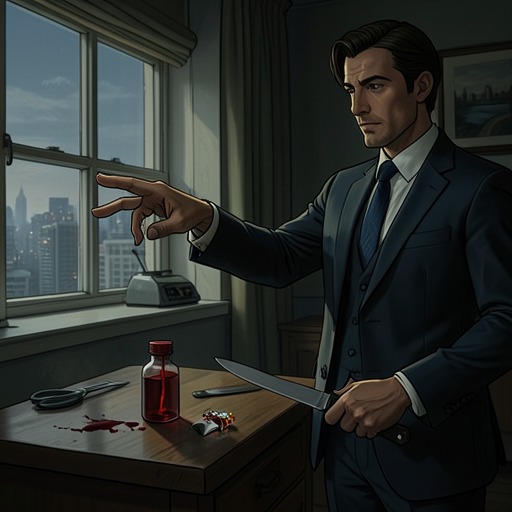
That cooperation is vulnerable when a case threatens to overwhelm the agreed framework. The Copeland affair places the relationship under exceptional strain. Police pressure grows, and Will's recent killings are described as especially sloppy; his conduct puts additional pressure on the Society as well as the police. Alison says that the Society wants to be rid of him because he has become too erratic. Its interest in removing him shows the other side of collective protection: the organization may defend members through negotiation, but its relationship with the police also gives it reason to distance itself from a practitioner whose actions endanger the arrangement.
The Society's institutional standing is not identical to automatic immunity for every long-standing member. Will has belonged to it for years and nevertheless has not followed its rules. He believes that Isobel Child's affection for him will protect him, since Isobel is popular within the vampire community and her brother, Otto Child, oversees the list. Yet his membership, reputation, and personal connection do not prevent his name from being removed. The episode exposes the gap between the protection Will assumes he possesses and the Society's capacity to withdraw that protection when his behavior threatens its wider position.
Will Radley and the Reach of the System
Will's account of his own status presents the Society as a shield against police action: he says he is protected and describes himself as usually near the top of the list. He also associates that security with access to a social world in which practicing vampires can obtain bottled vampire blood. At The Black Narcissus, a Manchester nightclub run by the Society, bottles are sold by the cloakroom attendant for twenty pounds, and Will describes the venue as outside police reach because of its connection to the organization.
The club makes the Society's role more concrete than the list alone. It is not only a negotiating body whose decisions operate at a distance; its name is attached to a place where members can meet and obtain blood. Will's visit there the previous night illustrates the practical appeal of the organization to a practitioner: protection, community, and access are presented together. At the same time, the police arrangement surrounding the venue underscores the broader compromise. A strategy designed to keep vampire activity contained and out of public view also permits a protected institutional space in which the practice continues.
Will's removal from the list follows a call received by Alison Glenny fifteen days before the account of the decision. The caller is identified only as a man whose familiar, cold, tired whisper tells her that Will Radley is off the list; his identity is not established in this account. The decision is a consequential limit on the protection Will has relied upon. It also shows that the list is changeable rather than a permanent entitlement, though the evidence does not specify the Society's formal procedure for making or communicating removals.
Significance
The Sheridan Society occupies an uneasy position between community representation and institutional compromise. It creates a route for dialogue where direct police suppression had helped fuel further conversions and threatened open conflict. Yet its protective system sorts vampires into those the police must avoid and those left without equivalent safeguards, with the most dangerous practitioners potentially receiving the greatest institutional protection.
Its dealings with Will bring that contradiction into focus. The Society's influence can sustain his expectation of impunity, provide a setting associated with blood and practitioner life, and then turn against him when his conduct makes him a liability. The organization therefore neither simply opposes police power nor merely enforces it. It brokers a limited order between the two, gaining leverage from the very people whose behavior makes that order ethically unstable.