THE ETERNAL—1992
The RadleysTHE ETERNAL—1992 is a bottle of vampire blood that Will Radley keeps hidden and unopened, preserving in a small, tangible object the memory of a defining night in 1992. Its importance shifts as the story connects Will’s private attachment to blood with Rowan Radley’s encounter with drinking: the bottle stands at once for abstention, remembered intimacy, and the possibility of relapse.
Appearance and Keeping
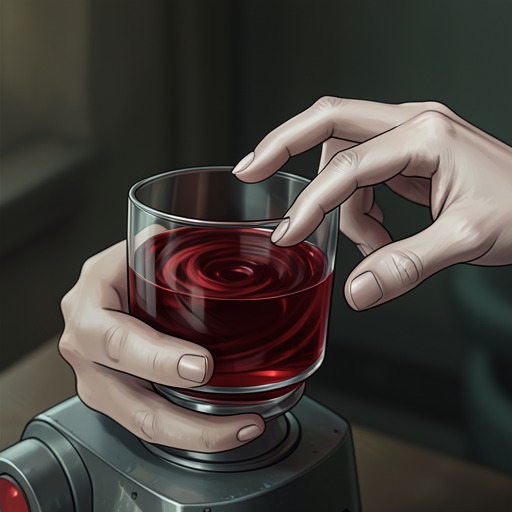
Will finds the bottle inside the rolled-up sleeping bag he keeps behind him in the van. He handles it when he feels weak and needs strength, but the narrative distinguishes wanting the blood from consuming it. The label bears his own handwriting and the name THE ETERNAL—1992. He caresses the label, looks at the glass, and imagines both its taste and the taste it once had for him. After lingering over it, he puts it back inside the sleeping bag and returns it to the back of the van.
The bottle’s contents remain untouched despite Will’s vulnerability. He has never opened it, and the narration stresses that no occasion has seemed special or desperate enough to justify doing so. This deliberate restraint makes the sealed container more than a reserve of nourishment: it is an object he can keep close, handle, and contemplate without crossing the line into drinking. Its presence offers a private ritual of approach and withdrawal, repeated when he seeks strength but chooses not to open it.
Memory of 1992
The date on the label points to a past that the novel evokes through Will’s memory of the night before Paris. He recalls being with Helen Radley in the van, and remembers the first bite and the unexpected intensity of tasting her. The narrative places this recollection alongside his attention to the bottle, connecting its remembered blood with the beginning of their intimacy. The label’s promise of permanence sits against that specific, irrecoverable moment: Will can preserve the blood, its name, and the memory, but he does not reopen the experience by drinking it.
The object also makes the novel’s contrast between abstention and appetite concrete. The Abstainer’s Handbook states that blood magnifies cravings rather than satisfying them. Against that warning, Will treats the bottle as a contained dream: it lets him imagine the pleasure of blood while maintaining the boundary he has set for himself. Its title suggests something eternal, yet its meaning depends on a dated memory and on Will’s continuing decision not to drink.
Rowan’s Encounter with Blood
The novel later gives Rowan a bottle of vampire blood to hold and contemplate. He wonders whether a sip could be kept small enough to control, then hides the bottle under his bed when he hears his sister leaving her room. Its hiding place beside an old papier-mâché puppet makes the secrecy practical and personal: Rowan conceals the blood among belongings from childhood, rather than openly confronting what he is considering.
Rowan’s hesitation gives way when he remembers being crushed to the ground by Stuart Harper while other boys, including Toby Felt, laughed. He picks up the bottle with Harper in mind and drinks. The passage links a specific memory of helplessness to his decision, and describes an immediate change: his worries and tension lift, his familiar aches disappear, and he feels awake. That short-term relief makes the bottle’s attraction legible without overturning the handbook’s warning. Blood offers Rowan a powerful escape from distress, but the novel frames that relief as part of a craving that drinking can intensify.
Secrecy, Loss, and Temptation
The sleeping bag later becomes an absence that Will notices. When he reaches for it and finds only its cotton padding, he searches; nearby, a shoebox stands open, with a letter and a photograph of Rowan on the floor. These details do not establish every step by which the bottle leaves Will’s keeping, but they place the missing contents of the sleeping bag beside the exposed evidence of Rowan’s identity and family history. The van’s hidden space, once a private store for Will’s restraint, has been disturbed.
Elsewhere, Rowan again debates drinking vampire blood, reasoning that even the smallest sip might be harmless. He holds a bottle, considers what he has taught himself to hate, and brings it to his lips. The recurrence turns the bottle into a test rather than a simple possession: Will’s sealed keepsake and Rowan’s threatened restraint are set against the same desire. The book also distinguishes bottled blood from the blood used to convert Eve Copeland. Helen explains that giving Eve blood would make her a vampire and could create strong feelings toward the person whose blood was used; Rowan ultimately saves Eve with blood from a cut in his palm. The bottle thus belongs to a wider pattern in which blood carries memory, craving, and relationship, while the choice to drink—or to give blood—changes what that substance means.