Tess Copeland
The RadleysTess Copeland is the wife of Jared Copeland and the mother of Eve Copeland. Though she appears chiefly through other people’s memories, her murder by Will Radley becomes a decisive point of connection between Will’s concealed past and Jared’s account of what happened to his family. The narrative first lets her return as a name, then supplies the campus setting and the witness who saw her killed.
Identity and Background
Jared identifies Tess as his wife and the mother of their child, Eve. The available account gives little direct access to her life beyond those relationships, but it places her in an academic setting: she was working on a dissertation and had Will as her tutor. Her scholarly interests enter the story through Will’s memory of their conversation about Michel Foucault and Wordsworth, including the way Foucault’s theories of sex and madness seemed to occupy her dissertation.
That recollection is not a broad portrait of Tess so much as a sharply particular trace of an evening shared with Will. They had drinks in the university union bar, and their discussion had a playful quality. The same memory records her uncertainty about being out so late and her wish to return to her husband. This detail locates her within a marriage and a family life that Will’s later violence would rupture; it does not establish that she intended to leave that life or explain the nature of her relationship with Will beyond their roles as tutor and student.
The Evening Before Her Death
The narrative revisits Tess’s last evening in fragments rather than presenting it as a continuous scene. In the pub, Will speaks about his past to a man whose wife was murdered. When the man names Tess Copeland, Will abruptly recognizes her. The name carries him back to the university, the union bar, and their conversation, interrupting his attempt to speak easily about someone else’s loss.
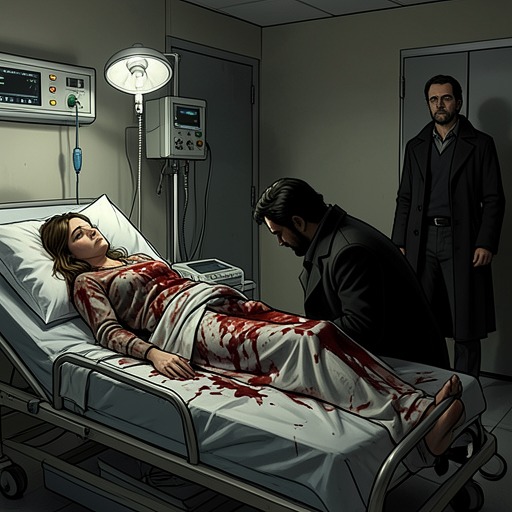
Will’s memory makes the violence personal before it makes it fully legible. He recalls killing Tess on campus and hearing someone running nearby; the scream belongs to that same witness. In this brief return, the earlier conversation about academic ideas is set against the later murder. The contrast does not explain Will’s motive, but it shows how an ordinary remembered encounter and a concealed killing occupy the same history.
Jared’s Account and Will’s Confirmation
Jared later tells Eve that Tess was murdered on the university campus, on the lawn outside the English Department. He explains that he had gone to collect her after she said she was working late in the library. When she was not there, he searched for her and eventually saw an attacker across a large body of water. Jared says he ran through the water, screaming, but that no one was there. He describes seeing the attacker bite and kill Tess and take her away; to him, the assailant was not ordinary.
The account is also a revelation to Eve. Jared had tried to tell her what he saw while she was in hospital, but she had taken his words for a rant. This time, he presents them as a rational explanation: Tess was killed, and he was there. His testimony supplies the circumstances that Will’s short recollection leaves out, while Will’s memory independently confirms the central fact of his own responsibility. The two accounts meet around the nearby runner and the scream: Jared remembers himself running and crying out, and Will remembers hearing someone run before identifying that person as the one who screamed.
Narrative Role and Aftermath
Tess’s character is built largely through this delayed convergence of testimony and memory. Her name first breaks through Will’s conversational performance; the recognition forces him into silence and draws the reader toward the event he has concealed. Jared’s later explanation gives Eve—and the reader—a fuller account of the campus, the search, and the failed attempt to be heard. Neither recollection gives Tess a voice in the murder scene, and the narrative does not supply further information about her life or what happened after she was taken away.
The difference between what each man can say is significant. Jared tells Eve what he witnessed, including the attacker’s unnatural appearance and the fact that he could not make anyone respond. Will remembers himself as the killer, but his initial recollection is compressed to the act, the approaching runner, and the scream. Together, their accounts turn Tess from a name attached to Jared’s loss into the point at which Will’s past becomes a specific, witnessed crime. Her murder also gives Jared’s earlier warning to Eve a concrete basis, even though she had initially dismissed it.