The Abstainer’s Handbook (second edition)
The RadleysThe Abstainer’s Handbook (second edition) is a practical guide to abstainer life: it turns the Radleys’ commitment to resisting vampire instincts into rules for daily conduct, while acknowledging the physical and emotional costs of that choice. For Rowan Radley, it is first a source of answers supplied by Peter Radley, then a reference he consults during a crisis. Its counsel offers a discipline for living with desire, but the story places that discipline beside Rowan’s increasing attraction to Vampire blood.
Identity and Purpose
The Handbook is presented as the work of an anonymous group of abstainers who wrote it in the 1980s. Peter describes it to Rowan as a source of guidance, and Rowan receives an old paperback with an austere gray cover. Its pages are yellowing and dog-eared: a used, materially worn object, not an abstract set of principles. The second edition is identified by page references that recur through the narrative, including pages 50, 54, and 89.
Its central premise is that vampire instincts cannot be treated as reliable guides. The passage on page 54 contrasts animal survival instinct with the restraint required for civilization, urging abstainers to suppress desires that could lead them toward predation. The book frames self-denial as social as well as personal: restraint is a contribution to living among others, not merely a private test of will.
A further instruction, on page 89, recommends the outward structures of an ordinary human life: keeping daylight hours, holding regular work, and spending time with people whose moral boundaries are stable. The advice makes routine part of abstention. Rather than presenting resistance as a single dramatic decision, the Handbook describes a pattern of conduct that can help keep dangerous impulses at a distance.
Peter Introduces the Book to Rowan
The book enters Rowan’s life after he asks Peter whether he has ever killed anyone. Peter explains that he tried to avoid killing and to rely on blood obtained by other means, including from a hospital. He also acknowledges that human blood was more compelling and that cravings could become powerful. His account ends in a quiet moral conclusion: abstention is better, even though it may mean feeling unwell more often and dying younger than a vampire otherwise might.
Peter then leaves the room and returns with the paperback. He tells Rowan that it helps and presents it as containing answers to the questions Rowan is facing. Rowan turns through its worn pages, and the physical reality of printed words makes the situation feel more real to him. The book therefore arrives not as a detached manual but as Peter’s response to a question about violence, inheritance, and what it means to choose restraint.
Rules, Limits, and Warnings
The Handbook’s guidance is not limited to moral exhortation. On page 50, it warns that blood does not resolve craving but intensifies it. The distinction matters to the book’s model of abstention: drinking may bring immediate relief, but it is not a lasting way to satisfy desire. The warning makes a first taste potentially consequential rather than safely experimental.
Rowan later consults the index while listening to the Smiths album Meat Is Murder and finds a section on suicide on page 140. It explains that suicidal depression is common among abstainers and connects that suffering to self-loathing and the painful awareness of instincts that they refuse to act upon. The Handbook does not reduce abstention to uncomplicated virtue; it recognizes that resisting desire can carry psychological costs as well as physical ones.
The same section distinguishes abstainers from vampires whose addiction obscures their awareness of their own behavior. It also warns that abstainers cannot necessarily die as easily as humans. Ordinary assumptions about bodily vulnerability do not apply straightforwardly, and the sight or scent of one’s own blood may provoke a renewed desire for fresh blood. The advice thus treats self-harm not as a simple escape from distress but as a danger entangled with the appetite abstainers are trying to control.
Rowan’s Use of the Handbook and Its Limits
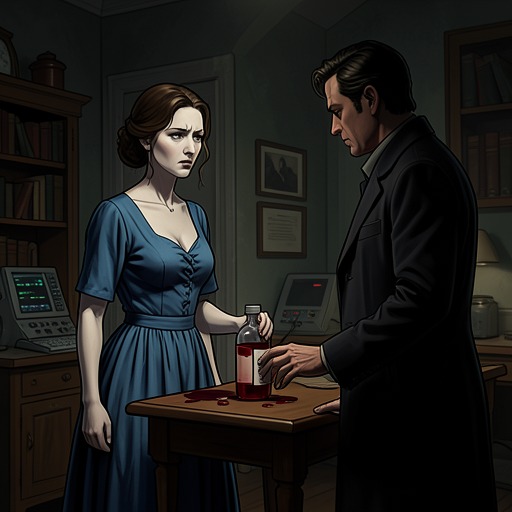
The book’s presence recurs as Rowan’s temptation grows. After returning to his room, he holds a bottle of Vampire blood and considers whether a tiny sip could be controlled. When he hears Clara Radley leaving her room, he hides the bottle beneath his bed beside an old papier-mâché puppet of Saturn, made years earlier at a village-hall arts-and-crafts club. The Handbook’s warnings about desire and self-destruction belong to the same emerging conflict, though the book does not prevent Rowan from hiding or later reaching for the bottle.
On another occasion, Rowan consults the Handbook’s account of suicidal despair after a difficult day. Later, he remembers being knocked down and held against the school field by Stuart Harper while other boys, including Toby Felt, laughed. That memory returns as he reaches for the bottle and drinks. The narrative sets the immediate appeal of Vampire blood against the Handbook’s warning that blood magnifies craving: Rowan feels temporary relief, but the book has already supplied a framework for understanding why relief may carry a cost.
Near the end of the supplied account, Rowan again debates the bottle. He recognizes it as everything he has taught himself to hate, then reasons that a very small sip might be harmless. The pause does not settle the question; the bottle reaches his lips as the song continues. The Handbook’s significance lies partly in this unresolved contrast. It makes restraint legible and gives Rowan language for its dangers, but knowledge alone cannot dissolve the desire the book warns against.