Unnamed Predator Unit
The RadleysThe Unnamed Predator Unit (UPU) is a covert, nationwide police unit based in Manchester that addresses crimes and risks involving vampires. Its stated purpose is to limit the socially and morally destructive activities of the vampire population. The organization’s importance lies in the tension between that protective aim and the secrecy through which it operates: for years, it concealed vampire-related crimes from ordinary investigations, while under deputy commissioner Alison Glenny it also pursued direct negotiation with the community.
Nature and remit
The UPU is described as a technically nonexistent branch of Greater Manchester Police, operating nationwide despite its Manchester headquarters. Its existence is kept from the wider population of people who do not know about vampires. The unit therefore works across a divide between ordinary policing and a concealed supernatural community, with a remit that requires knowledge and methods unavailable to the public-facing police service.
The account distinguishes the unit’s responsibility from counterterrorism. Its specialist purpose is countervampirism: identifying vampire-related activity and responding to its consequences. The organization is not presented simply as an enforcement body. Glenny describes a newer approach built around contact with vampires, negotiation, trust, and information-gathering, indicating that the unit seeks solutions within the community as well as action against particular threats.
Secrecy and earlier methods
The UPU’s hidden status has shaped the handling of crimes. In one earlier case, Will Radley murdered a mature student who was married to a police detective. Although the detective inspector witnessed the murder, the UPU ensured the case was treated as a missing-person matter and that the witness would not be taken seriously. The episode demonstrates how the unit could subordinate ordinary investigation and public acknowledgment to the maintenance of secrecy.
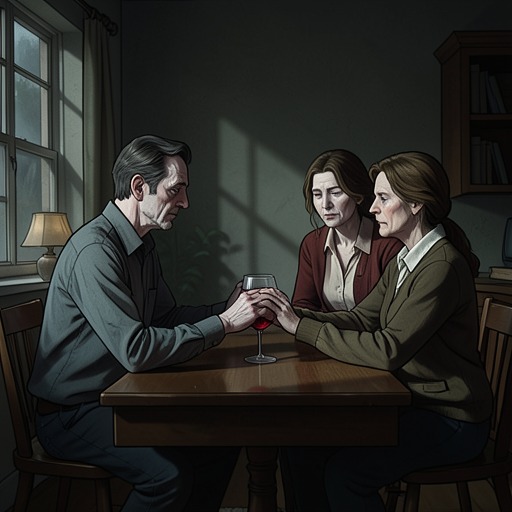
Jared Copeland’s experience shows the personal cost of that policy. Alison had warned him that if he told anyone who he believed had killed his wife, even his daughter, he would be returned to hospital and kept there. Her threat made the secret difficult to challenge: the unit could use the institutions of ordinary society to discredit or silence someone whose account depended on knowledge of vampires. Later, when Jared passed Glenny’s car after an operation had failed, he told her so; another detective in the car watched him in disbelief. The moment exposes a gap between the unit’s confidence in its plans and the consequences experienced by people caught up in them.
Glenny and a changing approach
Fifteen days before a later briefing, Glenny received a call from a man whose familiar, cold, tired whisper informed her that Will had been removed from the unit’s list. The list’s exact function is not fully explained, but the call shows that the UPU’s dealings with vampires include some form of recognized status or designation, and that changes to it are communicated at senior level. Glenny was briefing a new recruit when the call arrived, linking the unit’s internal training to its ongoing management of the vampire population.
In a separate encounter, Glenny met a superintendent who had never previously had face-to-face contact with a Manchester police officer, since Manchester lay well outside his jurisdiction. She identified herself as a national-unit deputy commissioner coordinating special-branch resources across the United Kingdom. She brought a form requiring nondisclosure of information about the UPU and explained that the organization worked with members of the vampire community. Her matter-of-fact presentation of the unit’s remit contrasts with the extraordinary knowledge she was asking the superintendent to accept and protect.
Glenny’s stated method was to speak with vampires, negotiate, establish trust, and gain information. She framed this as a more intelligent approach than the unit’s methods in the 1980s and 1990s, and told a parent that saving his daughter’s life was possible through solutions developed within the community. This policy does not remove the UPU’s coercive power or secrecy, but it marks a shift from concealment and suppression alone toward negotiated intervention.
Cases and operational judgments
The UPU’s work reaches into local investigations. During questioning about Clara Radley’s responsibility for a boy’s death, the police encounter was unnervingly routine for Clara. Glenny later questioned why a witness statement was blank and whether the Radleys were connected to a notorious Manchester vampire family. She suggested that those involved might have been influenced through blood-minding, a vampire ability capable of affecting another person’s thoughts. She also explained that some vampires gain particular mental and physical powers by drinking large quantities of blood. These observations show the unit interpreting apparent gaps in standard evidence through its specialized knowledge, though the possibility she raises is not itself proof of what happened in the case.
Glenny also sought a list of everyone living in Bishopthorpe and reacted with sadness when the name Jared Copeland arose. The request indicates that the unit used local population information to pursue its inquiries, while her response connects that investigation to Jared’s earlier conflict with the organization. At the Radley home, she advised Clara that consuming blood from time to time might prevent another overwhelming blood-thirst episode. The advice reflects the UPU’s practical engagement with vampire physiology and risk, rather than an approach limited to criminal investigation.
Role and significance
The UPU operates in two registers: it conceals the existence of vampires from the wider public while intervening in the consequences of vampire activity. Its treatment of Will’s earlier murder and its pressure on Jared reveal how secrecy can protect a hidden order at the expense of witnesses. Glenny’s emphasis on negotiation, trust, and community-based solutions offers a different means of managing danger, but the unit remains an authority capable of withholding evidence, directing investigations, and placing people under pressure.
That contradiction defines the organization. The UPU seeks to restrain harmful vampire activity without exposing the community it oversees, and its methods move between suppression, investigation, negotiation, and advice. Its secrecy is not merely background: it determines what can count as evidence, who is believed, and which forms of intervention are available to the human and vampire communities alike.