Vampire Abstainerism
The RadleysVampire Abstainerism is a moral and practical discipline built around refusing to feed on people or create new vampires. It presents the suppression of instinct as the price of civilized life, not as proof that the desire has disappeared. Through the Radley family and The Abstainer’s Handbook, the novel shows abstention as both an ethical commitment and an ongoing vulnerability to craving, depression, and relapse.
Principles and Handbook
The doctrine’s central claim is that instinct should not govern conduct: civilization depends on resisting desires that may lead to harm. The second edition of The Abstainer’s Handbook gives that principle a stark formulation on page 54, urging readers to distrust instinct and suppress dark desires. On page 50, it warns that blood does not quiet craving but makes it stronger. Abstainerism therefore treats drinking not as a lasting solution to hunger, but as an intensification of the force a practitioner is trying to resist.
The handbook is more than a statement of belief for the Radleys. After Rowan asks whether his father has killed anyone, Peter Radley explains that the family tried to obtain blood by other means, including from hospitals, but that human blood could be difficult to resist when cravings became powerful. He describes the exhilaration and strength it could bring, then concludes that abstention is better even though it can mean feeling unwell much of the time and dying younger than vampires otherwise might. He gives Rowan an old paperback copy of The Abstainer’s Handbook, written by an anonymous group of abstainers in the 1980s, as practical guidance. Its index directs Rowan to a note on page 140 identifying suicidal depression as a common burden among those who abstain.
Family Practice and Inherited Identity
Peter describes the Radleys as abstainers who no longer kill or convert anyone, while appearing to the outside world to be an ordinary human family. His account distinguishes the family’s vampire nature from the choices they make about it: Peter says he has always been a vampire, as generations of Radleys were before him, whereas Helen Radley was converted. The family’s abstention is thus a chosen way of living within vampirism, not an escape from it.
That distinction also clarifies the discipline’s limits. The Radleys remain subject to the cravings they reject, and Peter’s account of earlier efforts to obtain blood without killing shows that restraint has required practical compromises as well as principle. The handbook’s lessons do not erase desire; they name it as a continuing danger and prescribe resistance.
Craving, Relapse, and Cost
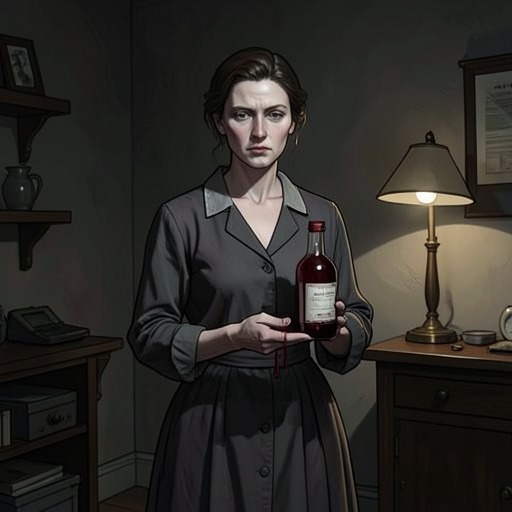
Rowan’s experience makes the gap between principle and practice concrete. After sitting with a bottle of vampire blood hidden beneath his bed, he remembers having been bullied by Stuart Harper and drinks from it, thinking of Harper. The blood quickly lifts his worries and familiar aches, leaving him feeling awake. The immediate relief gives the craving a powerful reinforcement: the same act that seems to offer release also contradicts the discipline Peter has taught him and the handbook’s warning that blood magnifies desire.
The struggle recurs when Rowan again holds a bottle and debates whether a tiny sip could be harmless. Later, faced with the temptation, he argues with himself that the blood is everything he has taught himself to hate, then gives way and brings the bottle to his lips. The repeated hesitation matters as much as the action: abstainerism does not make the choice easy or settle it once and for all. Its costs are registered not only in these moments of relapse but in Peter’s account of depression, persistent discomfort, and shortened life.
Conversion and the Limits of Abstention
Abstainerism also draws a boundary against converting others. Peter says that the Radleys no longer make vampires, while Helen warns Jared Copeland that giving Eve Copeland vampire blood will convert her and may produce very strong feelings toward the person whose blood is used. In the final crisis, Eve asks for Rowan’s blood. Rowan gives it to her, and as it reaches her, she recognizes him through a profound new intimacy. The act saves Eve, but it also crosses the family’s stated prohibition on conversion.
This ending makes the doctrine’s ethical stakes more complex than simple obedience or failure. Abstainerism protects others from predation and conversion, yet the choice to convert Eve is made as an attempt to save her life, at her request. The scene leaves the principle intact as a meaningful restraint while showing that, under extreme pressure, care for another person can collide with the rule against creating a new vampire.